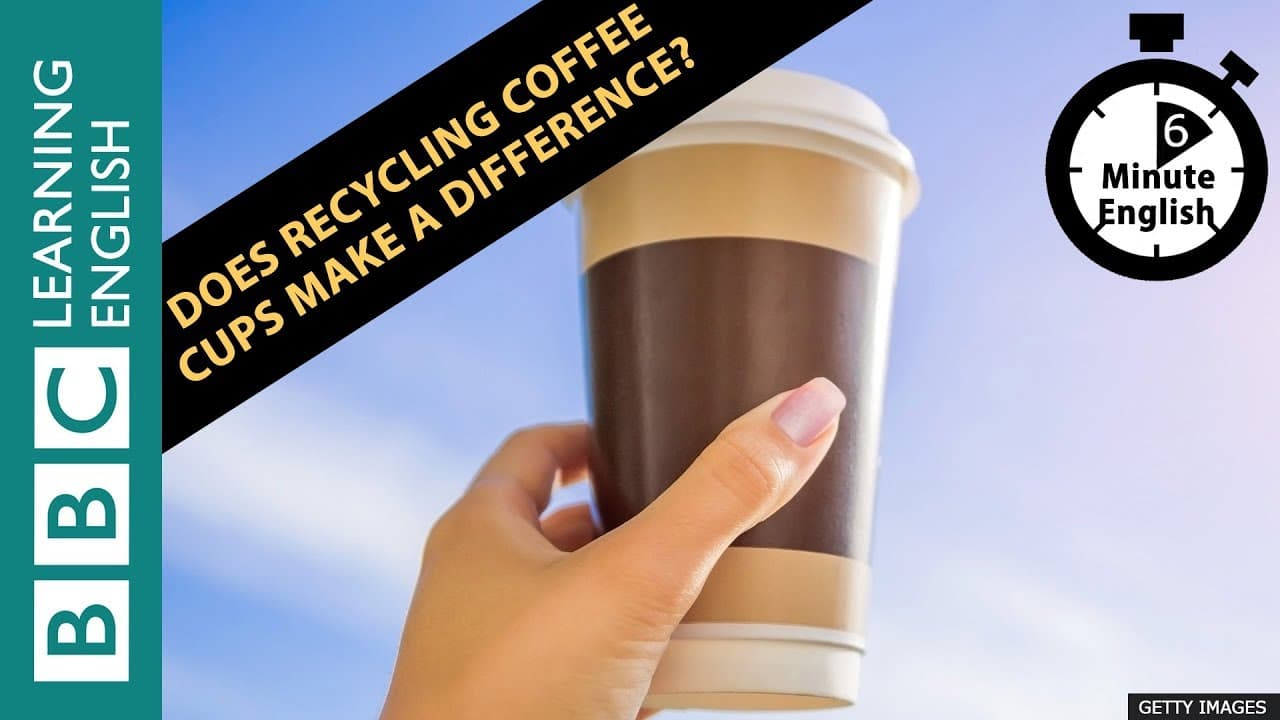
Does recycling coffee cups make a difference? 6 Minute English
TL;DR
Coffee chains are taking steps to reduce disposable cup waste.
Transcript
Neil: Hello, and welcome to 6 Minute English. I'm Neil. Rob: And I'm Rob. Neil: Now Rob, we've talked before on this programme about our love of coffee. Rob: Oh yes, indeed. I couldn't function without it. Neil: But have you ever thought about the environmental consequences of all those disposable coffee cups? Rob: Oh yes, indeed. I always carry a ... Read More
Key Insights
- Disposable coffee cups are largely non-recyclable due to their plastic lining, creating significant waste.
- Coffee chains are implementing charges for disposable cups and offering discounts for reusable ones to encourage sustainable habits.
- Starbucks is enhancing recycling efforts both inside and outside their stores through partnerships with environmental charities.
- The concept of 'rolling out' refers to gradually introducing new systems or products across a business.
- Mary Creagh suggests a legislative 'nudge' similar to the plastic bag charge to encourage reusable cup usage.
- The term 'infrastructure' encompasses the necessary physical structures to support new recycling initiatives.
- A 'nudge' is a psychological incentive designed to promote environmentally friendly behaviors among consumers.
- The expression 'fight tooth and nail' describes strong opposition, as seen from coffee chains against proposed legislation.
Install to Summarize YouTube Videos and Get Transcripts
Explore YouTube Video Summarizer or Get YouTube Transcript Extractor
Questions & Answers
Q: What are the environmental issues associated with disposable coffee cups?
Disposable coffee cups pose significant environmental issues because they are often lined with plastic, making them difficult to recycle. As a result, they contribute to a large amount of waste, since most are used only briefly before being discarded. This has prompted discussions on how to encourage consumers to switch to reusable options.
Q: How are coffee chains encouraging the use of reusable cups?
Coffee chains are encouraging the use of reusable cups by implementing a small charge for disposable cups and offering discounts to customers who bring their own reusable cups. This financial incentive aims to promote environmentally friendly behavior and reduce the reliance on single-use cups, thereby decreasing waste.
Q: What steps is Starbucks taking to improve recycling efforts?
Starbucks is enhancing its recycling efforts by rolling out new systems in their stores that make it easier to recycle paper cups. They are also working with environmental charities like Hubbub to improve recycling infrastructure outside of their stores, such as clearly marked bins and collection points for coffee cups, to ensure cups can be recycled on the go.
Q: What is the concept of 'rolling out' in a business context?
In a business context, 'rolling out' refers to the gradual introduction of new systems, products, or practices across an organization. This approach allows businesses to implement changes in a controlled manner, ensuring that any issues can be addressed before full-scale adoption. Starbucks is using this strategy to improve its recycling capabilities.
Q: What legislative measure does Mary Creagh propose to encourage reusable cup usage?
Mary Creagh proposes a legislative measure similar to the plastic bag charge to encourage the use of reusable cups. This 'nudge' would involve charging customers more for disposable cups, thus incentivizing them to bring their own reusable cups. Such measures aim to reduce waste and promote sustainable consumer behavior.
Q: How does infrastructure play a role in recycling initiatives?
Infrastructure is crucial for effective recycling initiatives as it includes the necessary physical structures like bins and collection points that facilitate the recycling process. By improving infrastructure, coffee chains can ensure that more cups are recycled, both inside and outside of their stores, thereby reducing environmental impact.
Q: What is the psychological concept of a 'nudge'?
A 'nudge' is a psychological strategy used to influence people's behavior in a subtle yet effective way. In the context of reusable cups, a nudge might involve financial incentives or legislative measures that encourage consumers to opt for reusable options, thereby promoting environmentally friendly habits without direct enforcement.
Q: What does it mean to 'fight tooth and nail'?
To 'fight tooth and nail' means to make a determined and vigorous effort to resist or achieve something. In the context of the coffee cup debate, it describes the strong opposition from coffee chains against proposed legislation that would enforce higher charges for disposable cups, as they believe it might negatively impact their business.
Summary & Key Takeaways
-
Disposable coffee cups contribute to environmental waste due to their plastic lining, making them difficult to recycle. Coffee chains are addressing this by charging extra for disposable cups and offering discounts for reusable ones, aiming to change consumer behavior towards more sustainable practices.
-
Starbucks is actively working on improving recycling infrastructure both inside and outside their stores. They are collaborating with environmental charities to ensure that paper cups can be recycled effectively, demonstrating a commitment to reducing the environmental impact of their products.
-
Mary Creagh, a British MP, advocates for a legislative 'nudge' to encourage the use of reusable cups, similar to the plastic bag charge. Despite resistance from coffee chains, such measures could significantly reduce waste and promote environmentally responsible consumer habits.
Read in Other Languages (beta)
Share This Summary 📚
Summarize YouTube Videos and Get Video Transcripts with 1-Click
Try YouTube Summary with ChatGPT & Claude or YouTube Transcript Generator
Explore More Summaries from BBC Learning English 📚
Summarize YouTube Videos and Get Video Transcripts with 1-Click
Try YouTube Summary with ChatGPT & Claude or YouTube Transcript Generator