What Are the Limits of Individual Freedom in Liberalism?
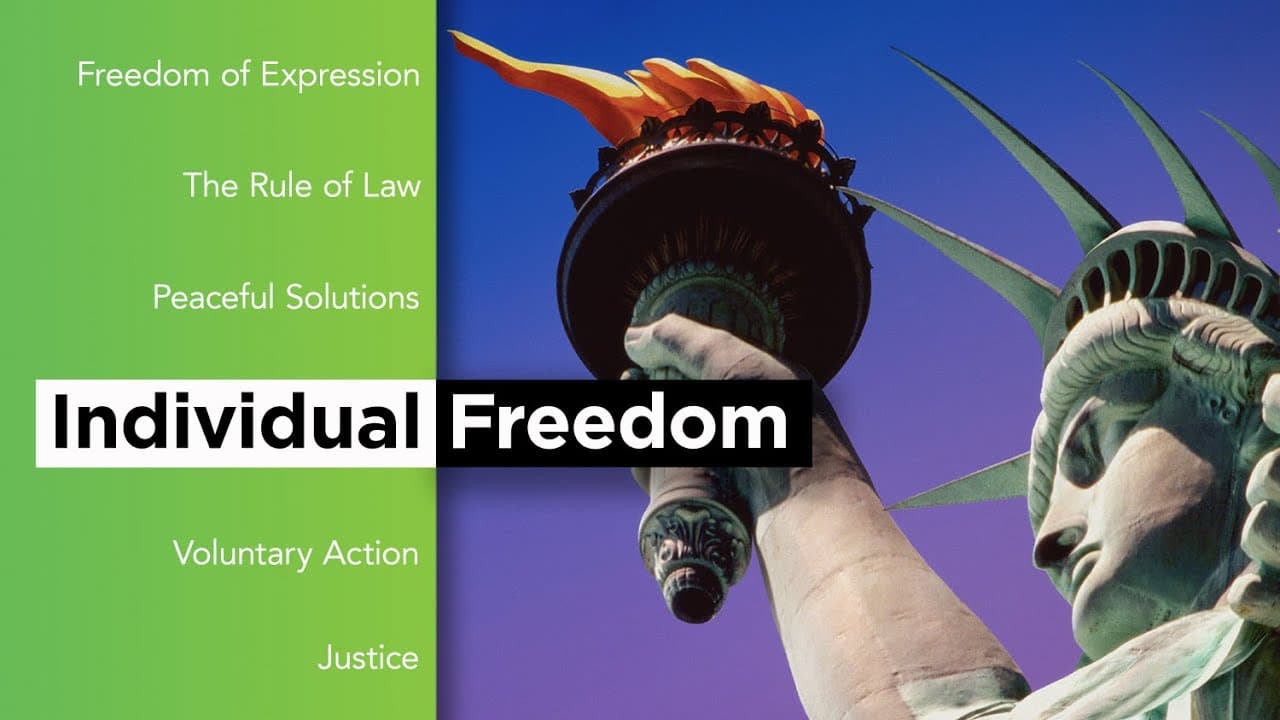
TL;DR
Individual freedom in liberalism is primarily about negative freedom — freedom from coercion by the state or society — as emphasized by classical liberals. They assert that laws should have limits to protect personal sovereignty, which raises debates about issues like drug legalization and mandatory vaccinations, where the balance between individual rights and societal good is central.
Transcript
the term liberals changed its meaning over the course of the 20th century and it's confusing in a lot of ways nowadays people use it often especially in the United States as a synonym for left-wing or progressive but liberalism was a movement in political philosophy in the history of ideas that was more coherent than that and that has some aspects ... Read More
Key Insights
- ❓ Liberalism's evolution blurs its original meaning with current political associations.
- 🗯️ Classical liberal values emphasize individual rights, democracy, and freedom from coercion.
- 👋 The debate on paternalistic laws centers on individual freedom versus societal good.
- 🤨 Mill's doctrine of individuality raises questions about self-sovereignty and liberty of conscience.
- 🧑💼 Balancing individual freedom with societal well-being presents complex trade-offs.
- 🧑⚕️ Mandatory vaccination showcases the tension between individual freedom and public health.
- 🛟 Liberalism underscores the importance of cautious compulsion regarding fundamental aspects of life.
Install to Summarize YouTube Videos and Get Transcripts
Explore YouTube Video Summarizer or Get YouTube Transcript Extractor
Questions & Answers
Q: How has the meaning of liberalism changed over time?
Liberalism shifted from a coherent political philosophy emphasizing individual rights to a term associated with left-wing politics, leading to confusion in its modern usage.
Q: What principles were valued by classical liberals?
Classical liberals cherished individual rights, personal responsibility, and democracy as a rule of the people, emphasizing the importance of freedom from state coercion.
Q: How does Mill's doctrine of individuality differ from modern views?
Mill's doctrine of individuality advocated for self-sovereignty and liberty of conscience, challenging paternalistic laws that restrict individual choices, even regarding recreational drug use.
Q: What trade-offs exist in balancing individual freedom and societal good?
The debate surrounds the extent of individual sovereignty, with liberals advocating for caution in imposing laws that diminish fundamental liberties while recognizing the need for societal well-being.
Summary & Key Takeaways
-
Liberalism transformed, now often linked with left-wing politics.
-
Classical liberals valued individual rights, democracy, and freedom from coercion.
-
There are debates on the balance between individual freedom and paternalistic laws.
Read in Other Languages (beta)
Share This Summary 📚
Summarize YouTube Videos and Get Video Transcripts with 1-Click
Try YouTube Summary with ChatGPT & Claude or YouTube Transcript Generator
Explore More Summaries from Big Think 📚






Summarize YouTube Videos and Get Video Transcripts with 1-Click
Try YouTube Summary with ChatGPT & Claude or YouTube Transcript Generator