Journey Into Unexplored Dinosaur Country | National Geographic
TL;DR
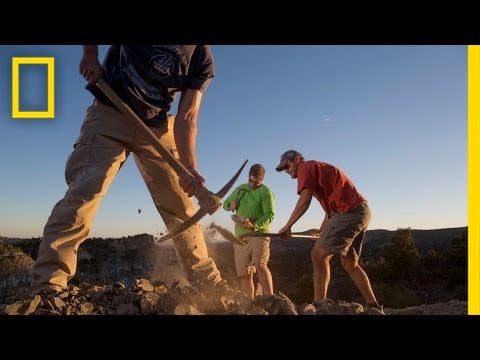
Exploring dinosaur fossils in rugged terrain requires careful excavation and preservation techniques.
Transcript
grand staircase-escalante national monument is this 2 million acre area in southern Utah and it represents one of the last great unexplored regions for dinosaurs in North America the thing that I enjoy most about being a paleontologist is just being out there walking around and never knowing whether you might find the equivalent of a prehistoric Pi... Read More
Key Insights
- 🦕 Grand Staircase-Escalante offers a promising site for dinosaur fossil discovery.
- 😀 Paleontologists face challenges of rugged terrain and physical demands during fieldwork.
- 🧻 Preservation techniques like wrapping fossils in toilet paper and jacketing in plaster are crucial.
- 🏕️ Fieldwork involves early mornings, long hikes, and communal camp activities.
- 🦕 Dinosaur paleontology requires meticulous excavation and preservation methods.
- 💦 The excitement of potentially finding a significant fossil drives paleontologists in their work.
- ❓ Teamwork and collaboration are essential for successful fieldwork in paleontology.
Install to Summarize YouTube Videos and Get Transcripts
Explore YouTube Video Summarizer or Get YouTube Transcript Extractor
Questions & Answers
Q: What is the significance of the Grand Staircase-Escalante National Monument for paleontologists?
The monument represents a prime location for discovering dinosaur fossils, with vast unexplored regions that hold great potential for new scientific discoveries.
Q: What are the challenges faced by paleontologists in the field?
Paleontologists face rugged terrain and steep hills, making it physically demanding to search for and excavate dinosaur fossils while ensuring their preservation.
Q: How do paleontologists protect dinosaur fossils once they are found?
Fossils are carefully wrapped in tissue paper or toilet paper to prevent damage, then jacketed in plaster and burlap for protection during transport and excavation.
Q: What is a typical day like for paleontologists in the field?
Their day starts early, involves long hikes, excavation work, and ends with communal activities at the campfire before preparing for the next day of exploration.
Summary & Key Takeaways
-
The Grand Staircase-Escalante National Monument in Utah is a vast area that holds great potential for discovering dinosaur fossils.
-
Paleontologists start their day early, prepare tools, and hike through rugged terrain, often walking for long distances.
-
The primary challenge in dinosaur paleontology is carefully extracting fossils from the rock layers and protecting them for transport.
Read in Other Languages (beta)
Share This Summary 📚
Summarize YouTube Videos and Get Video Transcripts with 1-Click
Try YouTube Summary with ChatGPT & Claude or YouTube Transcript Generator
Explore More Summaries from National Geographic 📚



Summarize YouTube Videos and Get Video Transcripts with 1-Click
Try YouTube Summary with ChatGPT & Claude or YouTube Transcript Generator