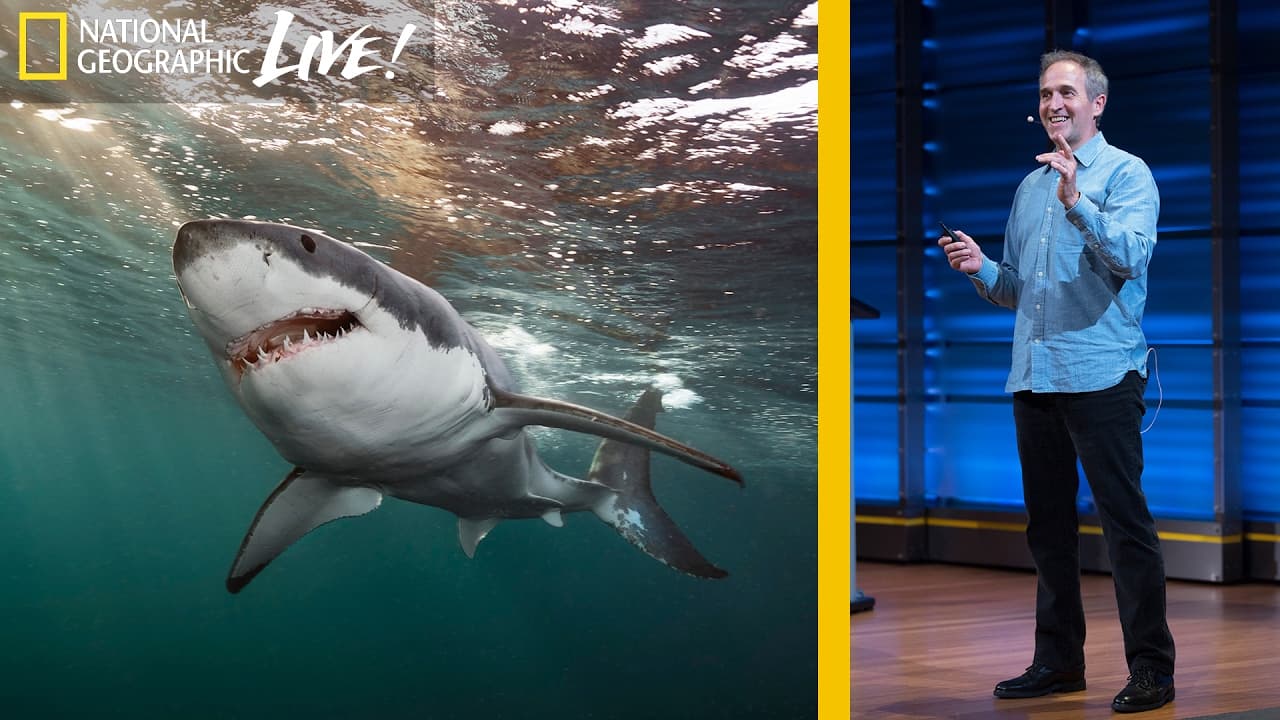
Great White and Oceanic Whitetip Sharks: Photographing Top Ocean Predators (Part 3) | Nat Geo Live
TL;DR
Oceanic White Tip sharks, once abundant, now face extinction due to overfishing for their fins.
Transcript
the third in the four species of sharks that I wanna share with you tonight is the Oceanic White Tip shark, a shark that has been listed as the fourth most dangerous species of sharks if you pay attention to such lists. It's an animal that is a true pelagic predator. This animal lives way out in the open ocean, hunts in deep water, occasionally ris... Read More
Key Insights
- 🥺 Oceanic White Tip sharks are threatened by overfishing for their valuable fins, leading to a 99% decline in their population.
- 🦈 Despite once being abundant, Oceanic White Tip sharks are now on the verge of extinction due to human activities.
- 🦈 Conservation efforts are crucial to saving Oceanic White Tip sharks from disappearing completely.
- 🦈 Understanding the behavior and habitat of Oceanic White Tip sharks is essential to their conservation and protection.
- 🦈 Cat Island in the Bahamas serves as a critical location for studying and documenting Oceanic White Tip sharks.
- 🦻 Satellite tagging is aiding researchers in tracking the movements and behaviors of Oceanic White Tip sharks for conservation purposes.
Install to Summarize YouTube Videos and Get Transcripts
Explore YouTube Video Summarizer or Get YouTube Transcript Extractor
Questions & Answers
Q: What has led to the drastic decline in the population of Oceanic White Tip sharks?
The main reason for their decline is the high demand for their fins, which are prized in shark fin soup, driving intense overfishing of this species.
Q: Why are Oceanic White Tip sharks considered efficient predators?
Oceanic White Tip sharks are skilled hunters due to their adaptation to the open ocean environment, enabling them to glide effortlessly through deep waters to catch prey.
Q: How are researchers tracking the movements of Oceanic White Tip sharks?
Researchers are using satellite tags attached to the sharks' dorsal fins to track their movements and gather crucial information to aid in conservation efforts.
Q: Why is Cat Island in the Bahamas significant for studying Oceanic White Tip sharks?
Cat Island is one of the last known concentrations of Oceanic White Tip sharks, providing researchers with a unique opportunity to study and document these endangered creatures.
Summary & Key Takeaways
-
Oceanic White Tip sharks are efficient pelagic predators living in the open ocean, hunting deep-sea fish and occasionally attacking shipwrecked sailors.
-
Once abundant, their population has declined by 99% due to overfishing for their valuable fins, leading them to the brink of extinction.
-
The Bahamas, especially Cat Island, is one of the few remaining locations to observe and study these majestic creatures.
Read in Other Languages (beta)
Share This Summary 📚
Summarize YouTube Videos and Get Video Transcripts with 1-Click
Try YouTube Summary with ChatGPT & Claude or YouTube Transcript Generator
Explore More Summaries from National Geographic 📚



Summarize YouTube Videos and Get Video Transcripts with 1-Click
Try YouTube Summary with ChatGPT & Claude or YouTube Transcript Generator