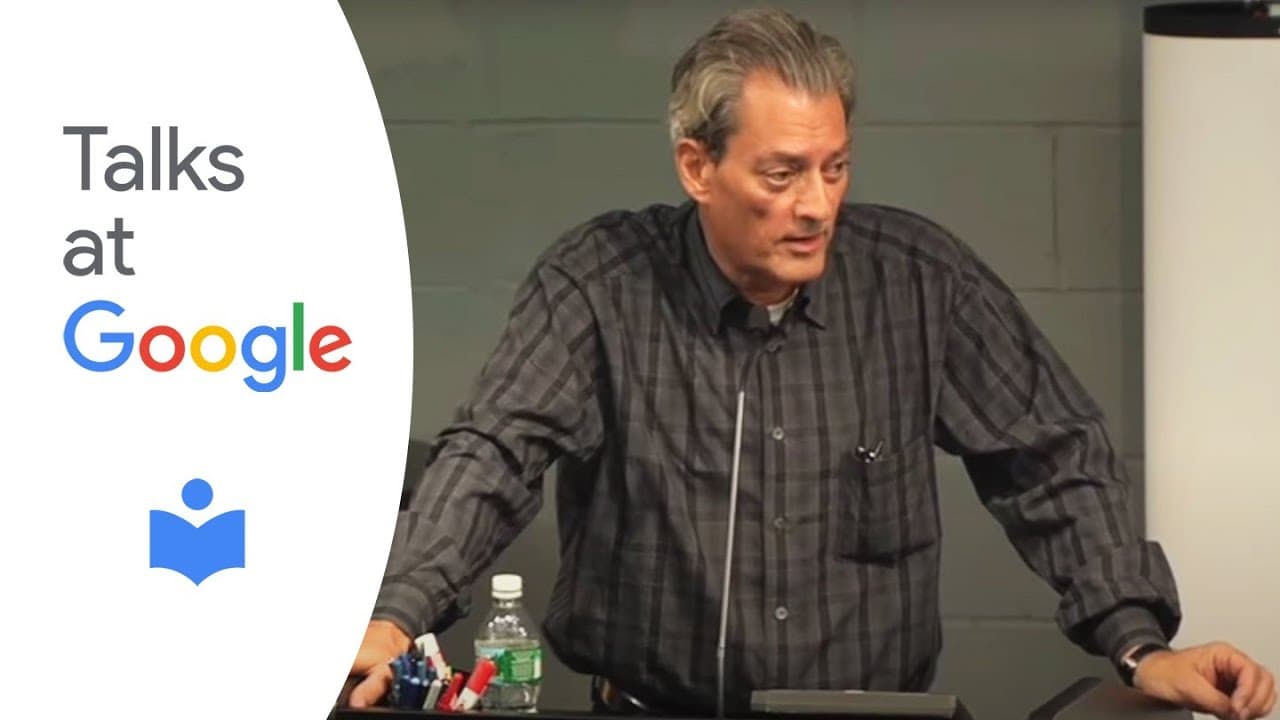
Man in the Dark | Paul Auster | Talks at Google
TL;DR
Paul Auster discusses his writing process, the differences between writing novels and screenplays, and the themes of realism and supernatural elements in his work.
Transcript
all right welcome out again to another authors at Google program here in New York we're really excited today but we have an amazing author in the house today Paul Auster one of New York's own Paul has been called one of America's most spectacularly inventive writers and his work has been translated into more than 30 languages he's the best-selling ... Read More
Key Insights
- ✍️ Paul Auster's writing combines elements of realism and the supernatural, capturing the unpredictable and strange aspects of reality.
- 😫 Writing screenplays involves a different set of challenges and techniques compared to writing novels, but Auster enjoys the collaborative nature of filmmaking.
- 💦 Recurring elements in Auster's works, such as notebooks, may have personal significance or create associations with his other works.
Install to Summarize YouTube Videos and Get Transcripts
Explore YouTube Video Summarizer or Get YouTube Transcript Extractor
Questions & Answers
Q: How do you approach writing screenplays compared to writing novels?
Writing a screenplay involves creating scenes and constructing a jigsaw puzzle of cuts, while writing a novel is a flowing, three-dimensional narrative experience. Both have their challenges and require different techniques, but I enjoy the collaborative nature of filmmaking.
Q: Your work often combines elements of realism and the supernatural. How do you achieve this balance?
I consider myself a realist, but reality is often stranger than we think. Bizarre things happen in life, and my novels aim to capture the unpredictability and strangeness of reality, incorporating elements of magic and the surreal as well.
Q: Do you intentionally include recurring elements, such as notebooks, in your works?
It's a bit of both. Sometimes I include recurring elements for personal reasons or to create associations with my other works. However, these elements should also stand on their own and hold meaning for readers, even if they haven't read my other books.
Q: Are you conscious of how your works will be analyzed and critiqued?
While writing, I try not to think about criticism or analysis. It's only after the work is complete and released into the world that I become aware of how it will be received. At that point, I prefer to focus on my next project and not get paralyzed by overthinking.
Summary & Key Takeaways
-
Paul Auster shares his experiences as a novelist and filmmaker, discussing his love for film and how it has influenced his writing.
-
He explains the differences between writing novels and screenplays, highlighting the challenges and rewards of each form.
-
Auster explores his fascination with the unpredictable aspects of reality, incorporating elements of magic and the surreal in his work.
Read in Other Languages (beta)
Share This Summary 📚
Summarize YouTube Videos and Get Video Transcripts with 1-Click
Try YouTube Summary with ChatGPT & Claude or YouTube Transcript Generator
Explore More Summaries from Talks at Google 📚
Summarize YouTube Videos and Get Video Transcripts with 1-Click
Try YouTube Summary with ChatGPT & Claude or YouTube Transcript Generator