What the Binary Pulsar Can Tell Us
TL;DR
Astrophysicists discovered indirect evidence for the existence of gravitational waves through the study of binary pulsars, confirming Einstein's prediction.
Transcript
the the field of gravitational wave astronomy is now getting quite hot it actually began uh quite a long time ago originating uh with a man named joseph weber who was a physicist at the university of maryland and he actually built the first gravitational wave detector to try to capture a gravity wave this was back in the 1960s but he was never able... Read More
Key Insights
- 👋 Gravitational wave astronomy has a long history, starting with Joseph Weber's first detector in the 1960s.
- 👋 The discovery of a binary pulsar by Joseph Taylor and Russell Hulse provided indirect evidence for the existence of gravitational waves.
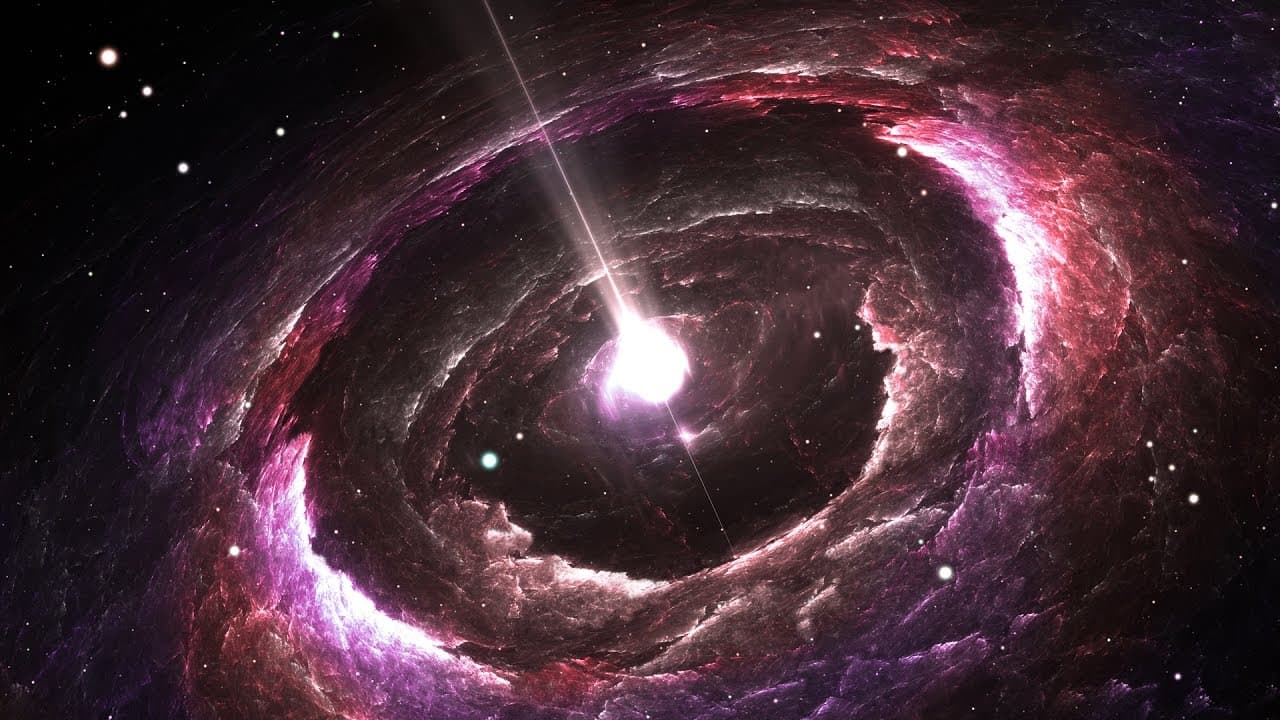
- 🤩 Pulsars are dense collapsed stars that emit radio beacons, allowing scientists to study their behavior.
- 👋 By observing the shrinking orbit of a binary pulsar, scientists confirmed Einstein's prediction of gravitational waves.
- 👋 The measurement of the shrinking orbit took 30 years and supported the existence of gravitational waves.
- 🥺 This discovery was considered beautiful and accurate, leading to a Nobel Prize in Physics.
- 🤩 Gravitational waves are crucial for understanding objects like neutron stars.
Install to Summarize YouTube Videos and Get Transcripts
Explore YouTube Video Summarizer or Get YouTube Transcript Extractor
Questions & Answers
Q: When did the field of gravitational wave astronomy begin?
The field began in the 1960s with Joseph Weber's construction of the first gravitational wave detector.
Q: What is a binary pulsar?
A binary pulsar is a system where one pulsar orbits around another object, emitting radio beacons that allow scientists to study their behavior.
Q: How did the observation of a binary pulsar provide evidence for gravitational waves?
The shrinking orbit of the binary pulsar, measured over 30 years, was consistent with Einstein's prediction of gravitational waves and explained the loss of energy from the system.
Q: What led to the indirect confirmation of gravitational waves?
The study of binary pulsars provided indirect evidence, as the shrinking orbit observed was only explained by the presence of gravitational waves.
Summary & Key Takeaways
-
The field of gravitational wave astronomy dates back to the 1960s when Joseph Weber built the first gravitational wave detector, although he was unable to confirm the waves.
-
Two radio astronomers, Joseph Taylor and Russell Hulse, stumbled upon a binary pulsar, which provided indirect evidence for the existence of gravitational waves.
-
Pulsars are dense, collapsed stars that emit radio beacons, and studying the behavior of a binary pulsar allowed scientists to observe the shrinking orbit, consistent with Einstein's prediction of gravitational waves.
Read in Other Languages (beta)
Share This Summary 📚
Summarize YouTube Videos and Get Video Transcripts with 1-Click
Try YouTube Summary with ChatGPT & Claude or YouTube Transcript Generator
Explore More Summaries from World Science Festival 📚



Summarize YouTube Videos and Get Video Transcripts with 1-Click
Try YouTube Summary with ChatGPT & Claude or YouTube Transcript Generator