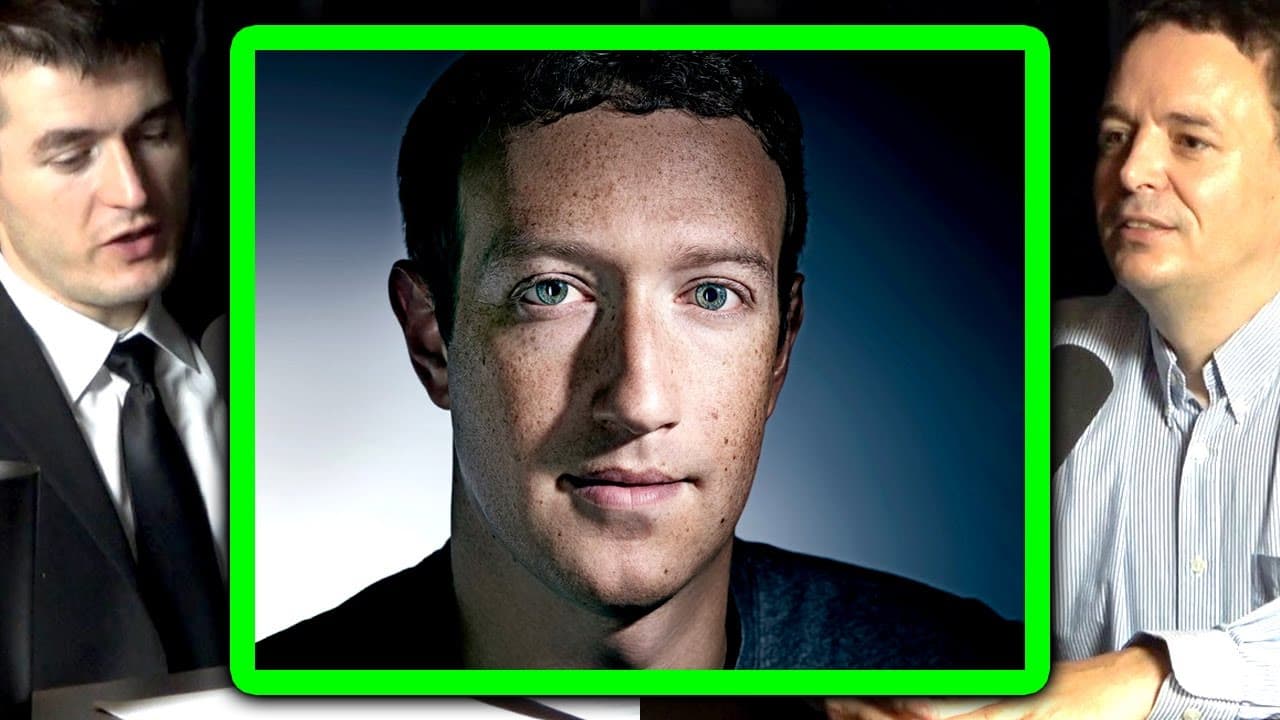
Why do people dislike Mark Zuckerberg? | Joscha Bach and Lex Fridman
TL;DR
Lack of transparency in incentives for individuals running tech companies and social media platforms can lead to distrust and manipulation of AI systems, highlighting the need for decentralized and explainable incentives to achieve fair and effective ethical solutions.
Transcript
it's nice for those incentives to be transparent so for example i'll give i'll give you examples there seems to be a significant uh distrust of um a tech like entrepreneurs in the tech space or or people that run for example social media companies like mark zuckerberg there's not a complete transparency of incentives under which that particular hum... Read More
Key Insights
- 🥺 Lack of transparency in incentives can lead to distrust and manipulation of AI systems.
- 🔉 Social media has disrupted traditional media by allowing random individuals to project their ideas, including conspiracy theories.
- 🔉 There is a push to make social media more like traditional media to increase stability, but it may limit opinions and raise concerns about indoctrination.
- 🍵 AI ethics needs to be handled by experts who understand statistics and have a deep understanding of the field.
- 🥺 The field of AI ethics is crucial for society's future, but the current lack of qualifications leads to frustration and a partisan discourse.
- 🧚 Transparent and decentralized incentives are essential to ensure fair and effective ethical decision-making in AI systems.
Install to Summarize YouTube Videos and Get Transcripts
Explore YouTube Video Summarizer or Get YouTube Transcript Extractor
Questions & Answers
Q: Why is transparency in incentives important for tech entrepreneurs and social media leaders?
Transparency in incentives ensures that their decision-making processes and impacts of AI systems are clear, preventing manipulation of information and fostering trust among users.
Q: How has social media disrupted traditional media?
Social media has allowed random individuals to spread their ideas, including conspiracy theories, which can challenge and sometimes surpass the influence of mainstream media outlets.
Q: Why is there a push to make social media more like traditional media?
The goal is to limit the range of projected opinions on social media, aiming for societal stability and cohesion. However, it also raises concerns about controlling information and indoctrination.
Q: What are the qualifications needed to participate in the AI ethics debate?
Currently, there are no specific qualifications, resulting in a wide range of participants who may not have a long-term vision for a peaceful and technologically advanced society.
Summary & Key Takeaways
-
Lack of transparency in the incentives of tech entrepreneurs and leaders of social media companies, such as Mark Zuckerberg, raises concerns about the impact of their AI systems on society.
-
Manipulation and dissemination of information about how these systems operate can lead to trouble and contribute to the growing distrust of powerful AI systems.
-
Traditional media has been disrupted by social media, enabling the spread of various narratives, including conspiracy theories, which can be more attractive and influential than mainstream opinions.
Read in Other Languages (beta)
Share This Summary 📚
Summarize YouTube Videos and Get Video Transcripts with 1-Click
Try YouTube Summary with ChatGPT & Claude or YouTube Transcript Generator
Explore More Summaries from Lex Clips 📚




Summarize YouTube Videos and Get Video Transcripts with 1-Click
Try YouTube Summary with ChatGPT & Claude or YouTube Transcript Generator