Bundling
TL;DR
Bundling increases profits by combining products to reduce demand variability.
Transcript
hello everyone today we're going to be looking at bundling which is a topic not just for the economics of media but for industrial organization more generally bundling is selling two or more Goods together as a package so Microsoft for example sells word excel PowerPoint a few other programs together in a package called office you can also buy thes... Read More
Key Insights
- Bundling involves selling multiple products together, increasing profits by reducing demand variability and capturing more consumer surplus.
- Negative correlation in product valuations, like Word and Excel, enhances bundling effectiveness, allowing firms to price closer to the mean.
- Zero marginal cost products, such as digital goods, benefit greatly from bundling, as it allows firms to maximize profits without additional costs.
- Bundling can lead to increased efficiency by reducing deadweight loss and increasing total sales, benefiting both firms and consumers.
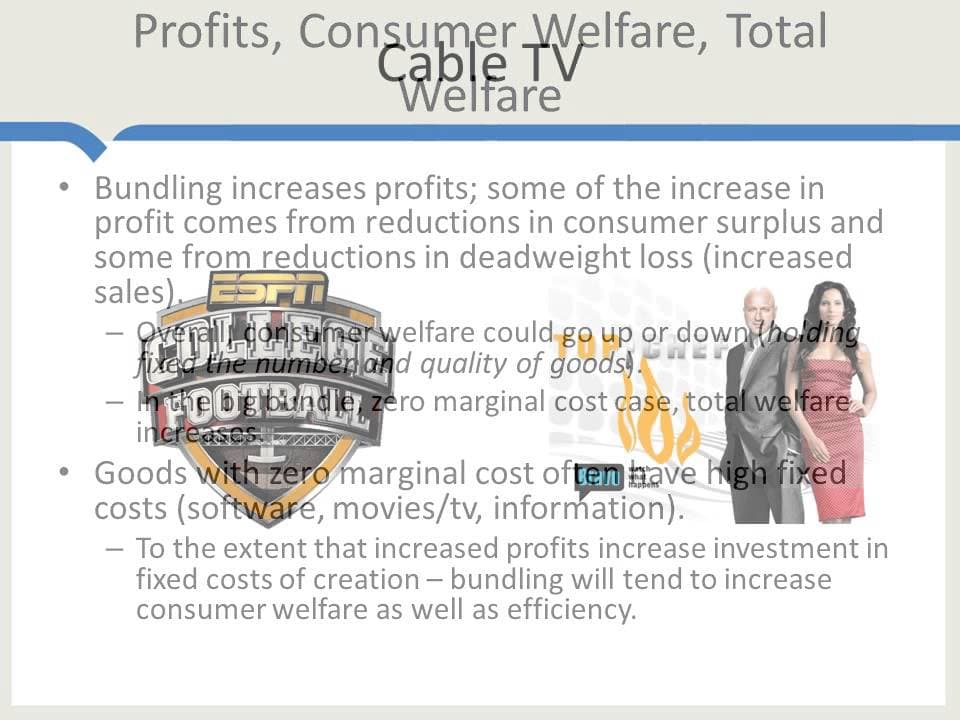
- In markets like cable TV, bundling satisfies conditions for profitability and efficiency due to high fixed costs and zero marginal costs.
- Consumer perceptions of being overcharged in bundled services are often misguided, as bundling equalizes value across diverse consumer preferences.
- Bundling in the music industry, exemplified by Spotify, is predicted to outperform per-item sales like iTunes due to lower transaction costs.
- Theoretical studies, such as those by BOS and Bron offerson, provide insights into bundling's impact on demand curves and consumer behavior.
Install to Summarize YouTube Videos and Get Transcripts
Explore YouTube Video Summarizer or Get YouTube Transcript Extractor
Questions & Answers
Q: Why is bundling effective in increasing profits?
Bundling is effective in increasing profits because it reduces demand variability by combining products, allowing firms to set prices closer to the average consumer valuation. This strategy captures more consumer surplus and increases sales, particularly when products have zero marginal costs, as seen with digital goods.
Q: How does negative correlation affect bundling?
Negative correlation in product valuations, where consumers value different products inversely, enhances bundling effectiveness. It allows firms to price bundles closer to the average valuation, reducing variability and capturing more consumer surplus, as demonstrated with products like Word and Excel.
Q: What role do zero marginal costs play in bundling?
Zero marginal costs play a crucial role in bundling by allowing firms to combine products without incurring additional production costs. This is particularly beneficial for digital goods, where bundling maximizes profits by leveraging the low cost of distribution and reducing variability in demand.
Q: Why is bundling advantageous in the cable TV industry?
Bundling is advantageous in the cable TV industry due to high fixed costs and zero marginal costs. It aligns with diverse consumer preferences by providing a balanced value across different interests, despite perceptions of overcharging, and increases efficiency by reducing deadweight loss and boosting total sales.
Q: How does bundling affect consumer perceptions of pricing?
Consumer perceptions of being overcharged in bundled services are often misguided. Bundling equalizes value across diverse consumer preferences, ensuring that most consumers receive similar value from the bundle. This strategy dispels the notion of unfair pricing by providing a balanced offering.
Q: What is the predicted outcome of bundling in the music industry?
In the music industry, bundling services like Spotify are predicted to outperform per-item sales models like iTunes due to lower transaction costs and more stable demand. Bundling reduces the cost of transactions and captures more consumer surplus, making it a more profitable strategy in the long run.
Q: What insights do theoretical studies provide on bundling?
Theoretical studies, such as those by BOS and Bron offerson, provide insights into bundling's impact on demand curves and consumer behavior. They illustrate how bundling reduces demand variability, allowing firms to set prices closer to the mean and capture more consumer surplus, enhancing profitability.
Q: How does bundling contribute to market efficiency?
Bundling contributes to market efficiency by reducing deadweight loss and increasing total sales. It allows firms to capture more consumer surplus and optimize pricing strategies, leading to a more efficient allocation of resources and increased total welfare, benefiting both firms and consumers.
Summary & Key Takeaways
-
Bundling is a strategy where multiple products are sold together, enhancing profitability by reducing variability in consumer demand and capturing more consumer surplus. This is particularly effective when products have zero marginal costs, like digital goods, as firms can maximize profits without incurring additional costs.
-
In industries such as cable TV, bundling is advantageous due to high fixed costs and zero marginal costs. It aligns with consumer preferences by providing a balanced value across diverse interests, despite perceptions of overcharging. This strategy also increases efficiency by reducing deadweight loss and increasing total sales.
-
The music industry illustrates bundling's benefits, with services like Spotify predicted to outperform per-song sales models like iTunes due to lower transaction costs and more stable demand. Theoretical insights from studies further elucidate bundling's impact on consumer behavior and market dynamics.
Read in Other Languages (beta)
Share This Summary 📚
Summarize YouTube Videos and Get Video Transcripts with 1-Click
Try YouTube Summary with ChatGPT & Claude or YouTube Transcript Generator
Explore More Summaries from Marginal Revolution University 📚

Summarize YouTube Videos and Get Video Transcripts with 1-Click
Try YouTube Summary with ChatGPT & Claude or YouTube Transcript Generator