What If The Sun Doubled In Mass?
TL;DR
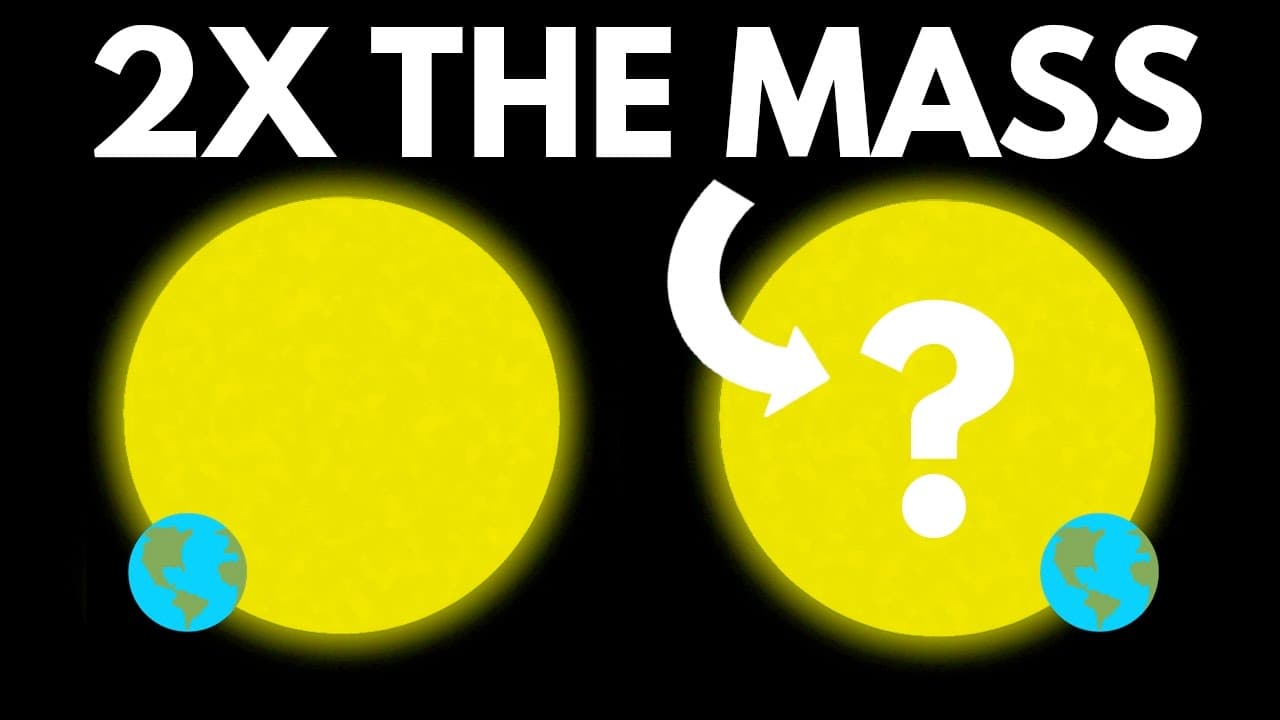
The sun's mass impacts its luminosity and the habitable zone; if it doubled in mass, Earth would be uninhabitable.
Transcript
Hey there! Welcome to Life Noggin. You Earthlings are pretty attached to your sun, and for good reason. It provides light and heat, drives photosynthesis that makes oxygen, and helps generate weather patterns. Without it, you wouldn’t exist. But if the sun is so great, would it be better if there was more of it? What if the sun has twice the mass i... Read More
Key Insights
- 😎 The sun's mass affects its luminosity and energy output, impacting the habitable zone.
- 😎 Earth is in a unique position within the sun's habitable zone, allowing for life to exist.
- 🙂 Planets in habitable zones orbit close to their stars to support life through capturing light and heat.
- 😎 Doubling the sun's mass would make Earth uninhabitable due to increased luminosity and temperatures.
Install to Summarize YouTube Videos and Get Transcripts
Explore YouTube Video Summarizer or Get YouTube Transcript Extractor
Questions & Answers
Q: How does the sun's mass affect its luminosity?
The sun's mass determines its luminosity, with larger stars being brighter and hotter due to more matter packed into them.
Q: What is the habitable zone, and why is Earth within it?
The habitable zone is an area around a star where planets have suitable temperatures for life; Earth is in this zone, allowing for life to exist.
Q: Why do planets in habitable zones orbit close to their stars?
Planets in habitable zones orbit close to their stars to capture enough light and heat to support life, as seen in the case of the exoplanets discovered by NASA.
Q: What would happen if the sun's mass doubled?
If the sun's mass doubled, Earth would fall out of the habitable zone, leading to increased luminosity, higher temperatures, and possible changes in Earth's orbit and tides.
Summary & Key Takeaways
-
The sun's mass affects its brightness and energy output, with larger stars being brighter and hotter.
-
Earth is in the habitable zone of the sun, where it has the right temperature for life to exist.
-
Planets in habitable zones orbit stars at specific distances to support life.
Read in Other Languages (beta)
Share This Summary 📚
Summarize YouTube Videos and Get Video Transcripts with 1-Click
Try YouTube Summary with ChatGPT & Claude or YouTube Transcript Generator
Explore More Summaries from Life Noggin 📚



Summarize YouTube Videos and Get Video Transcripts with 1-Click
Try YouTube Summary with ChatGPT & Claude or YouTube Transcript Generator