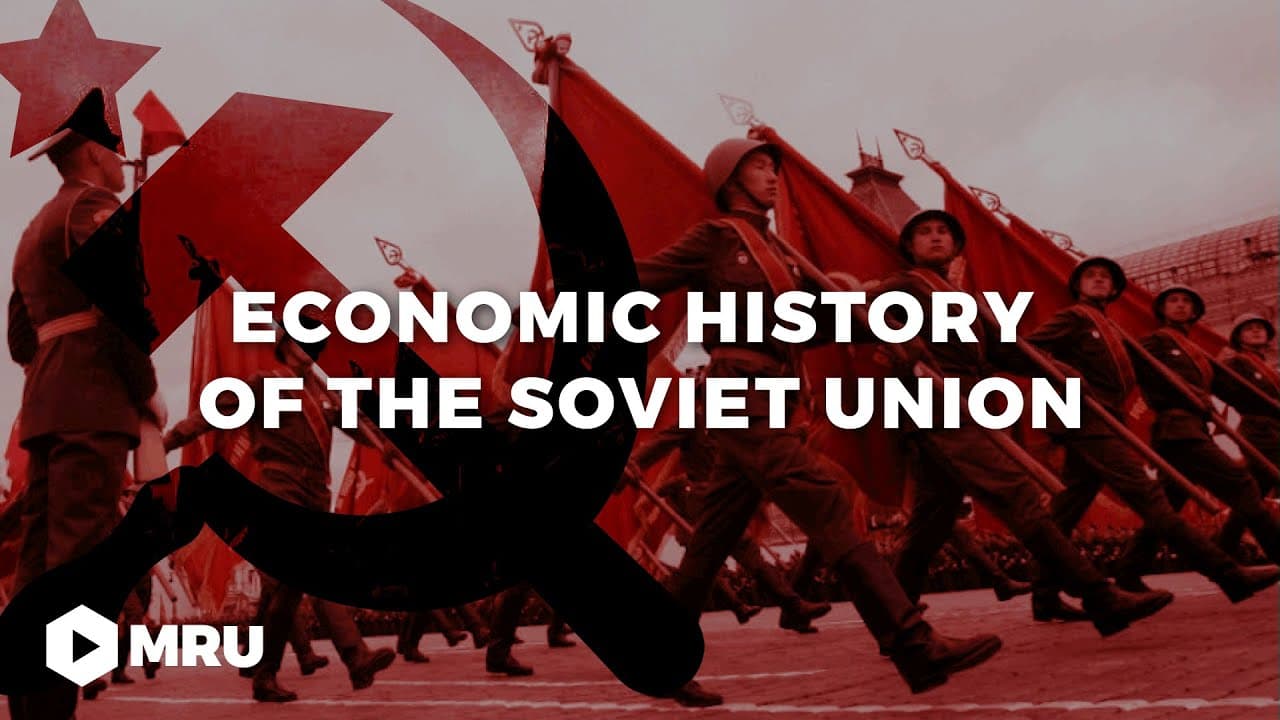
Stalin the Moderate
TL;DR
Stalin initially held moderate views on collectivization and economic policy.
Transcript
an overview of what collectivization was and what the results were now Stalin is today obviously considered quite extreme stalinism is considered a very extreme policy and it's assumed that Stalin from the beginning wanted to force collectivization and did not mind being a tyrant in order to achieve what he wanted to achieve which many assume is po... Read More
Key Insights
- Stalin is often perceived as an extreme leader, but in 1928-1929, his views were considered moderate within the Soviet political landscape.
- Stalin criticized Bukharin's free-market ideas as too capitalist, advocating for a balanced approach between free markets and state regulation.
- Stalin's moderate stance involved voluntary collectivization, opposing forced collectivization advocated by more extreme factions.
- He supported a controlled market within the New Economic Policy, opposing both extreme socialism and unrestricted capitalism.
- Stalin and Bukharin had similar views on collectivization and markets, differing mainly on how to manage peasant involvement.
- Stalin believed that with proper state supervision, the war communism experiment could be successfully repeated.
- By 1928, Stalin felt the state was strong enough to guide peasants toward collectivization without coercion.
- Historians suggest that Stalin's later coercive policies were driven by necessity and peasant resistance, not initial intent.
Install to Summarize YouTube Videos and Get Transcripts
Explore YouTube Video Summarizer or Get YouTube Transcript Extractor
Questions & Answers
Q: What was Stalin's initial stance on collectivization?
Stalin initially advocated for a moderate approach to collectivization, suggesting that it should be voluntary and not forced. He believed that peasants should join the collectivization movement willingly, with the state providing supervision to ensure successful implementation. This stance contrasted with more extreme views that supported compulsory collectivization.
Q: How did Stalin's views compare to Bukharin's?
Stalin and Bukharin shared similar views on the need for collectivization and a regulated market, but differed in their approach to peasant involvement. While Stalin believed in state supervision to guide peasants, Bukharin was concerned about the state's ability to encourage voluntary participation, fearing it was too weak to succeed without coercion.
Q: What economic policy did Stalin support?
Stalin supported the New Economic Policy (NEP), advocating for a controlled market where the state played a regulatory role. He opposed both extreme socialism, which demanded full socialization, and unfettered capitalism, which allowed complete market freedom. His approach sought a middle path, balancing market dynamics with state intervention.
Q: Why did Stalin oppose Bukharin's free-market ideas?
Stalin criticized Bukharin's advocacy of a free market as overly capitalist, arguing it was as harmful to the New Economic Policy as extreme socialist measures. He believed that unrestricted market freedom would undermine state control and stability, advocating instead for a regulated market with limited price movement to maintain economic balance.
Q: What did Stalin propose regarding state supervision of peasants?
Stalin proposed that with sufficient state supervision, the war communism experiment could be repeated successfully. He believed that the state could guide peasants in making the right decisions, ensuring the success of collectivization efforts without resorting to coercion, given the state's increased strength by 1928 compared to earlier periods.
Q: How did Stalin's policies evolve over time?
Stalin's policies evolved from an initial moderate stance to more coercive measures due to practical challenges and peasant resistance. Historians suggest that his later use of state power to enforce collectivization was driven by necessity rather than original intent, as voluntary participation proved difficult to achieve under existing conditions.
Q: What was the main difference between Stalin and Bukharin's approach to peasants?
The main difference between Stalin and Bukharin's approach lay in their strategies for engaging peasants in collectivization. Stalin believed in guiding peasants through state supervision, while Bukharin doubted the state's ability to encourage voluntary participation, fearing that coercion might become necessary due to the state's perceived weakness.
Q: Why do historians believe Stalin used coercion later on?
Historians believe that Stalin resorted to coercion later due to the practical challenges of implementing voluntary collectivization. The resistance from peasants and the need for expedient solutions led Stalin to use the state's power to enforce policies. This shift was seen as a response to the difficulties encountered, rather than his original plan.
Summary & Key Takeaways
-
In the late 1920s, Stalin's economic and collectivization policies were seen as moderate, advocating a balanced approach between free markets and state intervention. He opposed both extreme socialism and unrestricted capitalism, aiming for voluntary peasant participation in collectivization.
-
Stalin's views aligned closely with Bukharin's regarding collectivization and market dynamics, with their primary difference being the method of peasant engagement. Stalin believed in state supervision to guide peasants, while Bukharin doubted the state's strength to do so.
-
Historians argue that Stalin's eventual use of coercion was a pragmatic response to peasant resistance, rather than his original intention. His moderate stance initially focused on voluntary collectivization and balanced economic policy within the New Economic Policy framework.
Read in Other Languages (beta)
Share This Summary 📚
Summarize YouTube Videos and Get Video Transcripts with 1-Click
Try YouTube Summary with ChatGPT & Claude or YouTube Transcript Generator
Explore More Summaries from Marginal Revolution University 📚

Summarize YouTube Videos and Get Video Transcripts with 1-Click
Try YouTube Summary with ChatGPT & Claude or YouTube Transcript Generator