Antlers: The Secret to Deer's Cancer-Fighting Superpowers
TL;DR
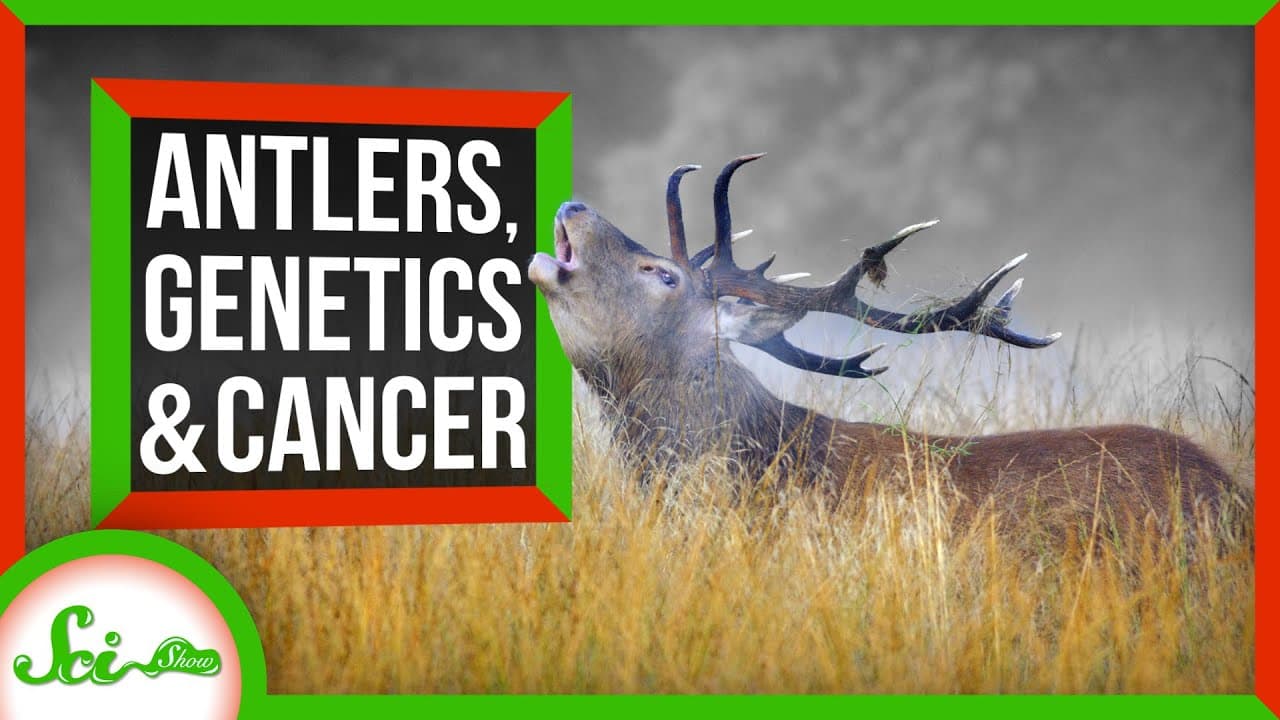
Deer, moose, and elk have antlers that grow incredibly fast and can regenerate completely. Despite this rapid cell division, they actually get cancer less frequently than other mammals. A 2019 genome study revealed genetic changes in the deer DNA that explain their ability to grow antlers quickly without developing cancer.
Transcript
the antlers of deer moose and elk grow ridiculously fast uniquely fast actually among mammals they're the only body parts that can regenerate completely and they do regrowing year after year from just a small stump so you would think with all those cells whose job is to divide really fast that animals in the deer family would get cancer more often ... Read More
Key Insights
- 💗 Antlers of deer, moose, and elk are unique among mammals for their ability to regenerate completely and grow rapidly.
- 💨 Despite fast cell division in antler growth, deer have lower cancer rates compared to other mammals.
- 🦌 Genetic changes in deer DNA, including alterations in the p53 gene and additional tumor suppressor genes, explain how they prevent the rapid cell division from causing cancer.
- 😘 Elephants also have low cancer rates due to extra copies of the p53 gene in their DNA.
- ☠️ The genetic changes in antler cells resemble those found in bone cancer cells.
- 😑 Antler cells express genes associated with cell growth and division, including the Foss gene, which increases the risk of cancer.
- 🦌 Deer have evolved mechanisms to support the p53 gene and other tumor suppressor genes that prevent cancer development.
Install to Summarize YouTube Videos and Get Transcripts
Explore YouTube Video Summarizer or Get YouTube Transcript Extractor
Questions & Answers
Q: Why do deer in the deer family get cancer less frequently than other mammals?
The 2019 genome study revealed genetic changes in deer DNA that promote fast antler growth while suppressing cancer development. These genetic changes involve tumor suppressor genes and alterations in the p53 gene.
Q: How do antler cells resemble tumors?
Antler cells express genes associated with cell growth and division, similar to bone cancer cells. However, deer have genetic changes, including additional tumor suppressor genes and support for the p53 gene, which prevent the rapid cell division from turning into cancer.
Q: Why do elephants also have low cancer rates?
Similar to deer, elephants have extra copies of the p53 gene in their DNA, which acts as a tumor suppressor. This extra protection against cancer is believed to contribute to their lower cancer rates.
Q: What are the mechanisms that allow antler cells to grow rapidly without becoming cancerous?
Deer's genetic changes involve the p53 gene and other tumor suppressor genes that help control and regulate cell division. These mechanisms maintain tight control over the rapid growth of antler cells to prevent cancer formation.
Summary & Key Takeaways
-
Deer, moose, and elk have antlers that regrow from small stumps every year, a unique ability among mammals.
-
Despite antler cells growing and dividing rapidly, which is typically associated with cancer, deer have lower cancer rates than other mammals.
-
A 2019 genome study found genetic changes in deer DNA that allow for fast antler growth while suppressing cancer development.
Read in Other Languages (beta)
Share This Summary 📚
Summarize YouTube Videos and Get Video Transcripts with 1-Click
Try YouTube Summary with ChatGPT & Claude or YouTube Transcript Generator
Explore More Summaries from SciShow 📚
Summarize YouTube Videos and Get Video Transcripts with 1-Click
Try YouTube Summary with ChatGPT & Claude or YouTube Transcript Generator