Most F*cked Up Food We've Ever Eaten - @BeerBiceps and @BETZMANN Discuss
TL;DR
The discussion explores various unusual delicacies and food experiences from around the world.
Transcript
they say podcasts are going to replace books i don't know about that but i do think trs clips will assist your learning process and of all the places you've traveled to in the world what's the weirdest or worst thing you've eaten in your life where it's like before i ate a lot of [ __ ] in cambodia i ate a tarantula wow which was like the size of t... Read More
Key Insights
- 🌐 Global culinary diversity includes a variety of unusual delicacies, each with unique flavors and preparation methods.
- 😅 Eating insects, such as grasshoppers and crickets, is becoming more accepted and recognized for its nutritional and environmental benefits.
- 😋 Cultural practices surrounding food reflect local customs, traditions, and attitudes towards adventurous eating.
- 😋 Unique food experiences can provoke strong sensory reactions, both positive and negative, highlighting the diversity of human taste preferences.
- 🥵 There is a growing interest in organ meats in certain cultures, driven by historical culinary practices and a desire for authentic eating experiences.
- 😋 The experience of dining on live seafood raises questions about ethics, safety, and personal comfort in food choices.
- 😅 Personal stories of adventurous eating reveal the storytelling potential of food, connecting people through shared experiences.
Install to Summarize YouTube Videos and Get Transcripts
Explore YouTube Video Summarizer or Get YouTube Transcript Extractor
Questions & Answers
Q: What was the most surprising food experience shared in the conversation?
The most surprising food experience mentioned involved eating a deep-fried tarantula in Cambodia. It was unexpectedly likened to burnt toast in flavor, highlighting the unusual choices people make when seeking out unique culinary experiences in different cultures.
Q: How does the taste of crocodile compare to more common meats?
Crocodile meat, according to the speakers, tastes surprisingly similar to chicken. This resemblance allows adventurous eaters to experience something new while still being comforted by familiar flavors, which can be particularly appealing in a culinary experience.
Q: Why do some cultures eat insects, and what benefits were mentioned?
Insects are consumed in various cultures due to their high protein content and environmental benefits. The conversation suggests that eating bugs can be a more sustainable option for protein compared to traditional livestock, making it both a nutritional and eco-friendly choice.
Q: What was the peculiar discussion around eating organ meats?
The organ meats discussed, particularly goat organs, offered strong and distinctive flavors. Descriptions focused on the gaminess of the taste, emphasizing that adventurous eaters are often aware that they are consuming an animal's internal organs, which adds to the unique experience.
Q: What culinary adventure did one speaker recount from their time in Mumbai?
One speaker recounted trying gurda kapoor, which consists of goat organs such as the kidneys and testicles, in Mumbai. They vividly described the texture and flavor as reminiscent of boiled eggs with an intensely gamey taste, making it a unique and slightly shocking culinary adventure.
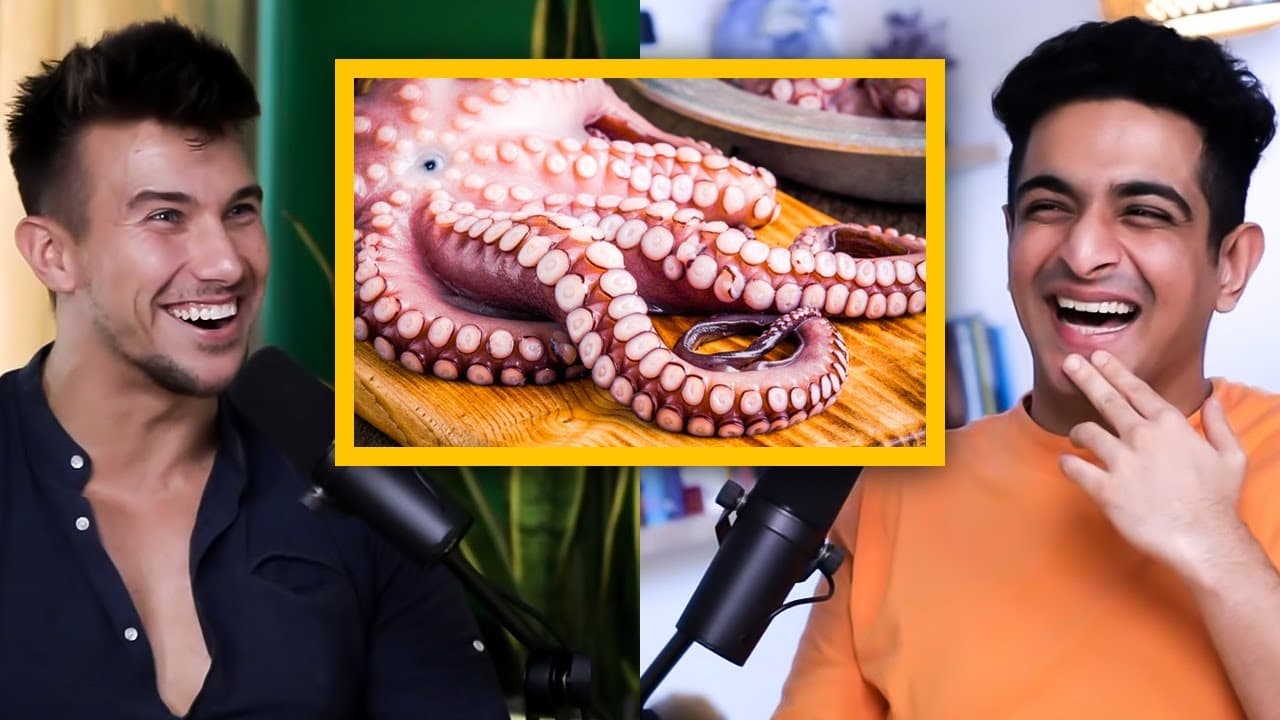
Q: How did the speakers describe the experience of eating live octopus?
The experience of eating live octopus was portrayed as both thrilling and daunting, with the creature's tentacles still moving. The speakers noted the importance of chewing properly to avoid choking, underscoring the adventurous spirit that characterizes such dining experiences.
Q: What cultural perceptions did the speakers touch on regarding weird food consumption?
The conversation highlighted that cultures have different thresholds for what is considered 'weird' food. While some might see eating insects or organ meats as culinary adventurism, others may view it with aversion, reflecting the diverse attitudes toward food across societies.
Q: Why do some foods, like live larvae, draw attention on social media?
Foods like live larvae have gained popularity on social media, particularly platforms like TikTok, due to their shock value and entertainment potential. These unusual eating experiences draw large audiences and engagement, showcasing the cultural fascination with extreme culinary challenges.
Summary & Key Takeaways
-
The content features a conversation about trying unusual foods from different countries, highlighting personal experiences with deep-fried insects, exotic animals, and other unique dishes.
-
The speakers share their reactions and descriptions of flavors, textures, and overall experiences while trying foods such as tarantula, snake, crocodile, and goat organs.
-
They discuss the cultural significance of these foods, addressing how adventurous eating can vary greatly across different regions and what it reveals about local culinary practices.
Read in Other Languages (beta)
Share This Summary 📚
Summarize YouTube Videos and Get Video Transcripts with 1-Click
Try YouTube Summary with ChatGPT & Claude or YouTube Transcript Generator
Explore More Summaries from TRS Clips 📚





Summarize YouTube Videos and Get Video Transcripts with 1-Click
Try YouTube Summary with ChatGPT & Claude or YouTube Transcript Generator