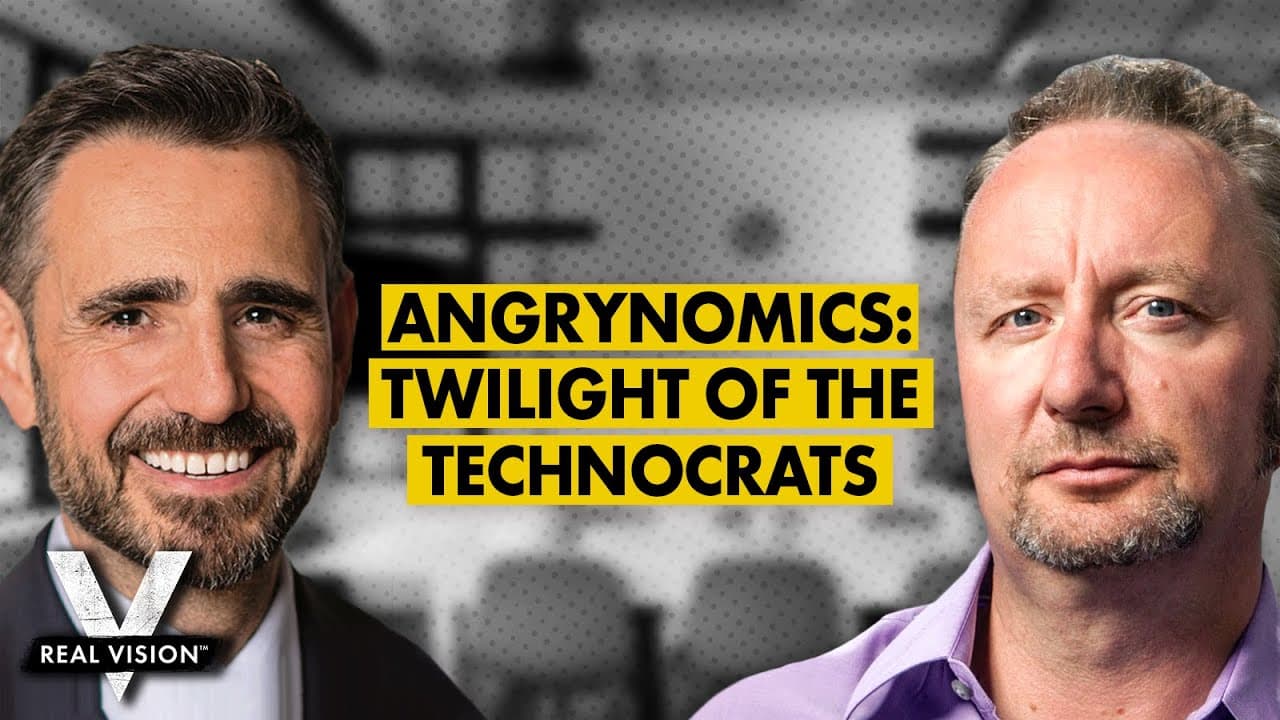
The Economics of Anger: How We Got a Rigged System (w/ Mark Blyth and Eric Lonergan)
TL;DR
"The book 'Angrynomics' explores the link between political economy and anger, offering simple and innovative solutions to address wealth inequality and economic uncertainty."
Transcript
MARK BLYTH: Hello, my name is Mark Blyth. I'm a Professor of Political Economy at Brown University. I have with me today Eric Lonergan, who is a hedge fund manager for M&G in London. The first question you should be asking yourself is what do these two have in common? The answer is we wrote a book called, Angrynomics, which seems to be getting a fa... Read More
Key Insights
- 💀 The book explores the role of anger in political economy and the ways in which it can be weaponized for political gain.
- 💀 Wealth inequality and economic uncertainty are major sources of anger and discontent in society.
- 🤑 The authors propose innovative solutions such as citizens' wealth funds, digital dividends, dual interest rates, and helicopter money to address these issues.
Install to Summarize YouTube Videos and Get Transcripts
Explore YouTube Video Summarizer or Get YouTube Transcript Extractor
Questions & Answers
Q: How does the book "Angrynomics" address the issue of wealth inequality?
The authors propose the implementation of citizens' wealth funds, where the government issues long-term bonds and invests the funds in a diversified portfolio. The returns generated by these investments would be distributed to the population, reducing wealth inequality.
Q: What is the concept of dual interest rates discussed in the book?
Dual interest rates involve lowering the interest rate on loans while keeping the interest rate on deposits unchanged or raising it. This would provide a stimulus to the private sector by increasing disposable income for borrowers and savers.
Q: How does the book suggest addressing the issue of corporate tax avoidance?
The authors propose the idea of data dividends, where individuals have the option to sell their personal data to a national or sub-national data trust. This would provide a revenue stream for the trust and create a more equitable transaction between individuals and digital giants.
Q: What is the significance of the concept of helicopter money?
Helicopter money refers to direct funding to households in times of crisis. The authors argue that this approach is more efficient and effective than quantitative easing (QE), which primarily benefits asset prices. Helicopter money can be used to stimulate the economy and provide financial relief to individuals.
Summary & Key Takeaways
-
"Angrynomics" is a book written by Mark Blyth and Eric Lonergan that discusses the intersection of political economy and anger.
-
The book explores the relationship between public and private anger, the weaponization of politics, and the importance of addressing wealth inequality and economic uncertainty.
-
The authors propose four key solutions: citizens' wealth funds, digital dividends, dual interest rates, and helicopter money.
Read in Other Languages (beta)
Share This Summary 📚
Summarize YouTube Videos and Get Video Transcripts with 1-Click
Try YouTube Summary with ChatGPT & Claude or YouTube Transcript Generator
Explore More Summaries from Real Vision 📚

Summarize YouTube Videos and Get Video Transcripts with 1-Click
Try YouTube Summary with ChatGPT & Claude or YouTube Transcript Generator