Why Does Malaysia Reverse Key Policies?
TL;DR
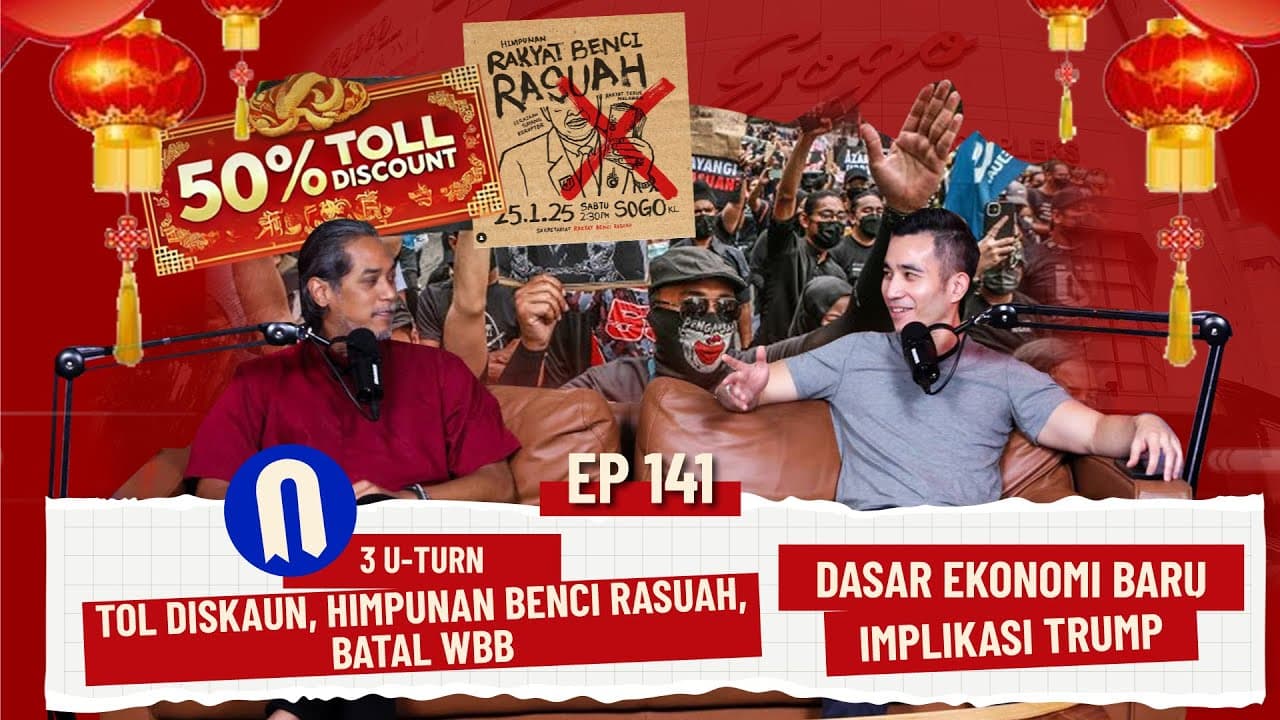
Malaysia's government recently reversed three significant decisions: toll discounts during festive seasons, approval for an anti-corruption rally, and a new working hour policy for health workers. These U-turns highlight challenges in policy consistency and decision-making, influenced by public criticism and internal cabinet dynamics, raising questions about governance effectiveness and political strategy.
Transcript
As a minister, the last thing you want is for the Prime Minister to basically change your decision. It looks bad, it looks like you didn't get it right. So, when that happens and perhaps in the current cabinet, the difference in stature and experience between Dato' Seri Anwar Ibrahim and the majority of the cabinet Assalamualaikum a... Read More
Key Insights
- Malaysia's government reversed a decision to end toll discounts during festive seasons after public backlash, highlighting challenges in fiscal responsibility versus populist measures.
- The anti-corruption rally was initially restricted by the government but later approved, raising questions about consistency in decision-making and freedom of assembly.
- A new working hour policy for healthcare workers was canceled following criticism from medical professionals, indicating a disconnect between policymakers and ground realities.
- The New Economic Policy (NEP) for Bumiputeras is debated, with Tun Mahathir suggesting it cannot last forever, despite its role in improving socio-economic conditions for Malays.
- The NEP's success is seen in increased Bumiputera representation in professional fields, but its effectiveness in entrepreneurship and equity ownership remains questioned.
- Donald Trump's presidency is marked by unconventional approaches, focusing on American interests and creating uncertainty in international relations.
- Trump's disinterest in Southeast Asia could lead to a power vacuum, potentially filled by China, affecting regional geopolitics.
- Elon Musk's influence in global politics, including his support for extreme parties, raises concerns about the impact of non-political figures on democratic processes.
Install to Summarize YouTube Videos and Get Transcripts
Explore YouTube Video Summarizer or Get YouTube Transcript Extractor
Questions & Answers
Q: Why did Malaysia reverse the toll discount decision?
Malaysia reversed its decision to end toll discounts during festive seasons due to public backlash. Initially, the government aimed to demonstrate fiscal responsibility by eliminating these discounts, but criticism from the public and the tradition of free tolls during festive times led to a reversal. The government decided to offer a 50% discount, balancing public expectation with financial considerations.
Q: What was the controversy around the anti-corruption rally in Malaysia?
The anti-corruption rally in Malaysia faced initial restrictions from the government, citing legal issues with the location. However, after public and political criticism, the rally was approved, reflecting inconsistencies in the government's stance on freedom of assembly. This decision reversal highlighted concerns about the government's commitment to democratic principles and the influence of public opinion on policy decisions.
Q: What led to the cancellation of the new working hour policy for healthcare workers?
The new working hour policy for healthcare workers was canceled after significant backlash from the medical community. The policy intended to reduce working hours but was criticized for potentially lowering allowances without addressing workload issues. The decision highlighted a disconnect between policymakers and healthcare professionals, leading to a cabinet intervention to reassess the policy's feasibility and impact.
Q: What is the debate around Malaysia's New Economic Policy (NEP)?
Malaysia's New Economic Policy (NEP) is debated for its role in improving socio-economic conditions for Bumiputeras but criticized for not achieving its equity ownership targets. Tun Mahathir suggested that the NEP cannot last indefinitely, prompting discussions on its effectiveness, the need for policy modernization, and the balance between protection and competitiveness in advancing Bumiputera economic interests.
Q: How has the NEP impacted Bumiputera representation in Malaysia?
The NEP has significantly increased Bumiputera representation in professional fields, such as accounting and engineering, contributing to social mobility and economic advancement. However, its impact on entrepreneurship and equity ownership remains limited, prompting debates on whether the policy needs modernization to address current economic challenges and foster competitiveness among Bumiputeras.
Q: What are the implications of Donald Trump's presidency on international relations?
Donald Trump's presidency is characterized by a focus on American interests, creating uncertainty in international relations. His unconventional approach and disinterest in multilateral commitments have led to concerns about a power vacuum, particularly in Southeast Asia. This shift could allow other powers, like China, to assume a more significant global leadership role, impacting regional geopolitics.
Q: How might Trump's disinterest in Southeast Asia affect the region?
Trump's disinterest in Southeast Asia could lead to a power vacuum, potentially filled by China, affecting regional geopolitics. As the U.S. shows less interest in ASEAN and multilateral commitments, China could increase its influence through economic and diplomatic initiatives. This shift may alter the balance of power in the region, impacting trade, security, and political dynamics.
Q: What concerns arise from Elon Musk's influence in global politics?
Elon Musk's influence in global politics raises concerns about the impact of non-political figures on democratic processes. His support for extreme parties and involvement in political discourse can disrupt traditional political dynamics, challenging accountability and transparency. Musk's actions highlight the growing role of influential individuals in shaping political landscapes, raising questions about their motivations and the implications for democracy.
Summary & Key Takeaways
-
Malaysia's government reversed its decision to end toll discounts for festive seasons after public backlash, highlighting the tension between fiscal responsibility and populist measures. The decision-making process in the cabinet appears inconsistent, raising concerns over governance effectiveness.
-
An anti-corruption rally initially faced restrictions but was later approved, reflecting inconsistencies in government policies regarding freedom of assembly. This decision reversal has drawn criticism from both organizers and political figures, questioning the government's commitment to democratic principles.
-
A new working hour policy for healthcare workers was canceled after backlash from the medical community, highlighting a disconnect between policymakers and the realities faced by professionals. The policy aimed to reduce working hours but was criticized for potentially lowering allowances and not addressing core issues.
Read in Other Languages (beta)
Share This Summary 📚
Summarize YouTube Videos and Get Video Transcripts with 1-Click
Try YouTube Summary with ChatGPT & Claude or YouTube Transcript Generator
Explore More Summaries from Keluar Sekejap 📚

Summarize YouTube Videos and Get Video Transcripts with 1-Click
Try YouTube Summary with ChatGPT & Claude or YouTube Transcript Generator