2.5 External Influences in 17 minutes! (Edexcel A Level Business Recap)
TL;DR
Overview of external factors affecting business operations.
Transcript
hi everyone welcome to 2.5 the final video in the theme two Recaps again this isn't comprehensive look 2.5.1 is an absolutely huge topic and so this is just going to kind of touch through the key terms it's not going to go into huge levels of depth there's so much further you could go but it hopefully will offer a recap and ... Read More
Key Insights
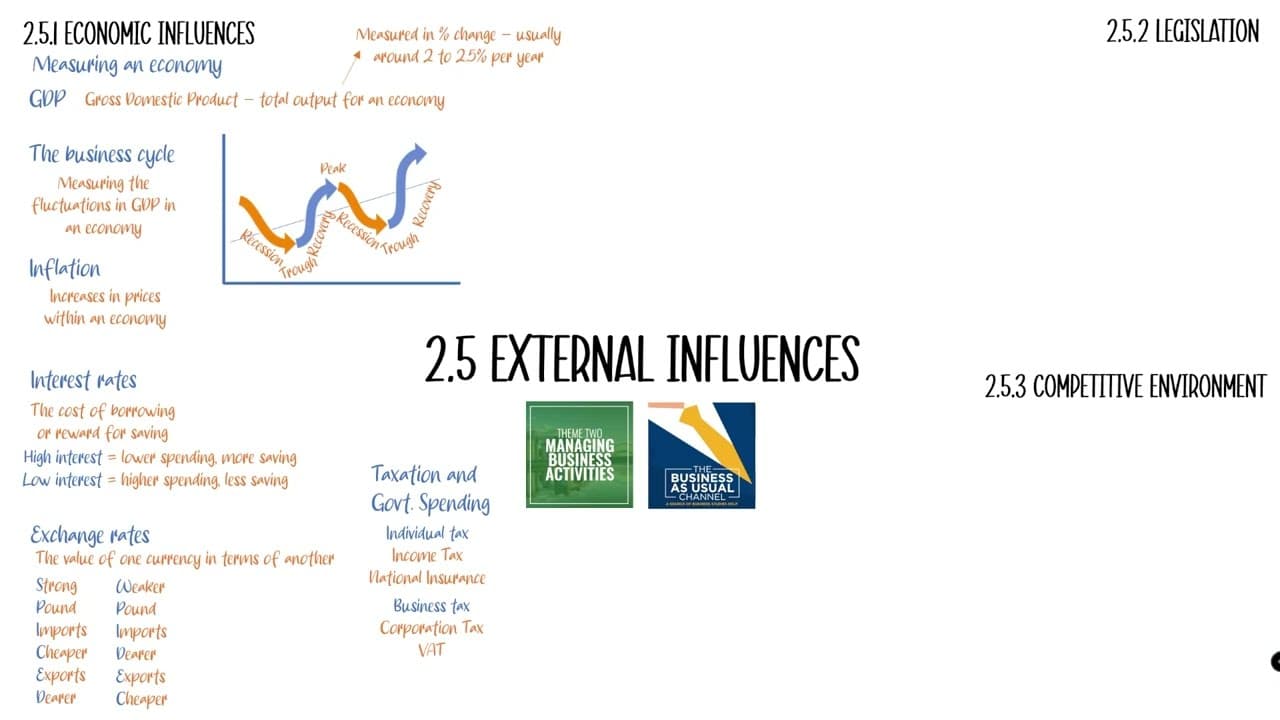
- GDP is a key economic indicator, measuring total output and economic performance, with typical UK growth between 2-2.5% annually.
- The business cycle involves fluctuations in GDP, with phases of recession, recovery, and peak affecting consumer confidence and business revenues.
- Inflation measures price increases, impacting consumer spending power and business costs, often calculated through the Consumer Price Index.
- Interest rates influence borrowing and saving behaviors, with lower rates encouraging spending and higher rates promoting saving.
- Exchange rates affect import and export costs, with strong currency making imports cheaper and exports more expensive.
- Taxation funds public services, with various taxes like income and corporation tax impacting both individuals and businesses.
- Legislation protects employees and consumers, with laws on equality, minimum wage, and consumer rights affecting business operations.
- Competitive environments vary from monopolies to oligopolies, influencing market dynamics and business strategies.
Install to Summarize YouTube Videos and Get Transcripts
Explore YouTube Video Summarizer or Get YouTube Transcript Extractor
Questions & Answers
Q: What is GDP and why is it important?
GDP, or Gross Domestic Product, measures a country's total economic output. It is crucial because it indicates economic health and growth, guiding business and government decisions. Typically, GDP growth in the UK ranges from 2% to 2.5% annually, reflecting increased productivity and workforce expansion.
Q: How does the business cycle affect businesses?
The business cycle, with phases like recession and recovery, influences consumer confidence and spending. During recessions, reduced spending lowers business revenues, prompting cost-cutting measures like layoffs. Conversely, recovery phases boost confidence and spending, aiding revenue growth and economic stability.
Q: How do interest rates impact consumer behavior?
Interest rates affect borrowing costs and saving rewards. High rates discourage borrowing and encourage saving, reducing consumer spending. Conversely, low rates make borrowing cheaper and saving less rewarding, boosting spending. Governments adjust rates to manage economic growth and inflation, influencing consumer financial decisions.
Q: What are the effects of exchange rate fluctuations?
Exchange rates determine currency value in international trade. A strong currency makes imports cheaper and exports pricier, affecting trade balance. Conversely, a weak currency raises import costs and lowers export prices, benefiting exporters. Businesses must navigate these fluctuations to optimize international trade strategies.
Q: How does legislation impact business operations?
Legislation, covering areas like employee protection and consumer rights, influences business costs and practices. Compliance with laws on equality, minimum wage, and data protection ensures fair treatment and legal adherence. While increasing operational costs, legislation enhances reputation and employee motivation, benefiting long-term business success.
Q: What role does taxation play in the economy?
Taxation funds public services like healthcare and education, crucial for societal welfare. It includes individual taxes like income tax and business taxes like corporation tax. Effective tax policies ensure government revenue, supporting infrastructure and services vital for economic stability and growth.
Q: What is the significance of competitive environments?
Competitive environments, ranging from monopolies to oligopolies, shape market dynamics and business strategies. Understanding market size and competition helps businesses position themselves effectively. Even small market shares in large markets can be lucrative, influencing strategic decisions and competitive advantages.
Q: How does inflation affect businesses and consumers?
Inflation, the rate of price increases, erodes consumer purchasing power and raises business costs. Measured through indices like the Consumer Price Index, it affects spending habits and cost structures. Businesses must manage inflation impacts through pricing strategies and cost controls to maintain profitability and competitiveness.
Summary & Key Takeaways
-
This video provides a brief overview of external influences affecting businesses, focusing on economic indicators like GDP, inflation, and interest rates. It highlights the significance of the business cycle and how it impacts consumer confidence and business revenues.
-
Legislation plays a crucial role in protecting employees and consumers, with laws on equality, minimum wage, and consumer rights directly affecting business costs and operations. Environmental protection and competition law are also discussed as key legislative areas.
-
The competitive environment is explored, examining different market structures like monopolies and oligopolies. The video emphasizes understanding market size and share, as even small percentages in large markets can be highly profitable for businesses.
Read in Other Languages (beta)
Share This Summary 📚
Summarize YouTube Videos and Get Video Transcripts with 1-Click
Try YouTube Summary with ChatGPT & Claude or YouTube Transcript Generator