8.2.2 Carry-select Adders
TL;DR
Ripple-carry adders can cause performance bottlenecks, but carry-select adders can significantly reduce propagation delay and improve circuit performance.
Transcript
The most straightforward way to improve performance is to reduce the propagation delay of a circuit. Let’s look at a perennial performance bottleneck: the ripple-carry adder. To fix it, we first have to figure out the path from inputs to outputs that has the largest propagation delay, i.e., the path that’s determining the overall t_PD. In this case... Read More
Key Insights
- 🌥️ Propagation delay can be reduced by identifying and optimizing the path with the largest delay.
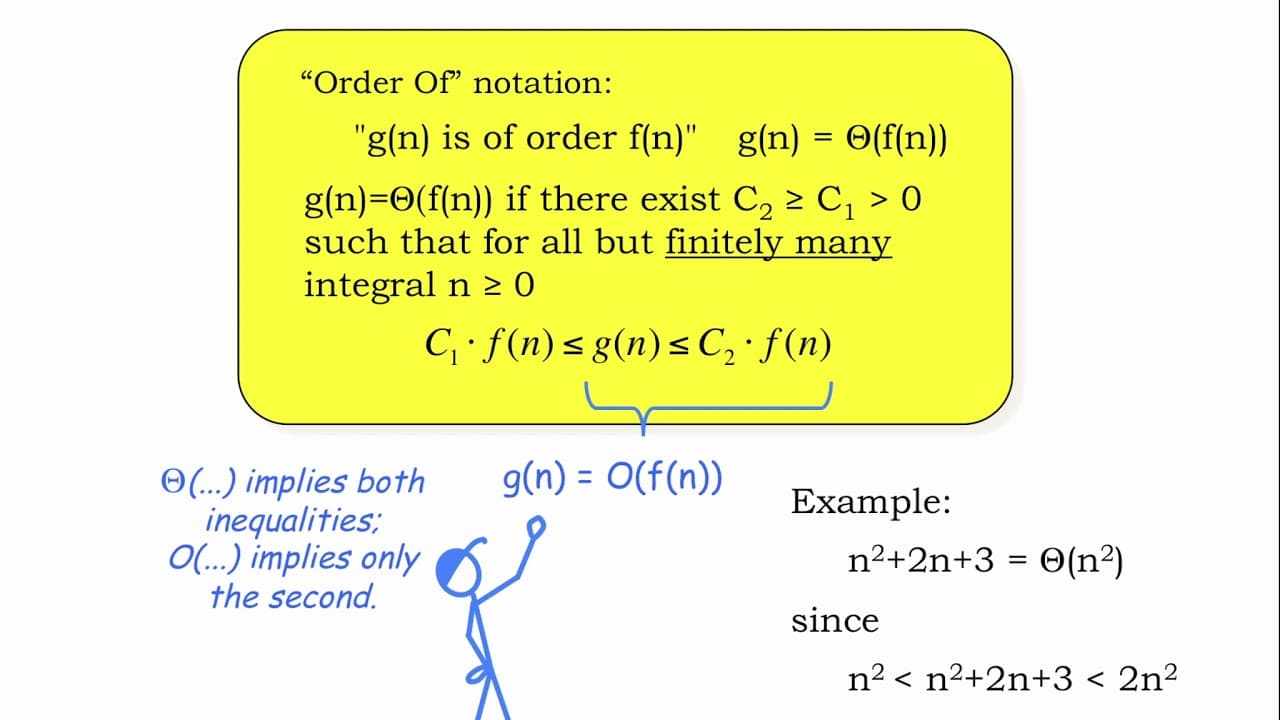
- 🪈 The order-of notation, such as order N or order log(N), helps understand the growth and dominance of latency in circuit designs.
- 🐎 Carry-select adders offer a performance-size tradeoff, improving speed at the cost of increased circuitry.
- 🪜 Careful engineering and buffering can further optimize the performance of carry-select adders.
Install to Summarize YouTube Videos and Get Transcripts
Explore YouTube Video Summarizer or Get YouTube Transcript Extractor
Questions & Answers
Q: What is the key performance bottleneck in ripple-carry adders?
The long carry chain following the carry-in to carry-out path has the largest propagation delay and determines the overall latency of the circuit.
Q: How does the latency of a carry-select adder compare to a ripple-carry adder?
The latency of a carry-select adder is approximately half that of a ripple-carry adder, providing a significant improvement in performance.
Q: How can the latency of an adder be further reduced using the carry-select strategy?
By recursively applying the carry-select strategy, the latency of an adder can be reduced to order log(N), where N is the size of the operands.
Q: What is the tradeoff when using carry-select adders?
Carry-select adders offer improved performance but require approximately twice as much circuitry compared to ripple-carry adders.
Summary & Key Takeaways
-
Ripple-carry adders have a performance bottleneck caused by a long carry chain.
-
The latency of a carry-select adder is approximately half that of a ripple-carry adder, achieved by parallelizing the high and low halves of the adder.
-
By recursively applying the carry-select strategy, the latency of the adder can be further reduced to order log(N).
Read in Other Languages (beta)
Share This Summary 📚
Summarize YouTube Videos and Get Video Transcripts with 1-Click
Try YouTube Summary with ChatGPT & Claude or YouTube Transcript Generator
Explore More Summaries from MIT OpenCourseWare 📚



Summarize YouTube Videos and Get Video Transcripts with 1-Click
Try YouTube Summary with ChatGPT & Claude or YouTube Transcript Generator