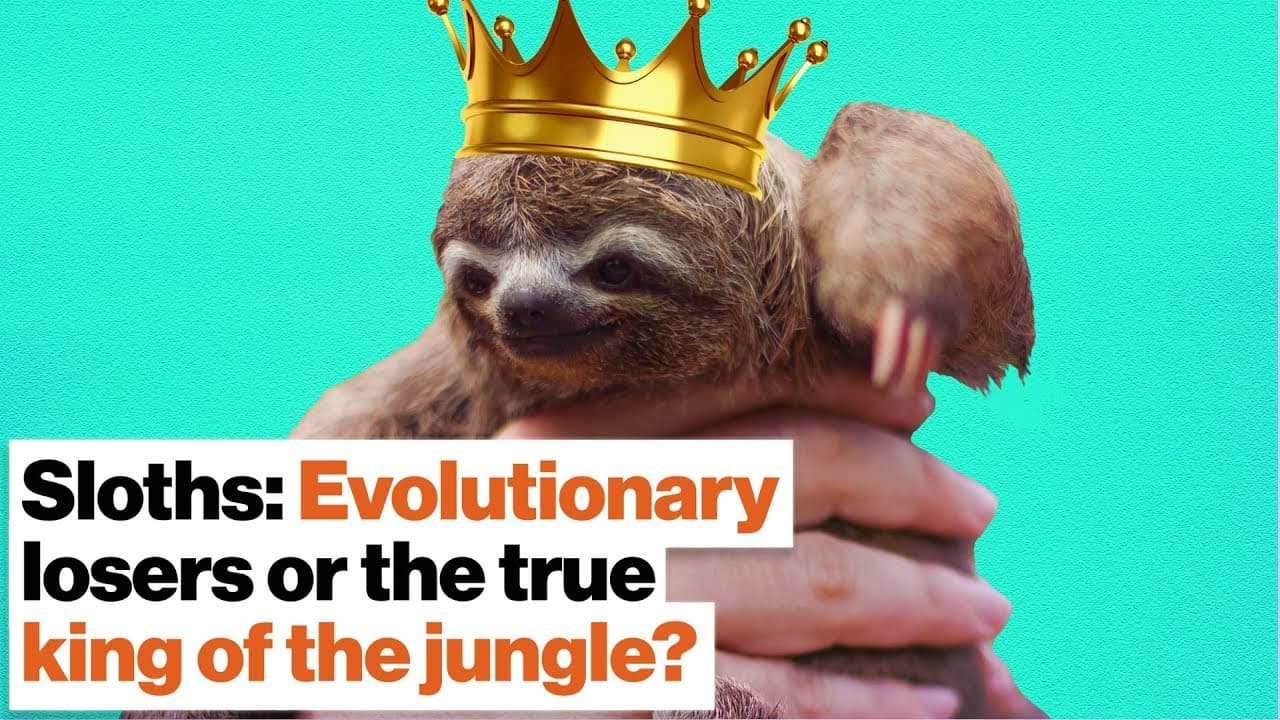
Sloths: Evolutionary losers or the true king of the jungle? | Lucy Cooke | Big Think
TL;DR
Sloths, often misunderstood as lazy and useless, are actually highly successful and efficient creatures in the jungle.
Transcript
So it’s no secret that I’ve got a soft spot for sloths. I founded the Sloth Appreciation Society; our motto? “Being fast is overrated.” I think the sloth is the true king of the jungle. But its reputation has been besmirched for centuries. Every since it was first discovered people have misunderstood sloths. The first explorers that went to the New... Read More
Key Insights
- 🥺 Sloths are often misunderstood due to their slow nature, leading to misconceptions about their importance.
- 🦥 Contrary to popular belief, sloths are highly successful creatures in the jungle, making up a significant portion of the mammalian biomass in some forests.
- 🙃 The sloth's upside-down lifestyle is energy-efficient, allowing them to conserve energy while hanging from trees.
- 🫵 Early explorers viewed sloths incorrectly, turning them upright and misinterpreting their natural behavior.
- 🦻 Sloths' slow movements make them difficult to notice by predators like the Harpy eagle, aiding in their survival in the jungle.
- 🖤 The misconception of sloths being lazy and useless stems from a lack of understanding of their unique adaptations and lifestyle.
- 👻 Sloths' core control and slow movements are seen as remarkable, allowing them to navigate the canopy silently and avoid detection by predators.
Install to Summarize YouTube Videos and Get Transcripts
Explore YouTube Video Summarizer or Get YouTube Transcript Extractor
Questions & Answers
Q: Why have sloths been misunderstood and labeled as losers?
Sloths have been misunderstood due to their slow nature and the wrong perspective of early explorers who saw them out of context, leading to misconceptions about their abilities and importance in the ecosystem.
Q: How do sloths survive in the jungle despite their slow movement?
Sloths are actually successful creatures in the jungle, with their slow movements allowing them to go unnoticed by predators like the Harpy eagle, making them efficient at avoiding danger and thriving in their habitat.
Q: Why is the sloth's upside-down existence considered energy-efficient?
The sloth's upside-down lifestyle requires only around 50% of the muscles needed for an upright existence, making it energy-efficient and allowing them to conserve energy while hanging from trees.
Q: How did early explorers perceive sloths and why did they think of them as useless?
Early explorers saw sloths incorrectly, often turning them upright which led to a pitiful sight of the animal dragging itself along, giving the impression of being useless and reinforcing the misconception.
Summary & Key Takeaways
-
Sloths have been wrongly labeled as evolutionary losers due to their slow nature and misunderstood by early explorers.
-
Contrary to perception, sloths are highly successful creatures, making up a third of the mammalian biomass in some forests.
-
Their upside-down existence is energy-efficient, allowing them to thrive in their environment despite being slow.
Read in Other Languages (beta)
Share This Summary 📚
Summarize YouTube Videos and Get Video Transcripts with 1-Click
Try YouTube Summary with ChatGPT & Claude or YouTube Transcript Generator
Explore More Summaries from Big Think 📚




Summarize YouTube Videos and Get Video Transcripts with 1-Click
Try YouTube Summary with ChatGPT & Claude or YouTube Transcript Generator