Why The Stock Market Is Selling Off... (It’s Not Only Ukraine)
TL;DR
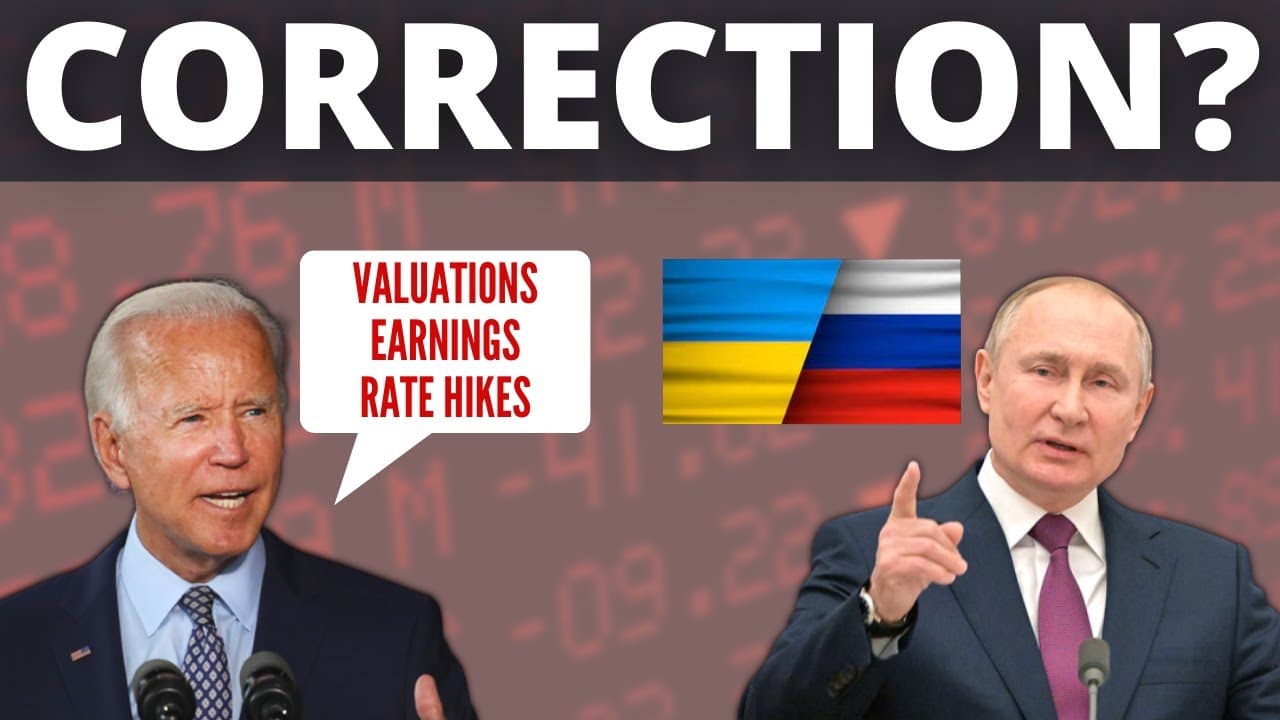
Russia-Ukraine tensions and uncertainties have led to market corrections, with potential economic and market implications.
Transcript
it is fair to say that the past period on markets has really been driven by uncertainty and fear wherever you look there's been significant headwinds that the markets have been moving into we've seen broad-based corrections across the indices many of the leading indices down by 10 to 15 percent of course there are a range of different uncertainties... Read More
Key Insights
- 😨 Uncertainty and fear are driving market corrections, with various factors contributing to the overall volatility.
- 🥺 Economic sanctions and supply chain disruptions could lead to inflationary pressures and impact global growth.
- 🤘 The ongoing earnings season shows signs of underlying economic recovery, but supply chain uncertainties and increased costs pose challenges.
- ☠️ The federal reserve's rate hike cycle and tapering of quantitative easing add to market uncertainties.
- 🤨 Valuation compression and divergent views on market corrections raise questions about the short-term retracement or a broader correction.
- 🏅 Safe havens such as the US dollar, treasury bonds, and gold are sought amid market uncertainties.
- 🇷🇺 The Russia-Ukraine situation is not happening in isolation, with multiple headwinds impacting market conditions.
Install to Summarize YouTube Videos and Get Transcripts
Explore YouTube Video Summarizer or Get YouTube Transcript Extractor
Questions & Answers
Q: What are the main factors contributing to the current market volatility?
The main factors include geopolitical concerns, ongoing earnings season, the federal reserve rate hike cycle, and discussions around valuations.
Q: How are economic sanctions impacting the Russia-Ukraine situation?
Economic sanctions, such as the freezing of the Nord Stream 2 gas pipeline project, can have significant economic implications, affecting energy supplies and potentially leading to rising input costs and inflation.
Q: What are the potential market reactions depending on how the situation evolves?
It is difficult to predict, but market reactions will depend on the intensity and direction of the conflict between Russia and Ukraine. Furthermore, economic sanctions and geopolitical uncertainties will also play a role in shaping market dynamics.
Q: How do past pre-war periods compare to post-conflict periods in terms of market volatility?
Historical data shows that pre-war periods tend to be more volatile and uncertain, with sell-offs and pullbacks in markets. Once conflict is engaged, volatility decreases as the market starts to digest and adapt to the situation.
Summary & Key Takeaways
-
Markets have been driven by uncertainty and fear, leading to broad-based corrections across indices, with many down by 10 to 15 percent.
-
The Russia-Ukraine geopolitical situation has been a top concern, with troops assembling on the border and Russia recognizing separatist regions.
-
Initial economic sanctions have been rolled out, impacting a gas pipeline project and potentially leading to rising input costs and inflation.
Read in Other Languages (beta)
Share This Summary 📚
Summarize YouTube Videos and Get Video Transcripts with 1-Click
Try YouTube Summary with ChatGPT & Claude or YouTube Transcript Generator
Explore More Summaries from ASX Investor 📚





Summarize YouTube Videos and Get Video Transcripts with 1-Click
Try YouTube Summary with ChatGPT & Claude or YouTube Transcript Generator