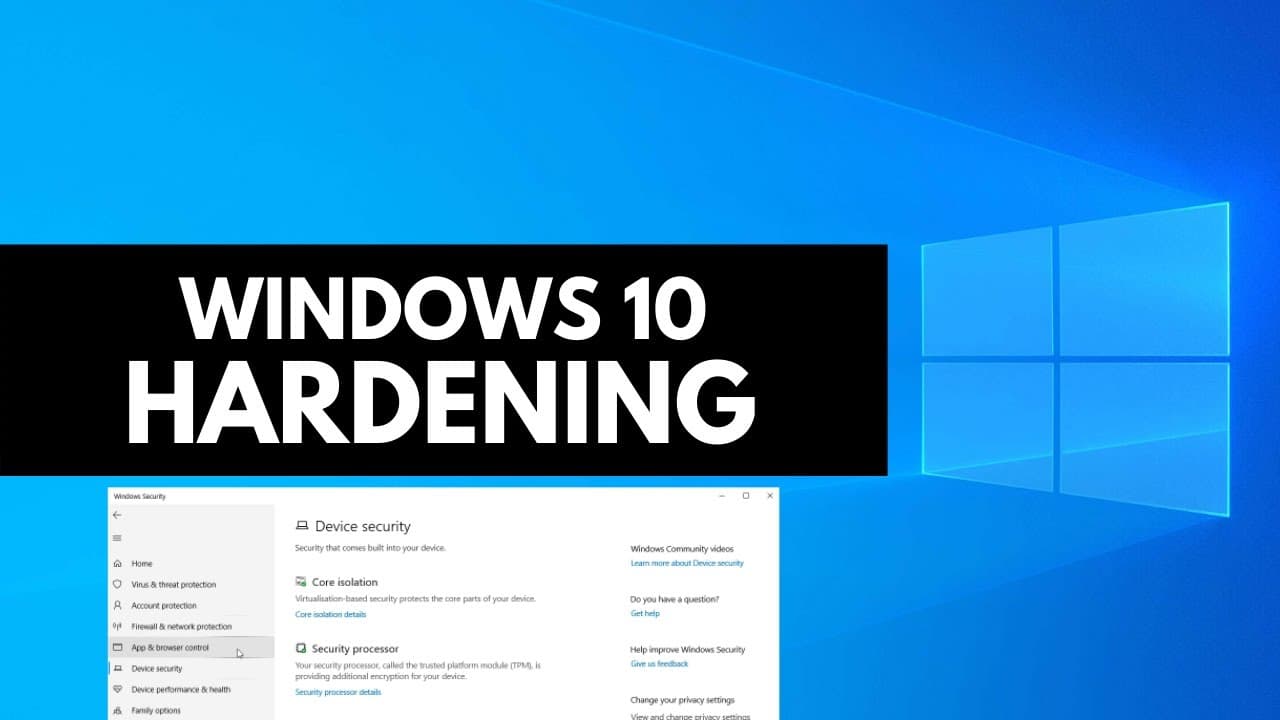
Windows 10 Hardening
TL;DR
Learn how to effectively secure your Windows 10 system without sacrificing usability, by implementing key security measures.
Transcript
hello and welcome to the pc security channel today we'll be talking about windows 10 hardening not specifically windows 10 defender so if you're interested in looking at windows defender particularly i've made a separate video on that configuring it testing it against malware you can check that out using the link in the description but this one is ... Read More
Key Insights
- 👤 The principle of least privilege should be applied not only to user accounts but also to drives and files, protecting against ransomware and unauthorized access.
- 🥳 Regularly installing updates and security patches is crucial to defend against both known and zero-day vulnerabilities.
- 😥 Disabling unnecessary legacy features and programs minimizes the risk of malware infiltration through unused entry points.
- ⚾ Windows Firewall provides basic protection, but network-based firewalls offer enhanced security and should be considered, especially in sensitive environments.
- 🔒 Finding the right balance between security and usability is essential, as excessive security measures can hinder accessibility and lead to data loss in the event of forgotten passwords or system lockouts.
- 👊 Implementing backup solutions can help mitigate the impact of malware or ransomware attacks, reducing the need for excessive security measures.
- 🔒 Different security measures may be required for different scenarios, and Windows 10 may not always be the most suitable choice for maximizing security.
Install to Summarize YouTube Videos and Get Transcripts
Explore YouTube Video Summarizer or Get YouTube Transcript Extractor
Questions & Answers
Q: What is the principle of least privilege, and how does it enhance security?
The principle of least privilege restricts each user's access to only the resources and privileges necessary for their job, reducing the risk of unauthorized actions and minimizing the impact of potential breaches.
Q: Why are regular updates important for maintaining a secure Windows 10 system?
Updates and security patches address vulnerabilities in the operating system and installed applications, protecting against exploitation by cybercriminals, especially in the case of zero-day exploits.
Q: How can disabling unnecessary legacy features and programs improve security?
Unused programs and features, such as obsolete browser extensions or file-sharing protocols, can serve as potential entry points for malware. By disabling them, you reduce the attack surface and mitigate the risk of compromise.
Q: Should I enable the Windows Firewall or use a third-party network-based firewall?
While Windows Firewall provides basic protection, a network-based firewall offers additional security features and can prevent certain types of attacks and communication with command and control servers. If possible, consider using both.
Summary & Key Takeaways
-
Understand the principle of least privilege and apply it to user accounts, drives, and files to protect against unauthorized access and ransomware attacks.
-
Regularly install updates and security patches for Windows 10 and other applications to mitigate the risk of zero-day exploits and vulnerabilities.
-
Disable unnecessary legacy features and programs to minimize potential entry points for malware and other security threats.
Read in Other Languages (beta)
Share This Summary 📚
Summarize YouTube Videos and Get Video Transcripts with 1-Click
Try YouTube Summary with ChatGPT & Claude or YouTube Transcript Generator
Explore More Summaries from The PC Security Channel 📚




Summarize YouTube Videos and Get Video Transcripts with 1-Click
Try YouTube Summary with ChatGPT & Claude or YouTube Transcript Generator