Was Abandoning the Gold Standard a Mistake?
TL;DR
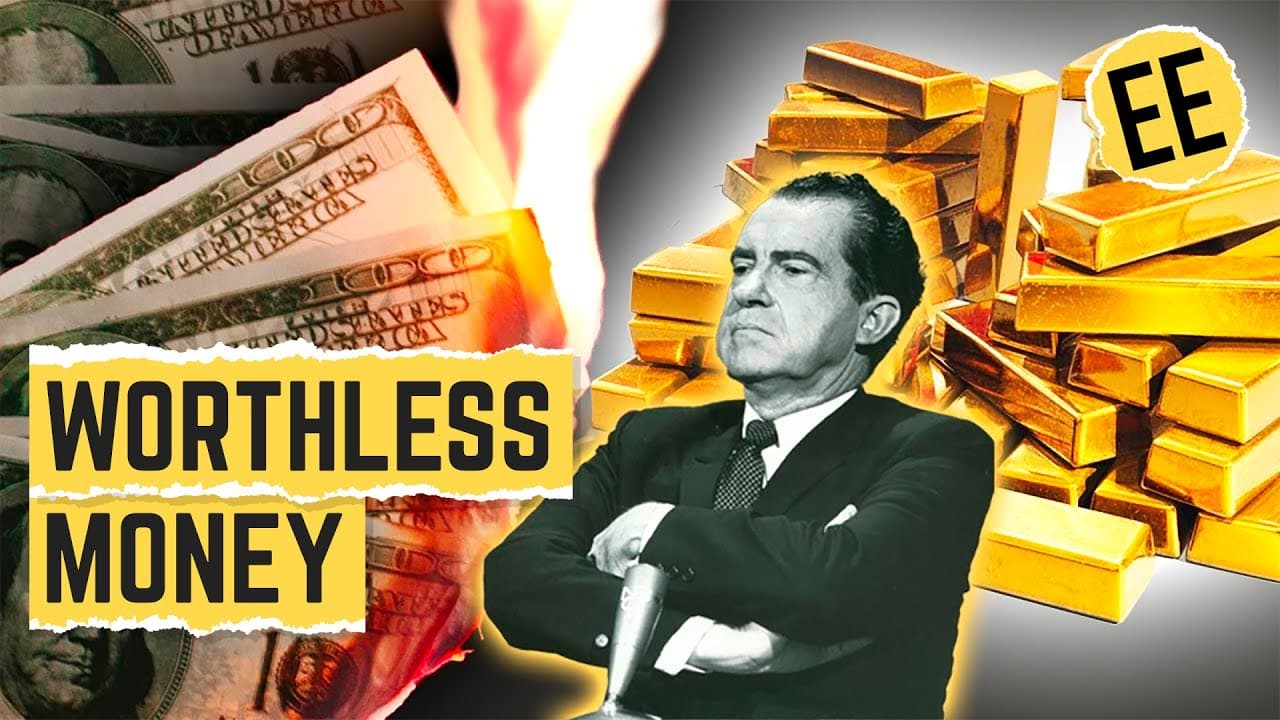
Dropping the gold standard in 1971 led to significant economic changes, including high inflation and altered global trade dynamics. While some argue it marked the decline of U.S. economic dominance, others believe it liberated the economy from rigid constraints. The debate on returning to a gold standard is complex, with pros and cons that need careful consideration.
Transcript
on august 15 1971 president richard nixon announced that the united states would be terminating the convertibility of american dollars into gold turning the world's reserve medium of exchange into something backed by nothing but belief over the next five years the price of gold which up until that point had been the baseline store of value more tha... Read More
Key Insights
- The gold standard was abandoned by the U.S. in 1971, ending dollar convertibility to gold.
- Abandoning the gold standard led to significant inflation in the 1970s and 1980s.
- The Bretton Woods system pegged currencies to the U.S. dollar, which was convertible to gold.
- Gold standards limit financial repression but can restrict economic growth if not managed well.
- A gold standard can lead to price stability but may prevent necessary monetary policy adjustments.
- Gold's value is largely based on belief, similar to fiat currency, questioning its reliability.
- Returning to a gold standard could cause trade imbalances due to unequal gold distribution.
- A fractional reserve gold standard carries risks similar to fractional reserve banking systems.
Install to Summarize YouTube Videos and Get Transcripts
Explore YouTube Video Summarizer or Get YouTube Transcript Extractor
Questions & Answers
Q: How did abandoning the gold standard affect inflation?
Abandoning the gold standard in 1971 led to significant inflation in the 1970s and 1980s. The decision removed the dollar's gold backing, allowing for more flexible monetary policies. However, this flexibility contributed to high inflation rates during this period, as the U.S. faced economic challenges including oil price shocks and increased government spending.
Q: What was the Bretton Woods system?
The Bretton Woods system, established in 1944, was a monetary management system that pegged global currencies to the U.S. dollar, which was convertible to gold. It aimed to facilitate international trade and economic stability post-World War II. The system allowed countries to exchange their currencies for a set amount of U.S. dollars, indirectly backing them with gold.
Q: What are the advantages of a gold standard?
A gold standard offers advantages such as price stability and prevention of financial repression, where savers earn interest below inflation rates. It can simplify foreign trade by providing a stable currency value. However, these benefits depend on the proper management of gold reserves and may not outweigh the limitations on economic growth and monetary policy flexibility.
Q: Why did the U.S. abandon the gold standard?
The U.S. abandoned the gold standard in 1971 due to economic pressures, including high borrowing costs from the Vietnam War and domestic issues. The Bretton Woods countries were exchanging overvalued U.S. dollars for gold, threatening U.S. gold reserves. The decision allowed for more flexible monetary policies, addressing these economic challenges but leading to high inflation.
Q: Can a gold standard ensure economic stability?
A gold standard can provide long-term price stability by limiting money supply growth to gold reserves. However, it can restrict economic flexibility and hinder responses to economic crises. It may not ensure stability if gold availability doesn't align with economic growth needs, leading to deflation or restricted growth, as seen during the Great Depression.
Q: What are the risks of a fractional reserve gold standard?
A fractional reserve gold standard, where only a fraction of currency is backed by gold, carries risks similar to fractional reserve banking. If confidence in gold convertibility wanes, it can lead to a 'run' on gold, depleting reserves and destabilizing the economy. This system requires careful management to maintain trust and prevent economic crises.
Q: How does gold's value compare to fiat currency?
Gold's value, like fiat currency, is largely based on belief. While gold has some industrial uses and aesthetic appeal, its value primarily stems from its historical role as a monetary standard. In contrast, fiat currency's value is backed by government decree and trust in economic stability, making both systems reliant on collective belief for their worth.
Q: What challenges exist for countries adopting a gold standard?
Countries adopting a gold standard face challenges like trade imbalances due to unequal gold distribution. Nations without significant gold reserves must acquire it through trade or other means, potentially leading to economic strain. Additionally, the need for gold-backed currency can restrict economic growth and limit monetary policy flexibility, complicating responses to economic changes.
Summary & Key Takeaways
-
The U.S. ended the gold standard in 1971, ceasing dollar convertibility to gold, which led to high inflation in the 1970s and 1980s. While some believe this decision marked the decline of U.S. economic dominance, others argue it freed the global economy from unnecessary constraints.
-
The gold standard, part of the Bretton Woods system, pegged currencies to the U.S. dollar, which was convertible to gold. This system facilitated global trade but restricted economic flexibility, leading to calls for its abandonment.
-
Returning to a gold standard is debated due to its potential benefits of price stability and prevention of financial repression. However, challenges include restricted economic growth, trade imbalances, and the inherent belief-based value of gold, similar to fiat currency.
Read in Other Languages (beta)
Share This Summary 📚
Summarize YouTube Videos and Get Video Transcripts with 1-Click
Try YouTube Summary with ChatGPT & Claude or YouTube Transcript Generator
Explore More Summaries from Economics Explained 📚





Summarize YouTube Videos and Get Video Transcripts with 1-Click
Try YouTube Summary with ChatGPT & Claude or YouTube Transcript Generator