Why Trust Scientists? Understanding Scientific Credibility
TL;DR
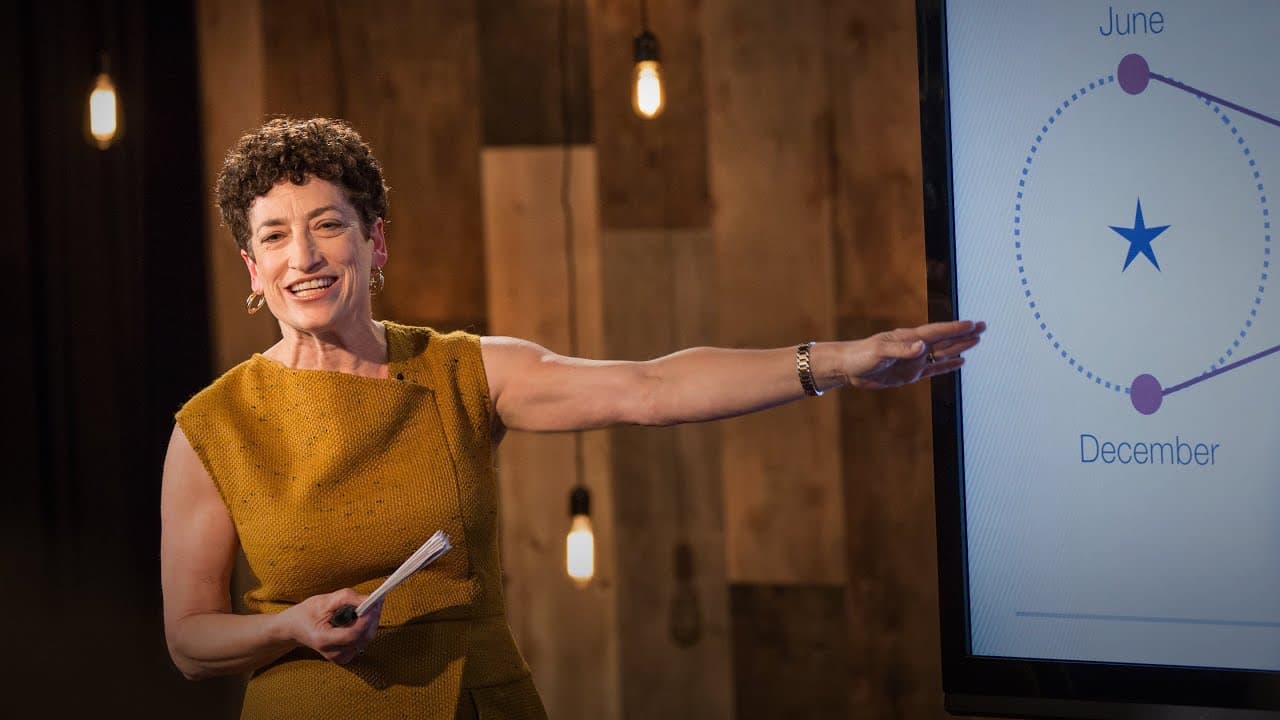
We should trust scientific claims because they are based on rigorous evidence evaluation and collective scrutiny within the scientific community. Scientists operate through organized skepticism, where claims are critically judged by experts, leading to a consensus that reflects the collective knowledge rather than individual authority. This trust is akin to our reliance on technology, which is also the result of cumulative expertise over time.
Transcript
Every day we face issues like climate change or the safety of vaccines where we have to answer questions whose answers rely heavily on scientific information. Scientists tell us that the world is warming. Scientists tell us that vaccines are safe. But how do we know if they are right? Why should be believe the science? The fact is, many of us actua... Read More
Key Insights
- 🧪 The public's skepticism towards scientific claims is evident in areas like climate change, evolution, and vaccine safety, highlighting the need for understanding why science is trustworthy.
- 🙏 Scientists view science as distinct from faith, with faith being the realm of belief. They aim to contrast science with religion and emphasize evidence-based reasoning.
- 🤔 Scientists themselves often need to rely on the claims of other scientists outside their own specialties, which raises the question of why they trust the expertise of their peers.
- 🎓 The traditional notion of the scientific method, known as the textbook method, is called into question due to its reliance on the hypothetical deductive model. This model involves developing hypotheses, deducing their consequences, and testing them against real-world observations.
- 🧐 However, this deductive-nomological model is flawed. False theories can make accurate predictions, and a lack of considerate auxiliary hypotheses or practical limitations can lead to incorrect conclusions.
- ⚖️ Scientists judge evidence collectively through organized skepticism, subjecting claims to scrutiny and upholding a conservative approach to scientific progress. Major changes in scientific thinking are relatively rare.
- 🧠 Scientific knowledge can be seen as the consensus of experts who, through organized scrutiny, have reached a conclusion about the evidence. It functions as a jury of knowledgeable individuals.
- 🙌 Trust in science is based on collective wisdom and experience, similar to trust in technology. Scientists should communicate not just what they know but also how they know it, while the public needs to be better listeners and critical thinkers.
Install to Summarize YouTube Videos and Get Transcripts
Explore YouTube Video Summarizer or Get YouTube Transcript Extractor
Questions & Answers
Q: Why should we believe in scientific information?
We should believe in scientific information because it is based on evidence and the collective knowledge and work of scientists. Science is not a matter of belief, but rather a process of inquiry that includes organized skepticism and collective scrutiny. Trust in science is built on experience and the ability of scientists to explain not just what they know, but how they know it.
Q: How do scientists judge the validity of scientific claims?
Scientists judge the validity of scientific claims through a process of organized skepticism. They collect evidence, subject it to scrutiny, and make judgments based on the available evidence. This process is collective, with scientists working together to evaluate data and come to a consensus. The burden of proof is on the person making a novel claim, and science is intrinsically conservative, making major shifts in scientific thinking relatively rare.
Q: Does the scientific method guarantee the truth of scientific claims?
No, the scientific method, as commonly taught in schools, is not a guarantee of the truth of scientific claims. The traditional textbook model, known as the hypothetical deductive method, involves developing hypotheses, deducing consequences, and testing those consequences through observation. However, this model is flawed for several reasons. False theories can make true predictions, making the logical connection between predictions and theories unreliable. Additionally, the model relies on auxiliary hypotheses, which can introduce uncertainty, and ignores the fact that much scientific inquiry is actually inductive rather than deductive.
Q: How do scientists determine what is right and wrong in science?
Scientists determine what is right and wrong in science through organized skepticism and collective judgment. They scrutinize data and evidence, subject it to scrutiny, and come to conclusions based on the available evidence. There is a culture of collective distrust in science, with the burden of proof on those making novel claims. Major changes in scientific thinking are relatively rare, and consensus among scientific experts plays a key role in defining scientific knowledge.
Q: Is science an appeal to authority?
Science is an appeal to authority, but not the authority of individuals. It is the authority of the collective community of scientists. Science is based on the accumulated work, wisdom, and experience of all the scientists who have worked on a particular problem. It is a collective wisdom, a consensus of experts. Science relies on evidence and the collective judgment of the scientific community, rather than blind trust in any individual.
Summary & Key Takeaways
-
Many people do not believe in scientific claims and public opinion polls show skepticism towards issues like climate change and vaccine safety.
-
Scientists don't like to talk about science as a matter of belief and view it as separate from faith.
-
Scientists rely on evidence and organized skepticism to judge the validity of scientific claims, and scientific knowledge is a consensus reached by experts through collective scrutiny.
Read in Other Languages (beta)
Share This Summary 📚
Summarize YouTube Videos and Get Video Transcripts with 1-Click
Try YouTube Summary with ChatGPT & Claude or YouTube Transcript Generator
Explore More Summaries from TED 📚


Summarize YouTube Videos and Get Video Transcripts with 1-Click
Try YouTube Summary with ChatGPT & Claude or YouTube Transcript Generator