Science Instruments Selected for Europa Mission on This Week @NASA – May 29, 2015
TL;DR
NASA selects instruments for Europa mission; Commercial Crew Program orders crew rotation mission from Boeing; ISS module move completed; NASA Administrator visits Aerojet Rocketdyne and Northrop Grumman; RS-25 engine test conducted; LDSD project test scheduled; NASA Chief Scientist at World Science Festival.
Transcript
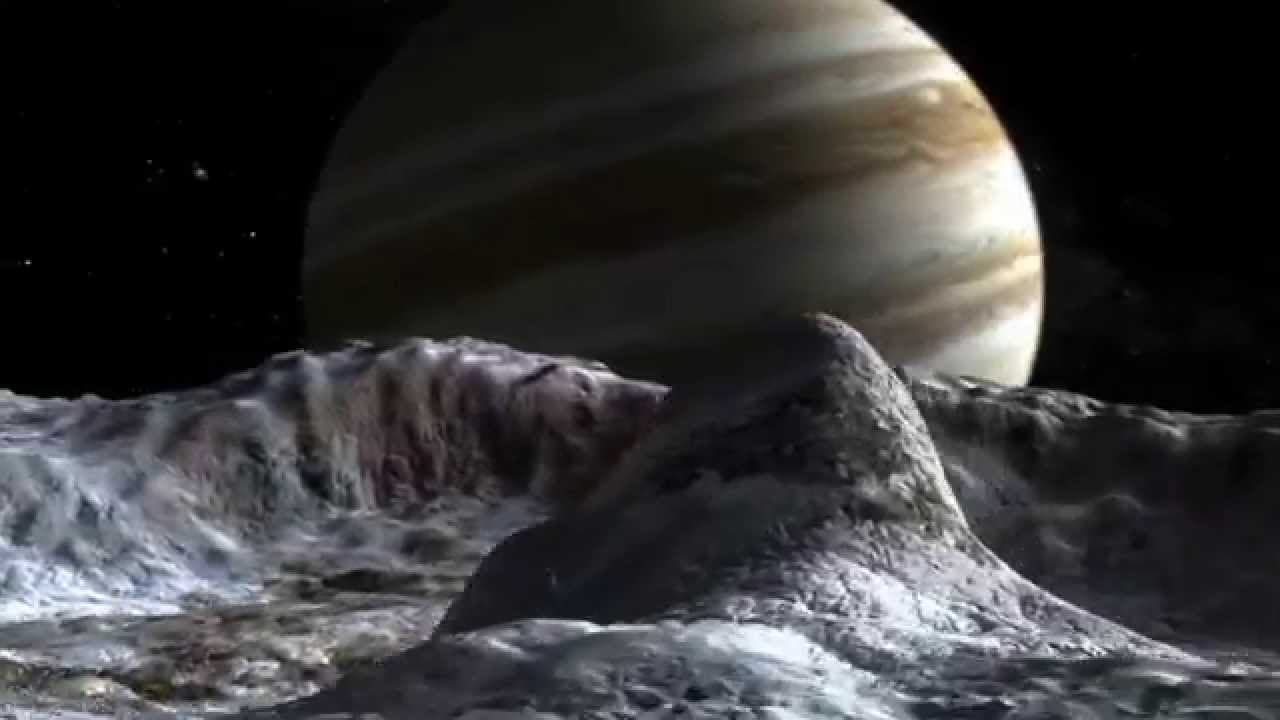
“Here’s some of the stories trending This Week at NASA!” NASA announced May 26 it has selected nine science instruments for a mission to Jupiter’s moon Europa to investigate whether the icy moon has conditions suitable for life. The instruments, targeted for launch aboard a robotic probe in the 2020s, include cameras and spectrometers to collect hi... Read More
Key Insights
- 🌱 NASA is planning a mission to Jupiter's moon Europa to explore the potential for life.
- 🇺🇸 The Commercial Crew Program is making progress towards launching astronauts from the United States to the International Space Station.
- 🪛 NASA is reconfiguring the International Space Station to accommodate future commercial crew spacecraft.
- 🚀 Development and testing of the Space Launch System rocket and Orion spacecraft are ongoing.
- 💦 NASA is actively working on landing technologies for future Mars missions.
- 🎆 The agency is promoting science and technology advancements at various events and festivals.
- 👾 Public-private partnerships play a significant role in NASA's space exploration efforts.
Install to Summarize YouTube Videos and Get Transcripts
Explore YouTube Video Summarizer or Get YouTube Transcript Extractor
Questions & Answers
Q: What is the purpose of the Europa mission and what instruments will be used?
The Europa mission aims to investigate whether the moon has conditions suitable for life. The selected instruments include cameras, spectrometers, ice penetrating radar, and a magnetometer to study the moon's magnetic field and determine the depth and salinity of its ocean.
Q: Which companies are involved in the Commercial Crew Program for launching astronauts to the International Space Station?
Boeing and SpaceX are the two companies involved in developing spacecraft to transport astronauts to and from the ISS. Boeing has been selected for the first crew rotation mission, and a determination on the first crewed mission will be made later.
Q: What was the purpose of relocating the International Space Station's Permanent Multipurpose Module?
The module's relocation is part of reconfiguring the station to accommodate future commercial crew spacecraft. It allows for easier access and docking of these spacecraft.
Q: What is the purpose of the Low-Density Supersonic Decelerator project, and when is the next test scheduled?
The LDSD project aims to develop technologies for landing future Mars missions and safely returning large payloads to Earth. The second test, simulating a supersonic entry and descent through the Martian atmosphere, is scheduled for June 2.
Summary & Key Takeaways
-
NASA has chosen nine science instruments for a mission to Jupiter's moon Europa to explore its potential for supporting life.
-
The Commercial Crew Program has ordered its first crew rotation mission from Boeing, bringing the US closer to launching astronauts to the International Space Station.
-
The International Space Station's Permanent Multipurpose Module has been relocated to make way for future commercial crew spacecraft.
-
NASA Administrator Charlie Bolden has visited Aerojet Rocketdyne and Northrop Grumman, learning about the propulsion system for the Space Launch System rocket and the production of parts for the James Webb Space Telescope.
-
The second RS-25 engine test for the Space Launch System rocket was conducted successfully.
-
The second flight test of NASA's Low-Density Supersonic Decelerator project, which aims to develop landing technologies for Mars missions, is set for June 2.
-
NASA Chief Scientist Ellen Stofan participated in the 2015 World Science Festival, showcasing NASA's advancements in science and technology for future space exploration.
Read in Other Languages (beta)
Share This Summary 📚
Summarize YouTube Videos and Get Video Transcripts with 1-Click
Try YouTube Summary with ChatGPT & Claude or YouTube Transcript Generator
Explore More Summaries from NASA 📚
Summarize YouTube Videos and Get Video Transcripts with 1-Click
Try YouTube Summary with ChatGPT & Claude or YouTube Transcript Generator