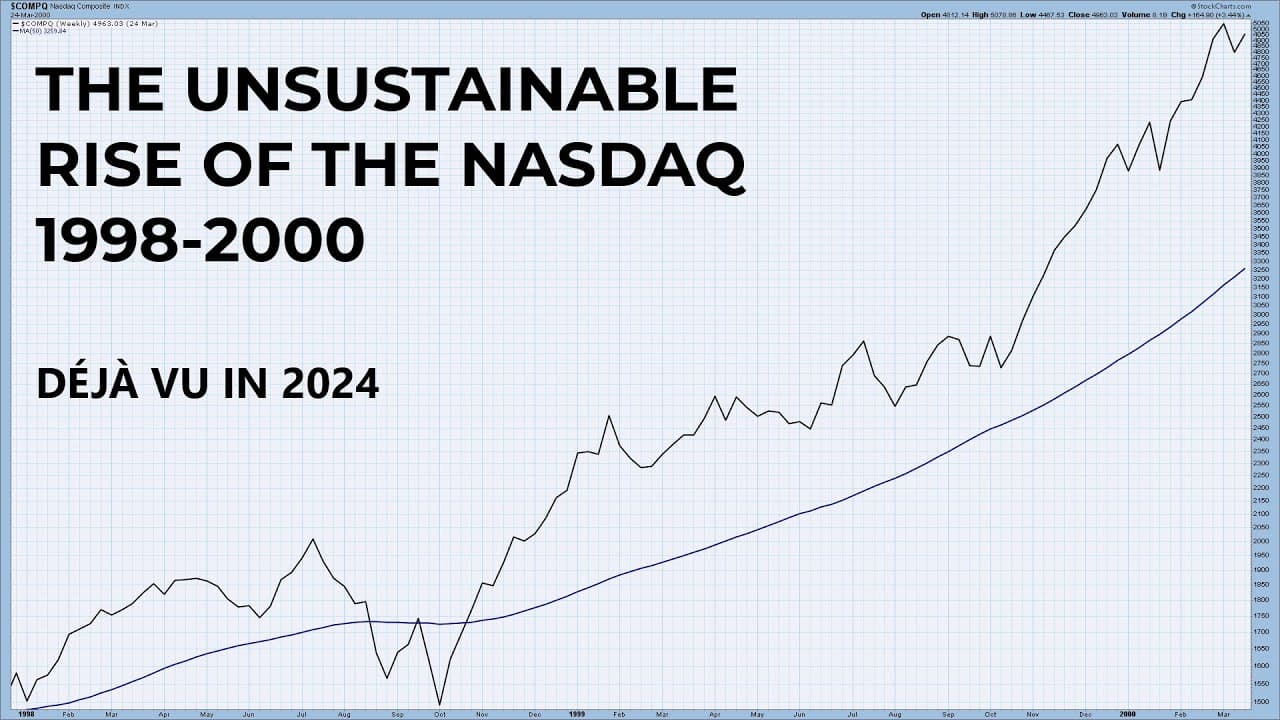
Comparing 2024 To The Latter Stages Of The 2000 Internet Bubble
TL;DR
2024 market trends differ significantly from the 2000 internet bubble.
Transcript
in this week's video we'll review the latest charts and data to help us answer the question how does 2024 2025 compared to the latter stages of the internet bubble we'll be moving quickly so feel free to use the pause button on your video player if you've been involved with the markets for any length of time you&... Read More
Key Insights
- Valuations are not reliable for market timing, as evidenced by the strong market performance post-2012 despite pessimistic headlines.
- The NASDAQ's recent performance differs from the 2000 bubble, showing more stability and less extreme outperformance compared to the NYSE Composite.
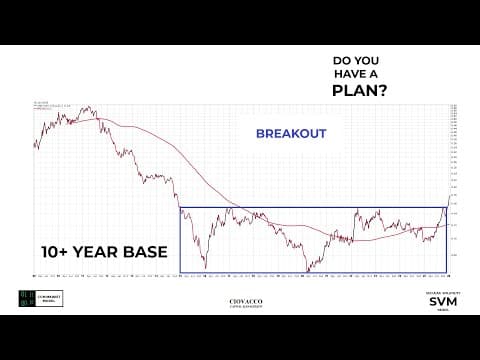
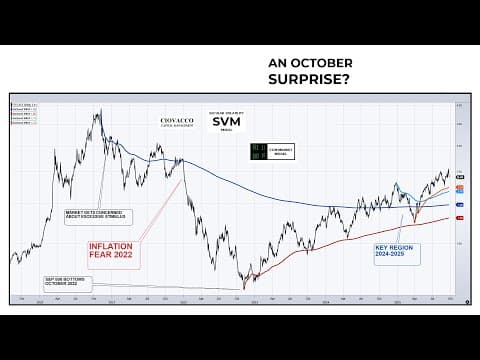
- Current market trends indicate a bullish breakout, contrasting with the breakdown seen in early 2022.
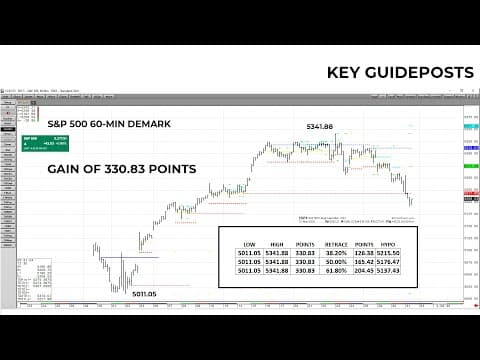
- The S&P 500's trend in late 2024 shows strength, unlike the declining trend observed in early 2022.
- Market reactions to interest rate cycles suggest that slow rate cuts correlate with stronger economic and market performance.
- Recent market behavior shows less concern about inflation compared to early 2022, with tech outperforming energy and defensive sectors.
- Dividend and low-volatility stocks underperformed tech recently, indicating a lack of economic fear.
- The NASDAQ's potential outperformance is supported by current chart patterns, suggesting a bullish outlook.
Install to Summarize YouTube Videos and Get Transcripts
Explore YouTube Video Summarizer or Get YouTube Transcript Extractor
Questions & Answers
Q: How does the current market compare to the 2000 internet bubble?
The current market shows significant differences from the 2000 internet bubble. The NASDAQ is not exhibiting the same extreme outperformance relative to the NYSE Composite as it did in 2000. Additionally, current market trends suggest a bullish breakout rather than the concerning breakdown seen in early 2022. This indicates a more stable and less volatile market environment compared to the 2000 bubble.
Q: Why are valuations considered unreliable for market timing?
Valuations, such as the Schiller PE, are considered unreliable for market timing because historical data shows that markets can perform well despite seemingly high valuations. For instance, despite pessimistic headlines in 2012 predicting a lost decade for US stocks, the market performed strongly in the subsequent years. This suggests that relying on valuations alone can lead to inaccurate predictions and missed opportunities.
Q: What current trends suggest a bullish market outlook?
Current trends indicating a bullish market outlook include the NASDAQ's recent breakout above 2021 levels, the S&P 500's strong trend in late 2024, and the outperformance of tech stocks over defensive and low-volatility sectors. Additionally, the market's response to interest rate cycles, with slower rate cuts correlating with stronger performance, further supports a bullish perspective.
Q: How do interest rate cycles affect market performance?
Interest rate cycles impact market performance by influencing economic conditions. Historical patterns show that slow and lower magnitude rate cuts from the Federal Reserve tend to occur when the economy is stronger, leading to better stock market performance. This relationship suggests that current market conditions, which align with such interest rate cycles, are conducive to a bullish market environment.
Q: What does the NASDAQ's current chart pattern indicate?
The NASDAQ's current chart pattern, characterized by a potential breakout and an upward sloping neckline, indicates a bullish outlook. If this pattern plays out, it implies significant potential outperformance by the NASDAQ relative to the NYSE Composite. This suggests that the NASDAQ is poised for growth, contrasting with the concerning patterns observed during past market downturns.
Q: Why is the market less concerned about inflation now compared to early 2022?
The market's reduced concern about inflation compared to early 2022 is reflected in the recent outperformance of tech stocks over energy and defensive sectors. This shift indicates that market participants are less worried about inflationary pressures affecting economic growth. Additionally, the lack of significant movement in inflation-sensitive charts suggests a more stable inflation outlook, contributing to a more optimistic market sentiment.
Q: How does recent sector performance reflect market sentiment?
Recent sector performance reflects a bullish market sentiment, with tech stocks outperforming defensive, dividend, and low-volatility stocks. This trend suggests that investors are more confident in economic growth and are willing to take on more risk. The underperformance of traditionally safer sectors indicates a shift away from economic fear, aligning with a broader bullish outlook.
Q: What lessons can be learned from past market behavior?
Lessons from past market behavior highlight the importance of maintaining an open mind and avoiding over-reliance on valuations for market timing. Historical patterns show that markets can defy pessimistic predictions and perform well despite high valuations. Additionally, understanding interest rate cycles and sector performance can provide valuable insights into market trends, helping investors make informed decisions.
Summary & Key Takeaways
-
The analysis compares current market conditions to the 2000 internet bubble, highlighting differences in NASDAQ performance and broader market trends.
-
Valuation metrics like the Schiller PE are deemed unreliable for market timing, as past predictions of downturns have proven inaccurate.
-
Recent market behavior, including sector performance and interest rate responses, suggests a bullish trend, contrasting with past bear markets.
Read in Other Languages (beta)
Share This Summary 📚
Summarize YouTube Videos and Get Video Transcripts with 1-Click
Try YouTube Summary with ChatGPT & Claude or YouTube Transcript Generator
Explore More Summaries from CiovaccoCapital 📚
Summarize YouTube Videos and Get Video Transcripts with 1-Click
Try YouTube Summary with ChatGPT & Claude or YouTube Transcript Generator