Dating apps: How our brains react - 6 Minute English
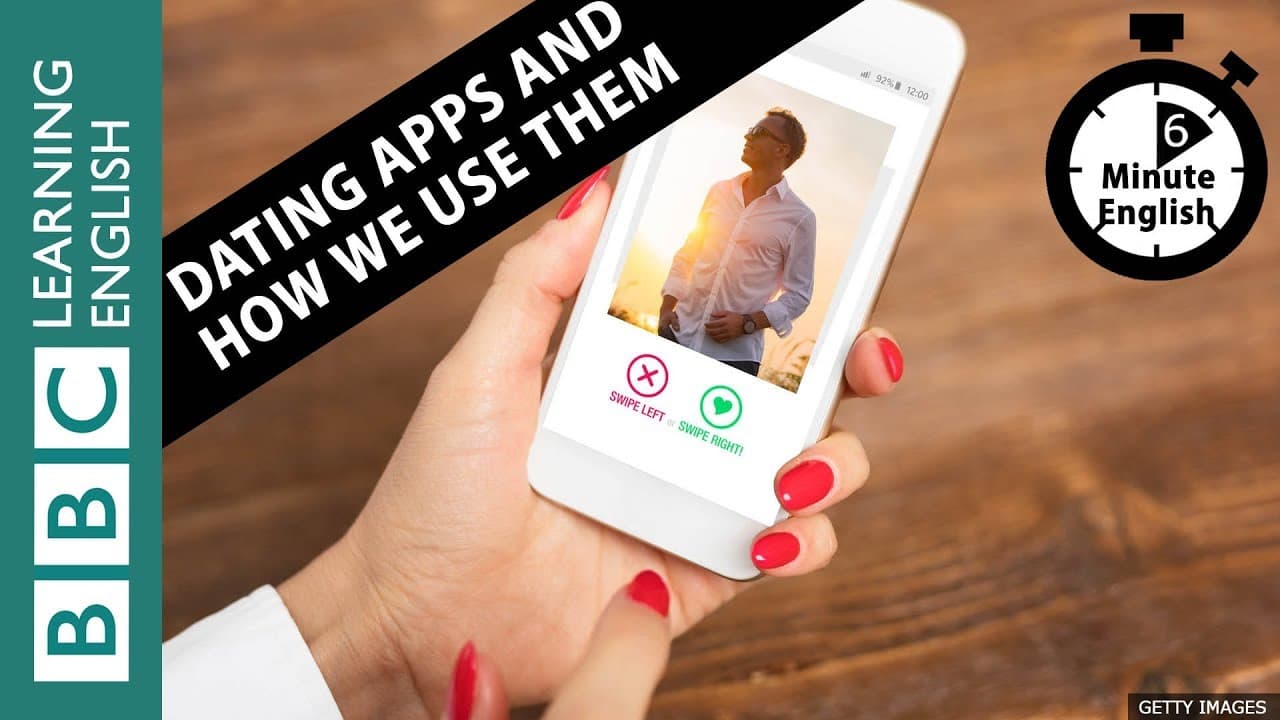
TL;DR
Our brains react similarly online and offline when dating.
Transcript
Dan: Hello and welcome to 6 Minute English. I'm Dan. Rob: And hello, I'm Rob. Dan: In today's programme we're going to be looking at what our brains are doing when we are using dating apps. Now, Rob, have you ever used a dating app? Rob: No way, I would never use one. Dan: Hmm, so Rob, can you explain, when talking about dating apps, what we mean b... Read More
Key Insights
- The process of choosing a mate on dating apps is similar to real-life interactions, with quick, almost instantaneous decisions being made about attraction.
- Swiping left or right on dating apps mimics turning a page in a book, representing the decision-making process of liking or disliking someone.
- Rejection on dating apps occurs more frequently than in real life, making it harder to cope with due to the rapid succession of rejections.
- Real-life rejection allows for more time to recover and 'dust yourself off,' unlike the fast-paced nature of online rejections.
- Approximately one in three marriages in the UK starts with the couple meeting online, highlighting the growing influence of digital dating.
- The vocabulary associated with dating apps, such as 'swipe' and 'instantaneous,' reflects the immediate nature of decision-making in digital dating.
- The emotional impact of rejection is similar online and offline, but the frequency of online rejection can be challenging to manage.
- Digital dating is a sign of the times, with technology significantly influencing modern relationship dynamics.
Install to Summarize YouTube Videos and Get Transcripts
Explore YouTube Video Summarizer or Get YouTube Transcript Extractor
Questions & Answers
Q: What is the main similarity between online and offline dating according to the content?
The main similarity between online and offline dating, as discussed in the content, is that the process of deciding whether we find someone attractive is quite similar in both scenarios. In both cases, our brains make quick, almost instantaneous decisions about attraction, indicating that the fundamental process of choosing a potential mate remains consistent regardless of the platform.
Q: How does the frequency of rejection differ between online and real-life dating?
The frequency of rejection differs significantly between online and real-life dating. In online dating, individuals experience rejection at a much higher rate due to the rapid and numerous interactions facilitated by dating apps. This high rate of rejection can make it challenging to cope, as it does not allow the time needed to recover and 'dust yourself off' as one might in real-life scenarios where rejections occur less frequently.
Q: What role does swiping play in the context of dating apps?
Swiping plays a crucial role in the context of dating apps as it represents the user's decision-making process. Swiping right indicates interest or attraction towards a person's profile, while swiping left denotes disinterest. This action mimics turning a page in a book and is a digital gesture that reflects the immediate and often superficial judgments made about potential partners based on their profiles.
Q: What statistic is provided about marriages in the UK related to online dating?
The statistic provided in the content about marriages in the UK related to online dating is that approximately one in three marriages now begins with the couple meeting online. This statistic underscores the significant impact and prevalence of digital dating in contemporary relationship dynamics, highlighting how technology is reshaping the way people meet and form romantic connections.
Q: What challenges are associated with the high rate of rejection on dating apps?
The challenges associated with the high rate of rejection on dating apps include the difficulty in managing the psychological impact of frequent rejections. Unlike in real life, where there is more time to process and recover from rejection, the rapid succession of rejections online can be overwhelming and hard to cope with, potentially affecting an individual's self-esteem and emotional well-being.
Q: How does the concept of 'dusting yourself off' apply to dating?
The concept of 'dusting yourself off' applies to dating as a metaphor for recovering from rejection and maintaining a positive outlook. In the context of dating, particularly online, where rejections can be frequent and rapid, it is important to 'dust yourself off' by staying optimistic and resilient, allowing oneself to move on and continue seeking potential connections despite setbacks.
Q: What does the term 'instantaneous' imply in the context of dating apps?
In the context of dating apps, the term 'instantaneous' implies that decisions regarding attraction or interest in a potential partner are made almost immediately. This reflects the swift judgment process facilitated by dating apps, where users often rely on first impressions based on limited information, such as photos or brief profiles, to decide whether to swipe left or right.
Q: Why might digital dating be considered a 'sign of the times'?
Digital dating might be considered a 'sign of the times' because it reflects the broader societal shift towards technology-driven interactions and relationships. The increasing prevalence of online dating platforms and the statistic that one in three marriages in the UK begins online illustrate how digital tools are reshaping social norms and the ways in which people connect, indicating a significant cultural transformation influenced by technological advancements.
Summary & Key Takeaways
-
The discussion explores how our brains react when using dating apps, emphasizing that instantaneous decisions made online are similar to those in real life. The frequency of rejection on apps is higher, posing challenges in coping with multiple rejections quickly.
-
Swiping left or right on dating apps is a digital equivalent of flipping a page, symbolizing the decision of liking or disliking someone. Despite the frequent rejections online, the emotional response is similar to real-life experiences.
-
One in three UK marriages begins online, showcasing the significant role of digital dating. The conversation highlights the psychological effects of rejection, stressing the need for resilience in the face of rapid online rejections.
Read in Other Languages (beta)
Share This Summary 📚
Summarize YouTube Videos and Get Video Transcripts with 1-Click
Try YouTube Summary with ChatGPT & Claude or YouTube Transcript Generator
Explore More Summaries from BBC Learning English 📚

Summarize YouTube Videos and Get Video Transcripts with 1-Click
Try YouTube Summary with ChatGPT & Claude or YouTube Transcript Generator