Rivalry: How to beat a basic instinct | Luke Burgis | Big Think
TL;DR
Human desire is influenced by others, leading to rivalries, but awareness and empathy can break the cycle of negative competition.
Transcript
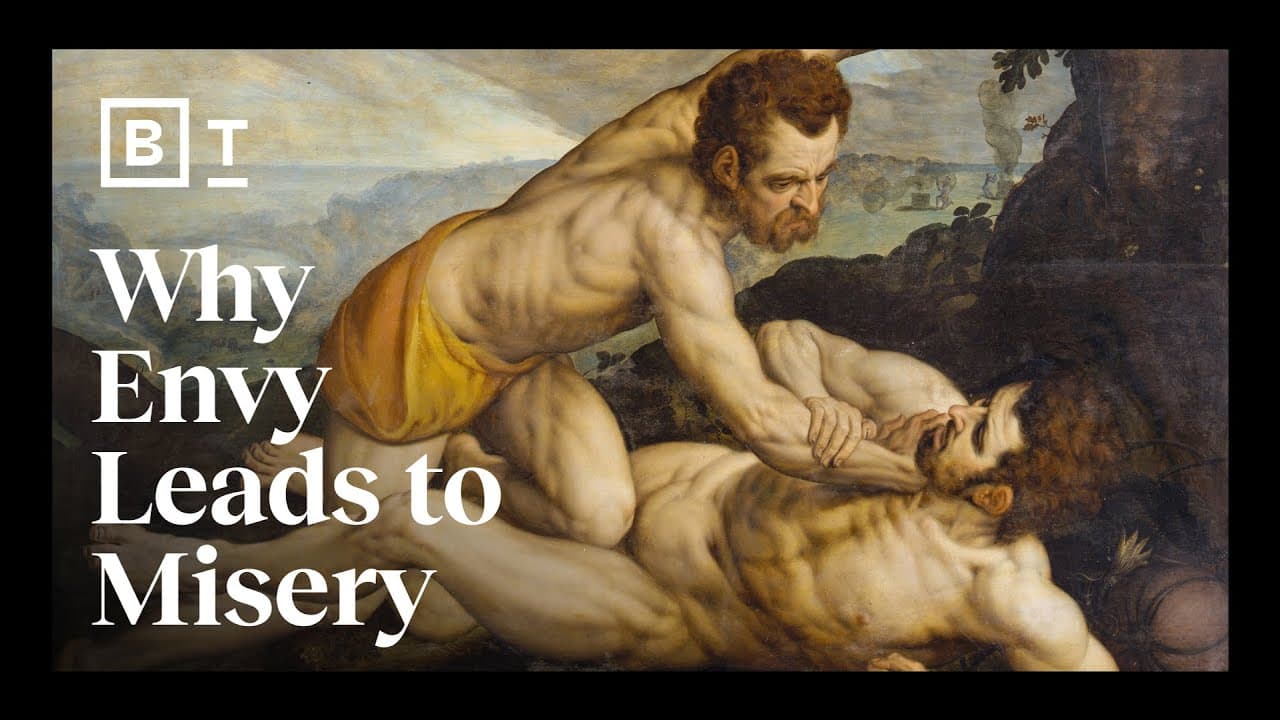
- We're more rivalrous than we like to believe. (violin music begins) Human beings tend towards rivalry. There's a reason why there's five stories of sibling rivalry in the book of Genesis alone, and almost every other culture in the world also has stories of sibling rivalry. It seems that there is some principle of rivalry that has been with us si... Read More
Key Insights
- ❓ Human beings have a natural tendency towards rivalry and competition.
- 🥺 Mimetic desire, adopting others' desires, can lead to unhealthy rivalries and conflicts.
- 🍳 Awareness of mimetic mechanisms is crucial for breaking out of negative rivalrous cycles.
- 🫷 Healthy rivalries can push individuals to innovate and create.
- 🥺 Renunciation of mimetic impulses and choosing empathy and forgiveness can lead to personal growth.
- 🍳 Forgiveness is a powerful anti-mimetic action that can break cycles of violence and conflict.
- 🏍️ Empathy can disrupt negative mimetic cycles by encouraging positive imitation.
Install to Summarize YouTube Videos and Get Transcripts
Explore YouTube Video Summarizer or Get YouTube Transcript Extractor
Questions & Answers
Q: What is mimetic desire and how does it influence human behavior?
Mimetic desire is the act of adopting another person's desires as our own, leading to competition and rivalry as we vie for the same objects or status.
Q: Why is awareness of mimetic rivalry important, and how can it be a positive force?
Awareness is crucial as it allows individuals to see when they are in a rivalry, potentially leading to negative consequences. However, healthy rivalries can push us to innovate and improve.
Q: How did Ferruccio Lamborghini's rivalry with Enzo Ferrari evolve, and what lesson can be learned from it?
Lamborghini's rivalry pushed him to enter the car business, but he realized the dangers of being consumed by competition. Choosing to renounce rivalry led to a fulfilling life and successful company.
Q: How can empathy and forgiveness break negative mimetic cycles?
Empathy and forgiveness can disrupt negative competition by breaking the cycle of retaliation and encouraging positive imitation. Writing a letter of gratitude to a rival can be a powerful gesture of empathy.
Summary & Key Takeaways
-
Human beings are innately rivalrous and tend towards competition, seen through stories of sibling rivalry and historical examples.
-
Mimetic desire, adopting others' desires as our own, creates competition and can lead to viewing others as rivals or obstacles.
-
Breaking out of the cycle of rivalry requires awareness, agency, renunciation of mimetic impulses, and actions like forgiveness and empathy.
Read in Other Languages (beta)
Share This Summary 📚
Summarize YouTube Videos and Get Video Transcripts with 1-Click
Try YouTube Summary with ChatGPT & Claude or YouTube Transcript Generator
Explore More Summaries from Big Think 📚




Summarize YouTube Videos and Get Video Transcripts with 1-Click
Try YouTube Summary with ChatGPT & Claude or YouTube Transcript Generator