Spike Protein Explained | Dmitry Korkin and Lex Fridman
TL;DR
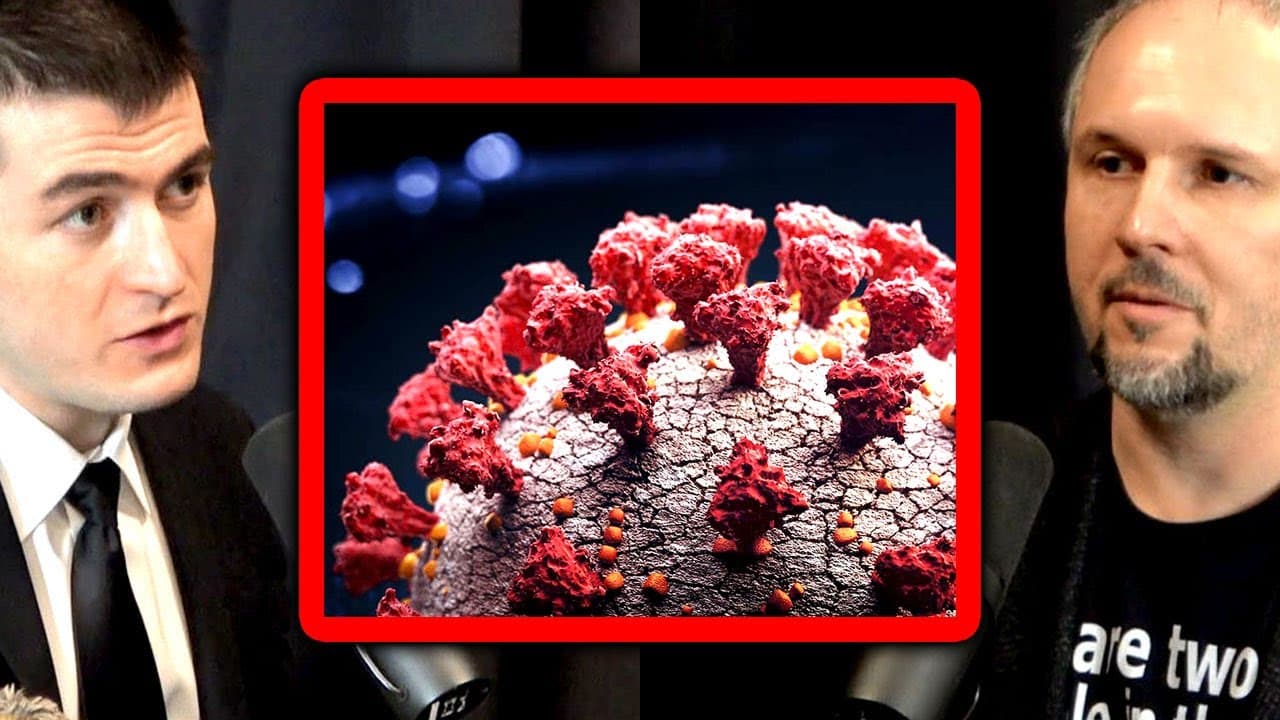
Researchers are studying the spike protein of the COVID-19 virus, facing challenges in decoding its structure and understanding its role in viral attachment and infection.
Transcript
can we linger on the spike protein for a little bit is is there something interesting or like beautiful you find about it i mean first of all it's an incredibly challenging protein and so we as a part of uh our sort of uh research to understand the structural basis of this virus to sort of decode structured decode every single protein in its proteo... Read More
Key Insights
- 💌 Decoding the spike protein's complex structure remains a challenge, with two-thirds of its structure currently understood and the remaining one-third buried in the viral envelope.
- 🦾 Recent mutations in the spike protein have shown the possibility of multiple arms opening up, increasing attachment opportunities to human receptors.
- ❓ Cryogenic microscopy has provided insights into the overall structure of the spike protein and revealed details about the organization of the viral capsid.
- ⚾ Understanding the spike protein's structure and function is crucial for understanding the virus's replication and developing targeted treatments such as nanoparticle-based therapies.
- 🚫 Targeting the spike protein and blocking AC2 receptors can be a potential therapeutic approach for preventing viral entry into cells.
- 👨🔬 Further research is needed to unravel the complexity of the spike protein's interaction with the viral membrane and its role in maintaining the stability of the virus's outer shell.
- 🆘 Studying the spike protein structure helps in developing effective vaccines and treatments against COVID-19.
Install to Summarize YouTube Videos and Get Transcripts
Explore YouTube Video Summarizer or Get YouTube Transcript Extractor
Questions & Answers
Q: What makes the spike protein of the COVID-19 virus challenging to study?
The spike protein is difficult to decode as two-thirds of its structure is visible through cryovm data, while the remaining one-third is buried in the viral envelope and chemically interacts with its surroundings.
Q: How does the spike protein attach to human receptors?
The spike protein's receptor binding domains untangle and prepare to attach to human receptors, but they do not necessarily go in sync. Recent mutations have even shown the possibility of multiple arms opening up, changing the dynamics of attachment.
Q: Can the spike protein function independently or does it require interaction with the viral membrane?
The spike protein needs to be attached to the viral membrane, and once attached, its positioning and dynamics play a significant role. Recent cryogenic microscopy research has provided insights into the structure and surface details of the spike protein.
Q: What are the implications of understanding the spike protein for developing treatments?
Understanding the virus's mechanism and the spike protein's role helps in developing targeted treatments. Designing nanoparticles that mimic the viral shape and block the AC2 receptors can prevent the virus from entering cells, providing a potential treatment strategy.
Summary & Key Takeaways
-
The spike protein of the virus is complex and challenging to study, with only two-thirds of its structure currently decoded.
-
The spike protein has a crucial role in attaching to human receptors and recent mutations have shown the possibility of multiple arms opening up, increasing attachment opportunities.
-
Understanding the structure and function of the spike protein has implications for developing vaccines and treatments.
Read in Other Languages (beta)
Share This Summary 📚
Summarize YouTube Videos and Get Video Transcripts with 1-Click
Try YouTube Summary with ChatGPT & Claude or YouTube Transcript Generator
Explore More Summaries from Lex Clips 📚




Summarize YouTube Videos and Get Video Transcripts with 1-Click
Try YouTube Summary with ChatGPT & Claude or YouTube Transcript Generator