Meet Our Nitrogen-Breathing Bacterial Relative
TL;DR
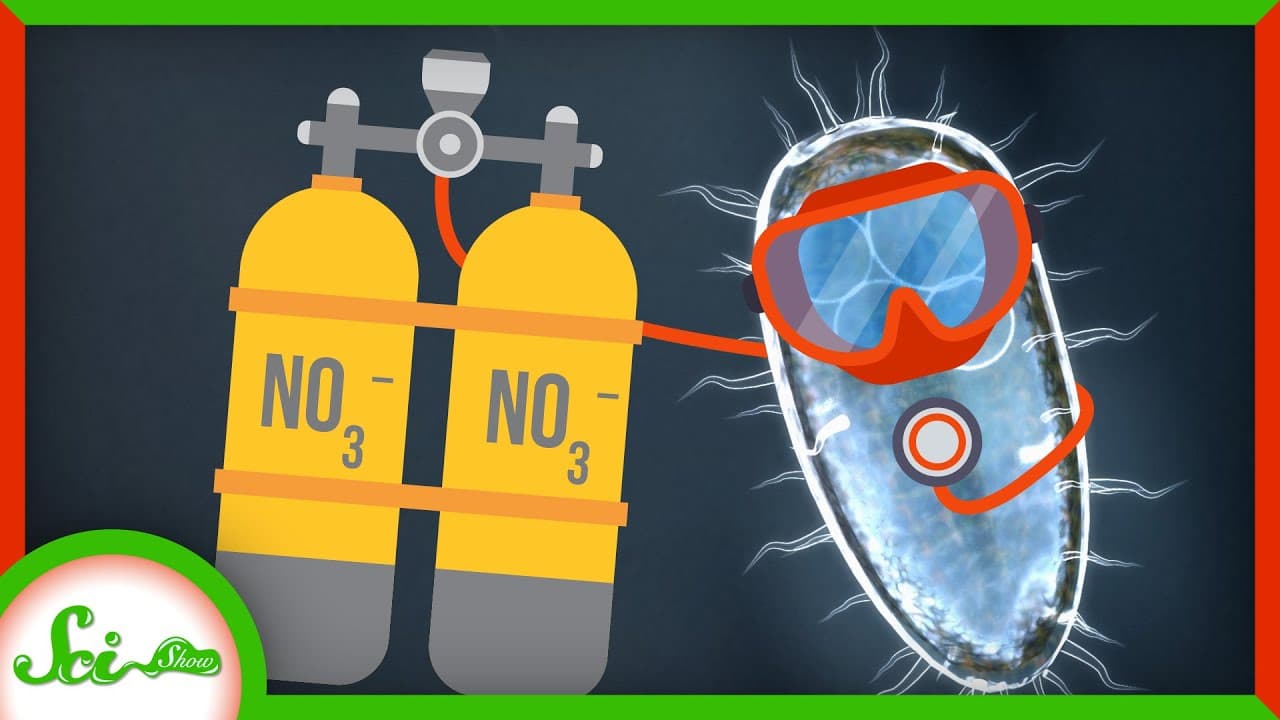
Scientists have discovered a single-celled organism that breathes nitrogen, offering insights into the evolution of eukaryotic cells and the origins of mitochondria.
Transcript
Thanks to Brilliant for supporting this episode of SciShow. Go to Brilliant.org/SciShow to learn how you can level up your STEM skills! [♪ INTRO] Oxygen is pretty great stuff. On a chilly morning in the mountains, there’s nothing better than breathing a couple of lungs full of fresh O2, right? But some organisms couldn’t care less about oxygen. In ... Read More
Key Insights
- 💨 Eukaryotic cells rely on oxygen, but some have developed alternate ways of creating energy, such as breathing nitrate.
- ❓ The Lake Zug organisms provide insights into the early evolution of eukaryotic cells and the origins of mitochondria.
- 🫤 The endosymbiont in the Lake Zug organisms may be transitioning to becoming an organelle, similar to mitochondria's evolution billions of years ago.
- 👏 The discovery raises questions about the prevalence of this type of relationship in other eukaryotes and the potential use of other compounds for energy production.
- ❄️ The Lake Zug endosymbiont's genes have been found in older lakes, suggesting a wider presence and an intriguing origin story that is yet to be fully understood.
- 🛟 This unique relationship offers lessons on how life can find ways of surviving in seemingly improbable environments and may shed light on the distant origins of life.
- 🛟 Computational Biology, offered by Brilliant, can expand knowledge about the complexities of life, including the overlap between computer science and biology.
Install to Summarize YouTube Videos and Get Transcripts
Explore YouTube Video Summarizer or Get YouTube Transcript Extractor
Questions & Answers
Q: How do eukaryotic cells rely on oxygen to generate energy?
Eukaryotic cells use mitochondria to convert oxygen into adenosine triphosphate (ATP), the molecule that stores and transfers energy throughout the cell and the body.
Q: Why did some eukaryotes develop alternate ways of creating energy?
Ancient eukaryotes needed to develop alternate ways of creating energy because oxygen may not have been present in high levels until around 450 million years ago. These organisms adapted to low or no oxygen environments by using fermentation or breathing other substances like nitrate.
Q: What are the organisms recently discovered in Lake Zug capable of breathing?
Organisms in Lake Zug have been found to breathe nitrate, a molecule with one atom of nitrogen and three oxygens. They convert nitrate into nitrogen gas for energy.
Q: How do the Lake Zug organisms breathe without mitochondria or fermentation?
The Lake Zug organisms have an endosymbiont, a symbiotic partner living inside them that performs functions similar to mitochondria. This partner transfers electrons to nitrogen instead of oxygen, allowing the organisms to survive in low-oxygen environments.
Summary & Key Takeaways
-
Scientists have found a single-celled organism that breathes nitrogen instead of oxygen, offering a new perspective on the evolution of cells.
-
Eukaryotic cells, which make up the bodies of animals, plants, fungi, and more, rely on oxygen to generate energy through mitochondria.
-
Some eukaryotes have developed alternate ways of creating energy, such as breathing nitrate, which raises questions about the origins of this unique relationship.
Read in Other Languages (beta)
Share This Summary 📚
Summarize YouTube Videos and Get Video Transcripts with 1-Click
Try YouTube Summary with ChatGPT & Claude or YouTube Transcript Generator
Explore More Summaries from SciShow 📚


Summarize YouTube Videos and Get Video Transcripts with 1-Click
Try YouTube Summary with ChatGPT & Claude or YouTube Transcript Generator