Genghis Khan and the Warriors of the Mongol Empire | Dan Carlin and Lex Fridman
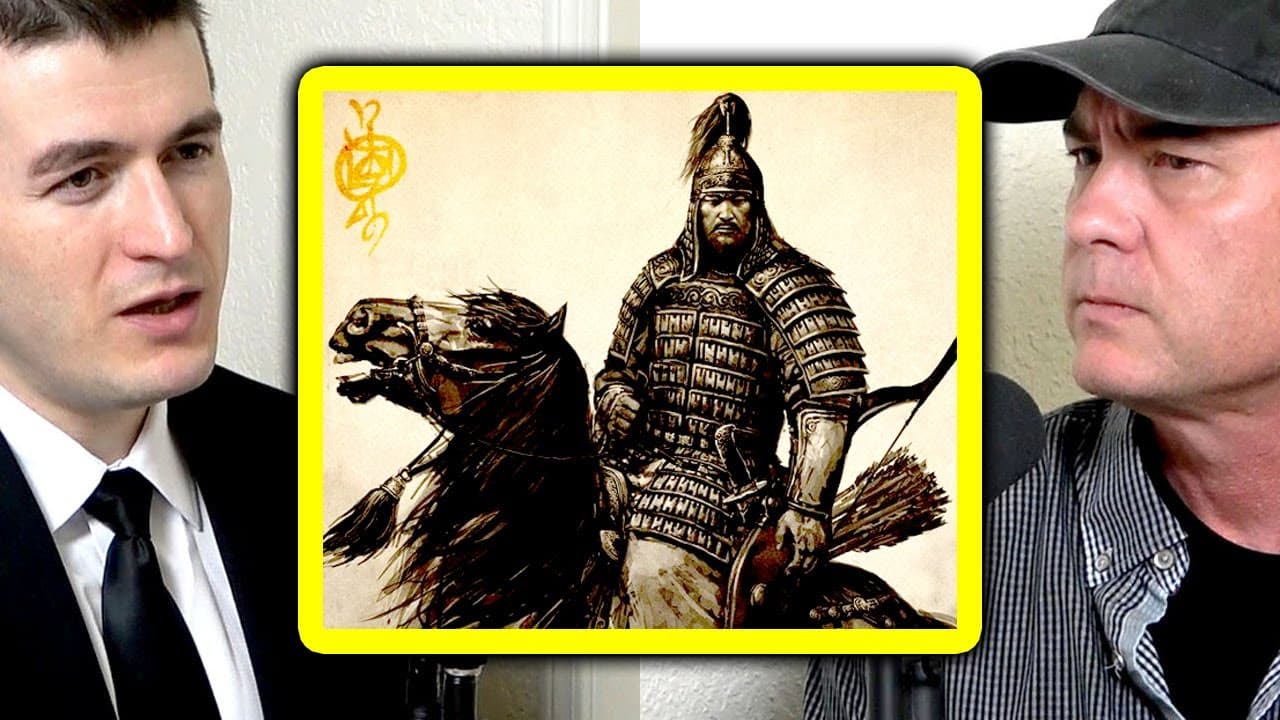
TL;DR
Genghis Khan's legacy is complex, with some viewing him as an evil man and others seeing him as a progressive leader.
Transcript
is it genghis khan or genghis khan it's not genghis khan it's either genghis khan or chingas khan so let's go with the genghis khan the only thing i'll be able to say with any certain last certain thing i'll say about it uh it's like i don't know gif versus jif i don't know i don't know how i don't know how it ever got started the wrong way yeah so... Read More
Key Insights
- 📏 Genghis Khan's legacy is complex, with differing perspectives on his character and rule.
- 😫 The Mongols' nomadic background and exceptional skills in warfare set them apart from other conquerors in history.
- ❓ Genghis Khan and the Mongols' tolerance of religions was primarily to maintain stability in their empire.
- ❓ The concept of historical arsonists suggests that sometimes destructive forces are necessary for societal progress.
- 🪶 Genghis Khan united various nomadic tribes, a rare feat among tribal confederacies.
- 🥹 Genghis Khan's legacy was influenced by his ability to hold the empire together for multiple generations.
- 🎖️ The Mongols' dominance relied on their expertise in horsemanship and archery, which gave them a significant military advantage.
Install to Summarize YouTube Videos and Get Transcripts
Explore YouTube Video Summarizer or Get YouTube Transcript Extractor
Questions & Answers
Q: Was Genghis Khan an evil man or a progressive ruler?
Genghis Khan's legacy is debated, with some viewing him as an evil man and others seeing him as a progressive leader. The perspective largely depends on how one interprets his actions and their impact on society.
Q: How were the Mongols portrayed as historical arsonists?
Some historians argue that in times of corruption and stagnation, a figure like Genghis Khan or a force like the Mongols is needed to clear out the "dead wood" and create space for societal rejuvenation. This portrayal frames their actions as necessary for progress.
Q: Did Genghis Khan's empire display religious tolerance?
Genghis Khan's empire was characterized by religious tolerance, but this was primarily a means to maintain stability and control. As long as a religion didn't disrupt the empire, the Mongols allowed people to practice their beliefs. However, instances of forced concubinage indicate that their motivations were not purely liberal or benevolent.
Q: How were the Mongols' exceptional warriors?
The Mongols, like other nomadic warrior societies, valued excellence in warfare and were raised in the saddle. Their unmatched skill in horsemanship and archery gave them a significant military advantage over settled societies. Their unique weapon systems could not be easily replicated.
Summary & Key Takeaways
-
Genghis Khan's portrayal as an evil man or a progressive ruler depends on one's perspective of his actions.
-
Some historians argue that Genghis Khan and the Mongols were historical arsonists, clearing out corruption and stagnation for societal rejuvenation.
-
Genghis Khan's empire displayed religious tolerance, but this may have been a means to maintain stability rather than a reflection of liberal reform.
-
The Mongols' nomadic background and exceptional skill in warfare set them apart from other conquerors throughout history.
Read in Other Languages (beta)
Share This Summary 📚
Summarize YouTube Videos and Get Video Transcripts with 1-Click
Try YouTube Summary with ChatGPT & Claude or YouTube Transcript Generator
Explore More Summaries from Lex Clips 📚




Summarize YouTube Videos and Get Video Transcripts with 1-Click
Try YouTube Summary with ChatGPT & Claude or YouTube Transcript Generator