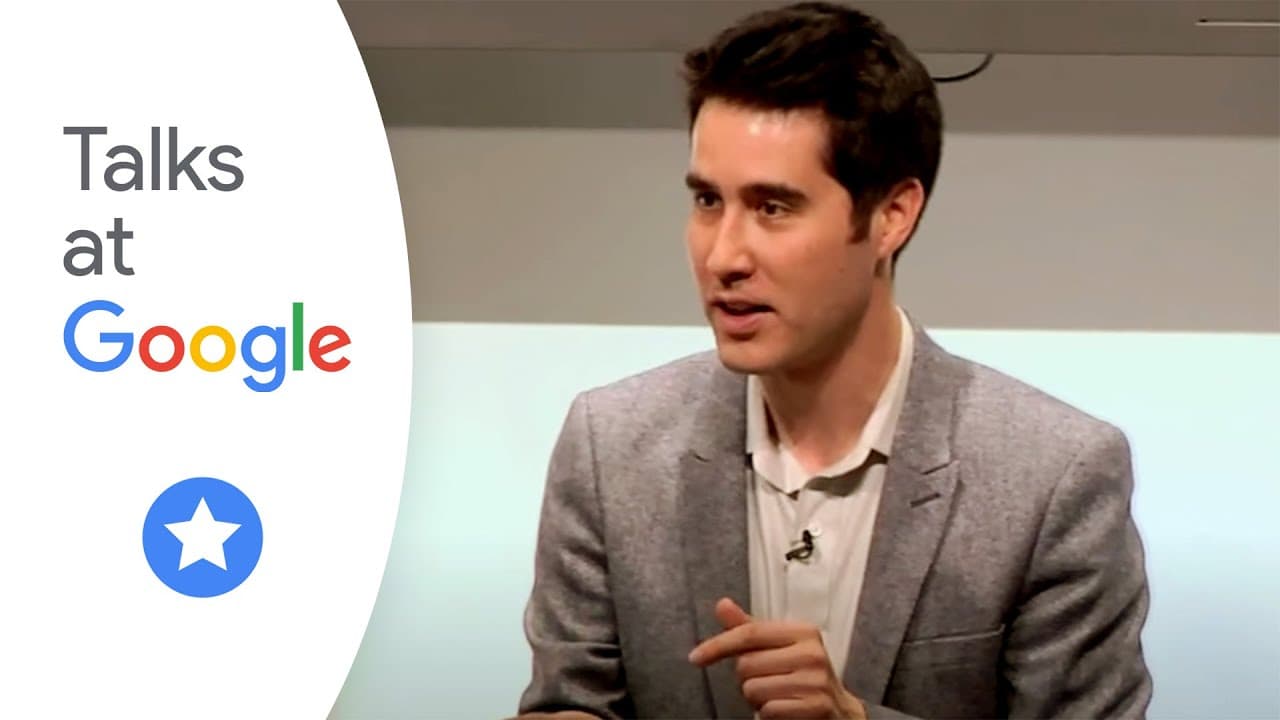
Spellbound | David Kwong | Talks at Google
TL;DR
Magician and puzzler David Kwong discusses the principles of illusion and misdirection in magic tricks, offering insights on how they can be applied in various areas of life.
Transcript
[MUSIC PLAYING] DAVID KWONG: Hi. Hello, Google. Thank you for having me back. It's so great to be here. My name is David Kwong. I am a magician. I'm also a puzzler. I write a lot of crosswords for "The New York Times." I've basically taken the world's nerdiest hobbies and combined them right into one career. [LAUGHTER] But that's because I think ma... Read More
Key Insights
- 🤔 Magic tricks are puzzles that challenge the mind, requiring problem-solving skills and creative thinking.
- 🪄 Misdirection in magic involves giving the audience something of greater interest to distract them from secret movements and manipulations.
- 🥶 The illusion of free choice is a powerful tool that can be utilized in various fields, such as sales and negotiations, to increase compliance and cooperation.
- 💦 Magicians operate in the intersection between preparation and misdirection, similar to how solvers work through puzzles by analyzing clues and finding creative solutions.
- 🦮 By being choice architects, leaders can guide others towards better decisions while still giving them a sense of freedom and control.
Install to Summarize YouTube Videos and Get Transcripts
Explore YouTube Video Summarizer or Get YouTube Transcript Extractor
Questions & Answers
Q: How does misdirection work in magic tricks?
Misdirection involves giving the audience something of greater interest to focus on while the magician performs their secret moves or manipulations. By redirecting attention, the magician can create illusions and make things appear or disappear.
Q: Can you explain the illusion of free choice and its effectiveness?
The illusion of free choice is the idea that if people believe they are dictating how a trick or situation goes, they are more likely to buy into the illusion. People value their sense of free will and are more cooperative and compliant when given the perception of choice.
Q: What is the connection between magic and puzzles?
Magic tricks and puzzles both require problem-solving skills and challenge the mind. Magicians often operate in the intersection between preparation and misdirection, similar to how solvers work through puzzles by analyzing clues and finding creative solutions.
Q: How can magic principles be applied in fields like sales and negotiations?
By utilizing the illusion of free choice, salespeople and negotiators can empower the other party to make decisions that benefit both sides. Convincing someone that an idea or decision was their own increases compliance and cooperation. By being choice architects, leaders can guide others towards what needs to be done while still giving them a sense of freedom and control.
Summary & Key Takeaways
-
David Kwong talks about his career as a magician and puzzler, and how magic tricks are like puzzles that challenge the mind.
-
He explains the principles of illusion and misdirection, showcasing examples like the Rubik's Cube trick and the backyard card trick.
-
Kwong discusses the power of the illusion of free choice and how it can be used in sales, negotiations, and even magic tricks.
-
He emphasizes the importance of being a choice architect and designing choice environments that guide people to make better decisions.
Read in Other Languages (beta)
Share This Summary 📚
Summarize YouTube Videos and Get Video Transcripts with 1-Click
Try YouTube Summary with ChatGPT & Claude or YouTube Transcript Generator
Explore More Summaries from Talks at Google 📚

Summarize YouTube Videos and Get Video Transcripts with 1-Click
Try YouTube Summary with ChatGPT & Claude or YouTube Transcript Generator