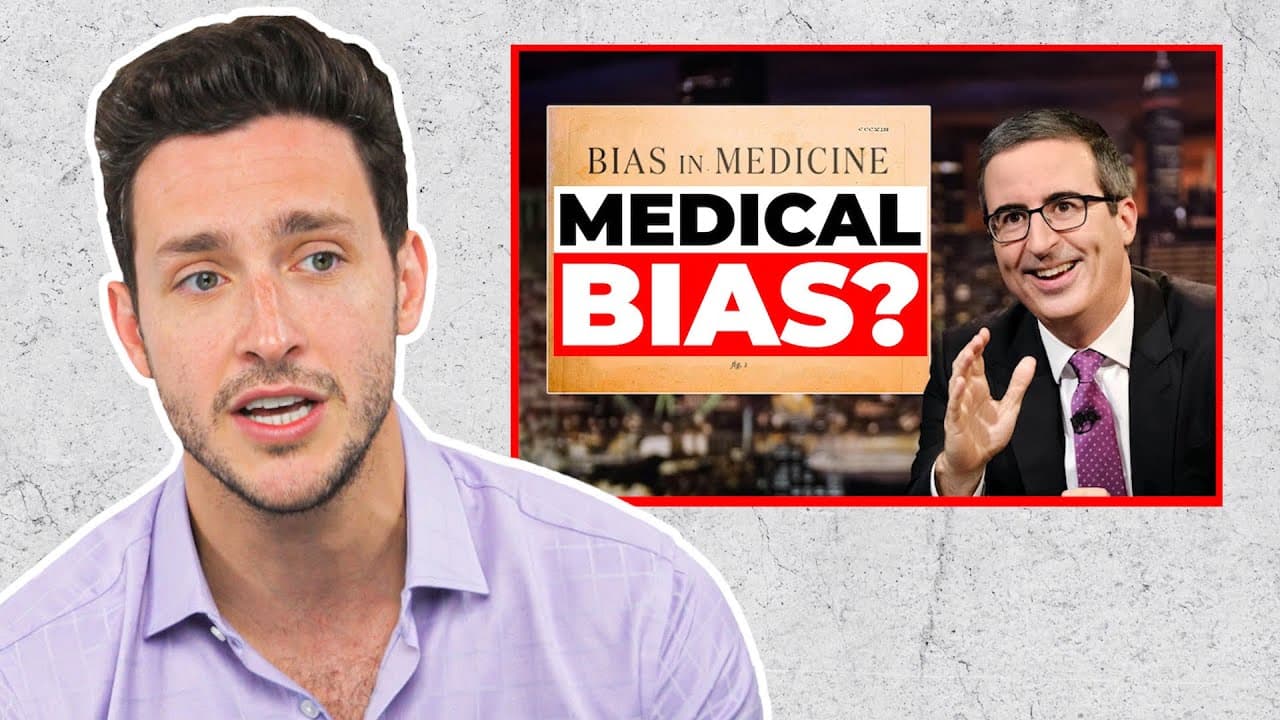
Doctor Reacts to John Oliver | Last Week Tonight: Bias in Medicine
TL;DR
John Oliver's segment highlights significant medical biases affecting women and people of color in healthcare.
Transcript
- Hey, guys! Welcome to another episode of the "Wednesday Checkup". John Oliver just did a hard-hitting piece on medical bias and you asked me to talk about it, so let's get to it. (smooth hiphop music) I actually like getting these subjects out in the open 'cause I feel like if we can discuss them honestly, openly, and fairly, we're gonna make the... Read More
Key Insights
- 👩🎨 Gender bias in healthcare often leads to women receiving inadequate pain management, with studies indicating they are less likely to be prescribed necessary medications compared to men.
- 🥰 Racial biases significantly impact the treatment of people of color, who are often misdiagnosed or under-treated for serious conditions like heart attacks, leading to preventable deaths.
- 🧑⚕️ Social determinants of health, such as zip code and access to quality care, can have a more significant effect on health outcomes than genetics or obstetric history.
- 😷 Educational interventions for medical students and practitioners are essential for increasing awareness about implicit biases and improving healthcare delivery.
- 👩⚕️ There's a notable gap in clinical research focused on women's health compared to men's, which can lead to misdiagnosis and inadequate treatment for women.
- 👨🔬 Legislative efforts are underway to allocate funding for research aimed at understanding and addressing racial and gender disparities in healthcare.
- 😷 Initiatives to recruit and support minority medical professionals can help improve diversity in medicine, which can lead to better healthcare outcomes for underrepresented populations.
Install to Summarize YouTube Videos and Get Transcripts
Explore YouTube Video Summarizer or Get YouTube Transcript Extractor
Questions & Answers
Q: What key biases are highlighted in John Oliver's piece?
The piece focuses on two primary biases: gender and racial bias in healthcare. It illustrates how women often receive less aggressive treatment for various medical conditions and how people of color face disparities in pain management and overall care. These biases result in poorer health outcomes for these groups, calling for awareness and reform in medical practices.
Q: How does the gender bias manifest in the treatment of women?
Gender bias in healthcare can be seen through various studies indicating that women are less likely to receive referrals for procedures like knee replacements. They also experience delays in pain management, with doctors sometimes dismissing their symptoms due to stereotypes about women being more emotional. This leads to significant disparities in care quality and overall outcomes for female patients.
Q: What systemic issues contribute to racial disparities in healthcare?
Several systemic issues contribute to racial disparities, including socioeconomic factors and the quality of healthcare facilities. Studies have shown that African-Americans often receive care in hospitals with lower quality standards, which can adversely affect treatment outcomes. Additionally, inherent biases among healthcare providers, such as assumptions about drug-seeking behavior, exacerbate these disparities.
Q: What solutions are being proposed to combat these biases?
Solutions include enhancing training for healthcare providers on biases and disparities, increasing the representation of diverse groups in medicine, and implementing systemic changes within healthcare facilities. Ongoing research into these disparities is crucial for developing effective interventions to ensure equitable treatment for all patients, irrespective of gender or race.
Summary & Key Takeaways
-
John Oliver's piece addresses the pervasive biases in the medical field, particularly against women and people of color, revealing the need for increased awareness and training among healthcare professionals.
-
The content emphasizes the importance of understanding the unique healthcare experiences of marginalized groups, illustrating disparities in treatment, pain management, and overall outcomes based on race and gender.
-
The discussion highlights ongoing efforts to rectify these biases through education, improved research, and initiatives to enhance diversity in the medical profession.
Read in Other Languages (beta)
Share This Summary 📚
Summarize YouTube Videos and Get Video Transcripts with 1-Click
Try YouTube Summary with ChatGPT & Claude or YouTube Transcript Generator
Explore More Summaries from Doctor Mike 📚





Summarize YouTube Videos and Get Video Transcripts with 1-Click
Try YouTube Summary with ChatGPT & Claude or YouTube Transcript Generator