How clean is YOUR drinking water?
TL;DR
Microbes are everywhere, essential for life but can also cause diseases if not handled properly.
Transcript
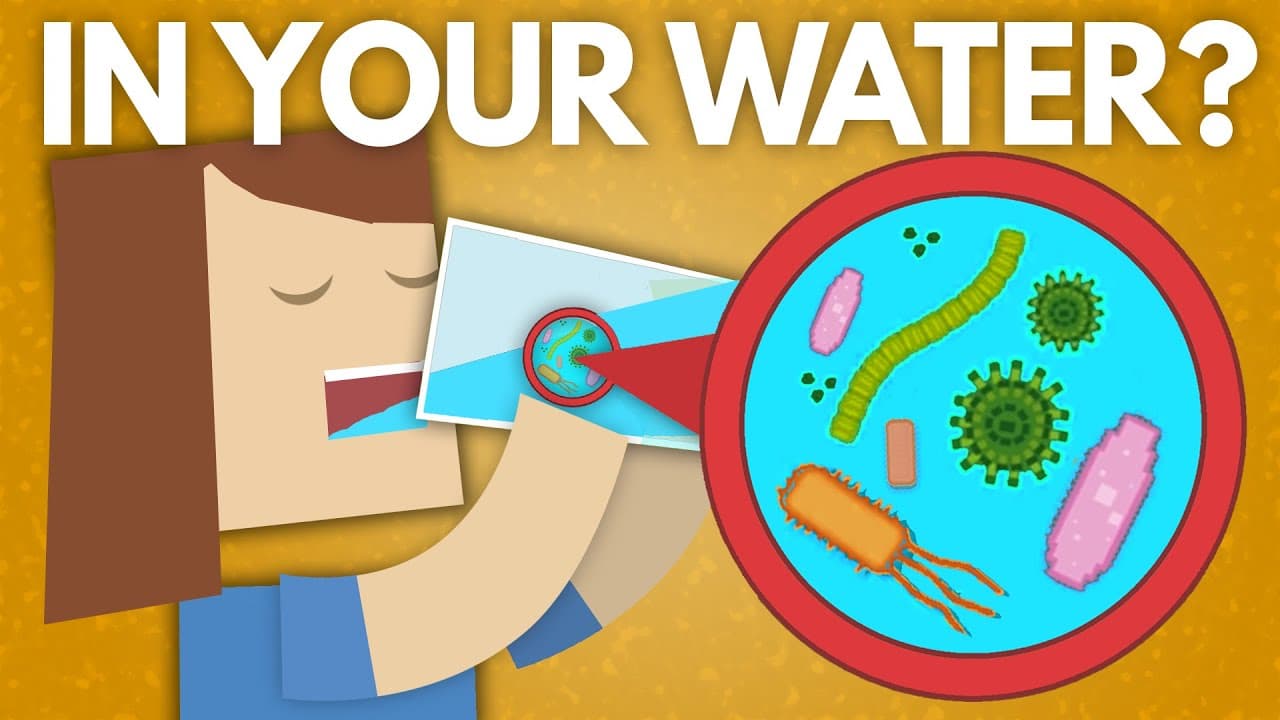
Hey there! Welcome to Life Noggin. Oh look it’s my invisible friend! So glad you finally got to meet him! Living in the water, and nearly everywhere else on Earth,, are tiny, microscopic organisms called microorganisms or microbes., They have existed for at least 3,500 million years and were the only living things on Earth for the majority of that ... Read More
Key Insights
- 🖐️ Microorganisms, including microbes, bacteria, and viruses, have played a significant role in Earth's ecosystem for millions of years.
- 😋 While some microbes are harmful pathogens causing diseases, others have beneficial roles in food production and environmental sustainability.
- 💦 Proper hygiene practices, immunizations, and clean water sources are essential to prevent infections by harmful microorganisms.
- 💱 Microbes contribute to various processes like biodegradation, nutrient recycling, biofuel production, and even climate change mitigation.
- 😋 Microorganisms are present in various aspects of daily life, from food production to wastewater treatment plants.
- 🖐️ Healthy microbial populations in and on the human body play crucial roles in digestion, immunity, and overall health.
- 🧑⚕️ Maintaining a balance between helpful and harmful microbes is essential for both environmental sustainability and human health.
Install to Summarize YouTube Videos and Get Transcripts
Explore YouTube Video Summarizer or Get YouTube Transcript Extractor
Questions & Answers
Q: What are some examples of harmful pathogens caused by microorganisms?
Some examples include bacteria like Mycobacterium tuberculosis, protozoa like Plasmodium, fungus like Trichophyton rubrum, and viruses like Varicella zoster, causing diseases such as tuberculosis, Malaria, ringworm, and Chickenpox, respectively.
Q: How do microbes play a role in environmental sustainability?
Microbes contribute to processes like biodegradation, nutrient recycling, and even biofuel production, showcasing their importance in maintaining ecological balance.
Q: How can individuals protect themselves from harmful microorganisms?
Practicing proper hygiene, getting immunizations, and ensuring clean drinking water sources are effective ways to safeguard against diseases caused by harmful microbes.
Q: What are some surprising benefits of microbes in everyday life?
Microbes are crucial in food production (yeast in bread and beer, mold in cheeses), environmental protection (oxygen production, greenhouse gas processing), and even maintaining human health through digestion and immunity.
Summary & Key Takeaways
-
Microorganisms, including bacteria, fungi, and viruses, have been essential for Earth's ecosystem for millions of years.
-
While some microbes are harmful pathogens causing diseases, others are beneficial in food production and environmental sustainability.
-
Maintaining proper hygiene and clean water sources are essential to prevent harmful microorganisms from causing infections.
Read in Other Languages (beta)
Share This Summary 📚
Summarize YouTube Videos and Get Video Transcripts with 1-Click
Try YouTube Summary with ChatGPT & Claude or YouTube Transcript Generator
Explore More Summaries from Life Noggin 📚






Summarize YouTube Videos and Get Video Transcripts with 1-Click
Try YouTube Summary with ChatGPT & Claude or YouTube Transcript Generator