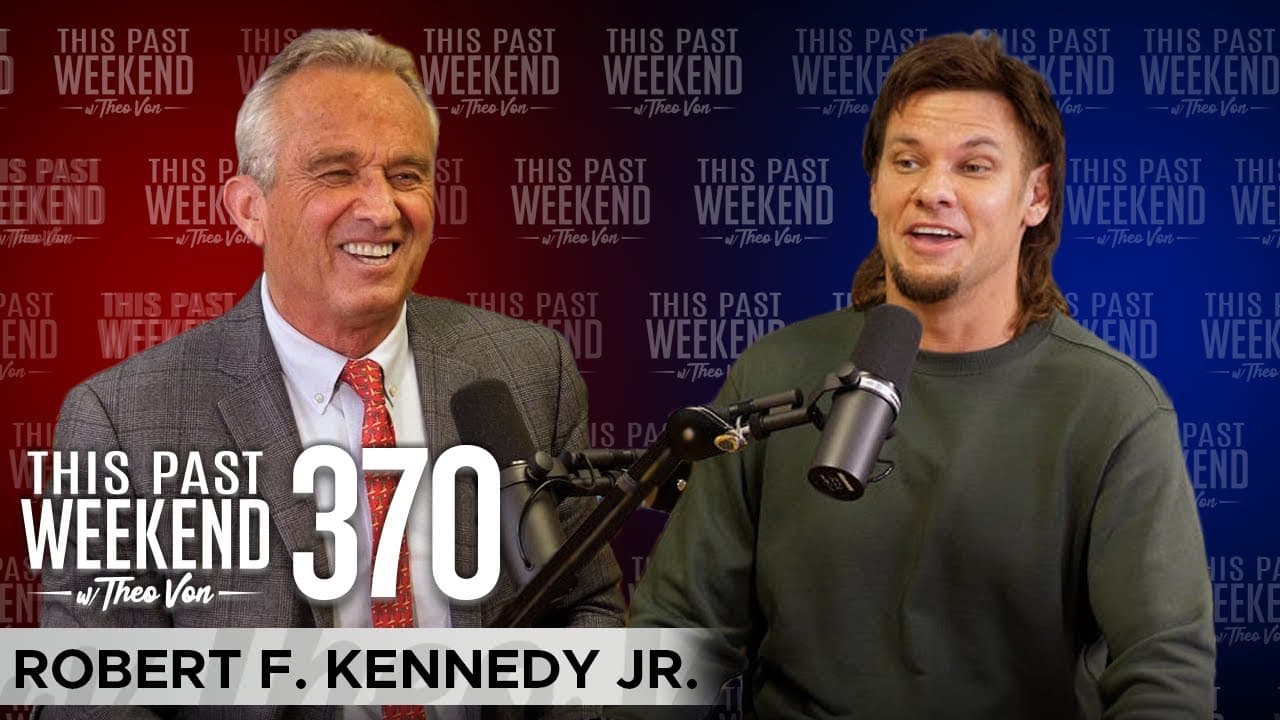
Robert F. Kennedy Jr. | This Past Weekend w/ Theo Von #370
TL;DR
Robert Kennedy Jr. discusses his book about Anthony Fauci's influence on vaccines and health policies.
Transcript
today's episode is brought to you by liquid death i'm happy to announce that the return of the rat tour will be picking up some steam february 2nd in jacksonville florida at the florida theater february 3rd in st petersburg florida february 5th orlando florida february 25th rockford illinois february 26th chicago illinois and friday may 6 over ther... Read More
Key Insights
- 🥺 Kennedy asserts that the compounding interests of pharmaceutical companies in the regulatory process have led to compromised public health decisions.
- 💉 He argues for the need to reevaluate the relationship between health authorities and the pharmaceutical industry to restore more independent oversight.
- 😥 Kennedy suggests that early treatment protocols for COVID-19 could have significantly reduced hospitalization rates, pointing to successful interventions used in other countries.
- 🧑⚕️ The book emphasizes the risks of placing too much trust in vaccine-only strategies without considering broader health implications and preventive measures.
- 🤨 Kennedy posits that long-term vaccine safety data is lacking, raising concerns about widespread vaccine campaigns targeting populations like children.
- 🧑⚕️ The discussion illustrates the erosion of civil liberties in the context of health mandates, urging a collective pushback against excessive governmental control.
- 🤗 Kennedy's criticism extends to the lack of open discourse about vaccine-related injuries, calling for transparent reporting systems for adverse events.
Install to Summarize YouTube Videos and Get Transcripts
Explore YouTube Video Summarizer or Get YouTube Transcript Extractor
Questions & Answers
Q: What is the main argument presented in "The Real Anthony Fauci?"
Robert Kennedy Jr. argues that Anthony Fauci's approach to public health, particularly during the COVID-19 pandemic, has led to misguided policies that prioritized vaccine profits over effective treatments, ultimately resulting in unnecessary deaths and harm to public health. Kennedy believes that this is indicative of a broader issue of agency capture where public health agencies have become too entwined with the pharmaceutical industry.
Q: How does Kennedy describe the relationship between the FDA and pharmaceutical companies?
Kennedy explains that approximately 45% of the FDA's budget comes from pharmaceutical companies, creating a potential conflict of interest. This reliance on industry funding can influence regulatory decisions, leading to a scenario where the agency acts more as a partner to the industry rather than an impartial regulator intended to protect public health.
Q: What criticisms does Kennedy raise regarding the response to COVID-19?
He criticizes the lack of early treatment options provided to patients, pointing out that many who were hospitalized were not given effective therapies, like hydroxychloroquine. Kennedy believes that focusing primarily on developing vaccines, while sidelining effective early treatments, contributed to higher hospitalization and death rates during the pandemic.
Q: What does Kennedy say about the safety and efficacy of vaccines?
Kennedy highlights concerns regarding vaccine safety, including reports of adverse effects like myocarditis and the alleged profits generated from vaccine administration. He argues that the expedited approval processes for vaccines during the pandemic may overlook potential long-term health consequences for recipients, emphasizing the need for further study and caution.
Q: How does Kennedy's book challenge mainstream media narratives?
Kennedy asserts that mainstream media has largely ignored or downplayed critical discussions regarding vaccine safety and alternative treatments for COVID-19. He believes media outlets, influenced by pharmaceutical advertising, prioritize narratives that align with industry interests while suppressing dissenting opinions or research findings that question the overall approach to public health.
Summary & Key Takeaways
-
Robert Kennedy Jr. shares insights from his new book, "The Real Anthony Fauci," critiquing the public health response to COVID-19 and highlighting the entanglement between pharmaceutical companies and regulatory agencies.
-
Kennedy argues that mismanagement by health officials, including Fauci, led to unnecessary deaths and ineffective treatments, particularly regarding early COVID care.
-
The discussion highlights systemic issues in the pharmaceutical industry, including the relationship between funding, regulatory bodies, and the impact on public health policy.
Read in Other Languages (beta)
Share This Summary 📚
Summarize YouTube Videos and Get Video Transcripts with 1-Click
Try YouTube Summary with ChatGPT & Claude or YouTube Transcript Generator
Explore More Summaries from This Past Weekend 📚


Summarize YouTube Videos and Get Video Transcripts with 1-Click
Try YouTube Summary with ChatGPT & Claude or YouTube Transcript Generator