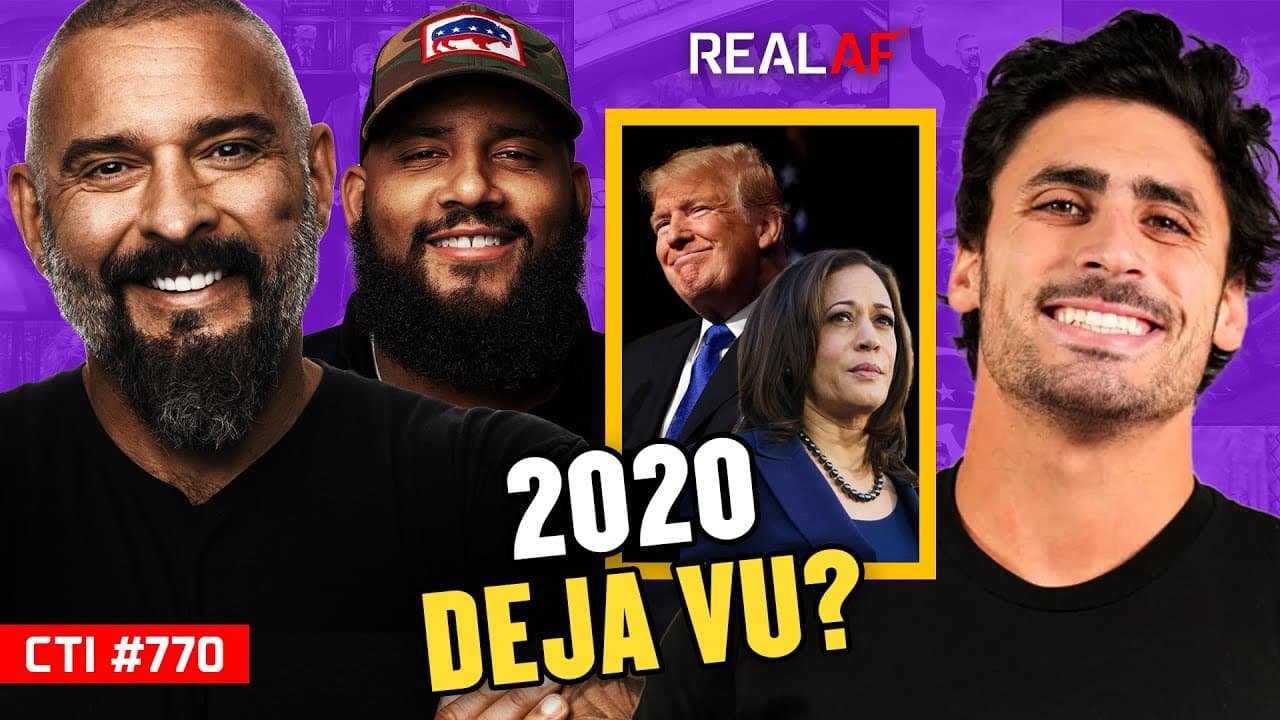
Are They Going To Run The Same Play From 2020? Ft. Duke Gomez - Ep 770 CTI
TL;DR
Discussion on political manipulation, social issues, and cultural shifts.
Transcript
apparently now Harris is in the lead over Trump in polls by rers who believes that like you go up and down the street dude of anywhere any of these videos anybody's doing that are Street walking videos and they ask anybody who they're voting for and they are saying Trump I just can't get over the fact that like bro like two months ago people hated ... Read More
Key Insights
- The discussion highlights the manipulation of political polls to create a false perception of candidate popularity, suggesting that oversampling certain groups can skew results.
- The conversation critiques the media's portrayal of political events, emphasizing how narratives can be constructed to mislead the public.
- There is a strong emphasis on the impact of social media censorship and the challenges faced by content creators who express controversial opinions.
- The episode discusses the cultural and societal implications of promoting unhealthy lifestyles as acceptable, arguing for a return to more traditional values.
- The hosts express concern over the perceived erosion of masculinity and the promotion of alternative gender identities, suggesting these trends are harmful to society.
- The episode touches on the impact of immigration policies, particularly the challenges posed by illegal immigration and its effects on local communities.
- The conversation includes a critique of cancel culture and its effects on free speech, with a focus on how it has changed the landscape for comedians and public figures.
- The hosts discuss corporate responses to social backlash, using Bud Light as an example of how businesses navigate cultural controversies.
Install to Summarize YouTube Videos and Get Transcripts
Explore YouTube Video Summarizer or Get YouTube Transcript Extractor
Questions & Answers
Q: What is the main concern regarding political polls discussed in the episode?
The main concern is the manipulation of political polls through oversampling certain groups, such as Democrats, to create a false perception of candidate popularity. This tactic is believed to skew results and mislead the public about the true standing of political figures.
Q: How do the hosts view the media's role in political narratives?
The hosts argue that the media plays a significant role in constructing misleading narratives about political events. They believe that the media often exaggerates or fabricates stories to serve specific agendas, which can distort public understanding and perception.
Q: What challenges do content creators face according to the episode?
Content creators face challenges related to social media censorship, where expressing controversial opinions can lead to account bans or removal of content. This environment encourages self-censorship, limiting free speech and impacting the diversity of opinions available online.
Q: What is the episode's stance on promoting unhealthy lifestyles?
The episode criticizes the promotion of unhealthy lifestyles as acceptable, arguing that it is harmful to society. The hosts advocate for a return to traditional values and emphasize the importance of addressing obesity and other health issues rather than normalizing them.
Q: How do the hosts perceive the cultural shifts regarding gender identity?
The hosts express concern over the cultural shifts promoting alternative gender identities, suggesting that these trends are detrimental to society. They argue that such movements contribute to the erosion of traditional masculinity and create confusion around gender roles.
Q: What is the critique of cancel culture mentioned in the episode?
The critique of cancel culture centers on its impact on free speech and the pressure it places on individuals to conform to certain viewpoints. The hosts discuss how cancel culture has changed the landscape for comedians and public figures, making it difficult to express controversial or dissenting opinions.
Q: What concerns are raised about immigration policies?
Concerns are raised about the effects of illegal immigration on local communities, particularly the challenges posed by an influx of migrants. The hosts discuss the strain on resources and the potential for increased crime, advocating for stricter immigration policies.
Q: How does the episode view corporate responses to social backlash?
The episode views corporate responses to social backlash as often misguided, using Bud Light as an example. The hosts argue that companies should focus on their core values and audience rather than attempting to appease social movements that may not align with their brand identity.
Summary & Key Takeaways
-
The episode delves into the manipulation of political polls and media narratives, highlighting the deceptive techniques used to influence public perception. The hosts argue that these tactics are employed to create a false sense of candidate popularity.
-
Social media censorship and the challenges faced by content creators are discussed, with emphasis on the self-censorship that individuals impose due to fear of backlash. The conversation critiques the impact of cancel culture on free speech.
-
Cultural shifts, including the promotion of alternative gender identities and unhealthy lifestyles, are critiqued. The hosts advocate for a return to traditional values, expressing concern over the erosion of masculinity and the effects of immigration policies.
Read in Other Languages (beta)
Share This Summary 📚
Summarize YouTube Videos and Get Video Transcripts with 1-Click
Try YouTube Summary with ChatGPT & Claude or YouTube Transcript Generator
Explore More Summaries from Andy Frisella 📚
Summarize YouTube Videos and Get Video Transcripts with 1-Click
Try YouTube Summary with ChatGPT & Claude or YouTube Transcript Generator