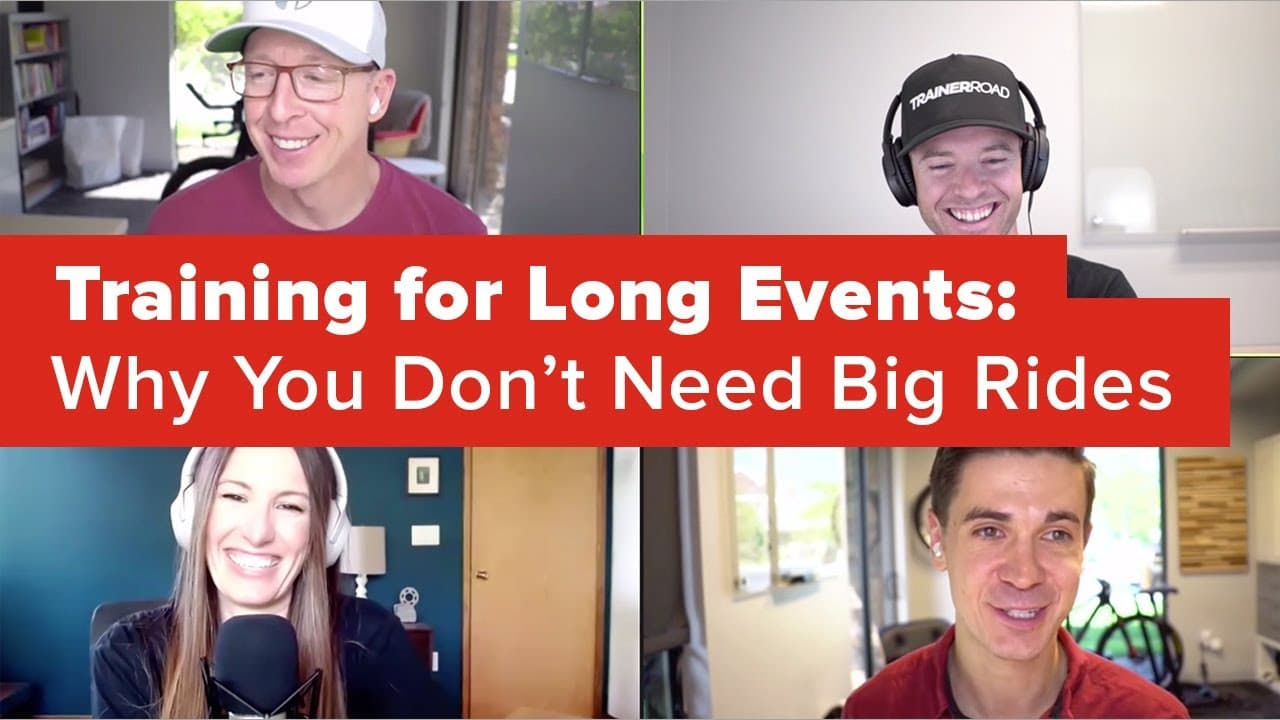
Training for Long Events: Why You Don’t Need Big Rides (Ask a Cycling Coach 264)
TL;DR
Training for long events on low-volume plans can be effective by focusing on specific energy systems and understanding the nuances of training stress.
Transcript
I've been following the low-volume climbing road race plan for my a event obviously this is now canceled but as I was getting great results from the training with little to little or no outdoor riding I decided to stick with it and really I guess what he's saying there we should sub in outdoor riding with structure lat or like unstructured rides ri... Read More
Key Insights
- 🥺 Consistency with structured training, both indoor and outdoor, leads to fitness gains and progress in FTP.
- ❓ Understanding the nuances of TSS and event-specific adaptations is crucial for effective event preparation.
- 🪘 Training specificity for long events, focusing on endurance and mental resilience, enhances performance.
- 🔈 Balancing shuttling capacity and endurance through low-volume training aids in preparing for challenging distances.
- 🟰 Not all TSS is created equal, and focusing on specific energy systems is essential for event readiness.
- 🔈 Low-volume plans can be effective for preparing for long events if consistency and specificity are maintained.
- ⛽ Training adaptations for challenging events should prioritize mental focus, fueling strategies, and saddle time.
Install to Summarize YouTube Videos and Get Transcripts
Explore YouTube Video Summarizer or Get YouTube Transcript Extractor
Questions & Answers
Q: How did the athlete adapt training after their event was cancelled?
The athlete continued with a low-volume training plan, focusing on structured indoor rides while occasionally adding outdoor rides for variation and specificity.
Q: What role does Training Stress Score (TSS) play in event preparation?
TSS provides insight into the intensity and duration of training, but it's essential to understand that not all TSS is equal and specificity matters for event readiness.
Q: How can athletes address deficits in their training for challenging events?
Athletes can overcome deficits by including specific adaptations for the event, maintaining consistency, and understanding the impact of training stress on performance.
Q: Why is it important to balance shuttling capacity and endurance for long events?
Maintaining a balance between FTP and endurance capacity helps in preparing for long events by ensuring efficient lactate management and sustained performance.
Summary & Key Takeaways
-
Following a low-volume training plan for a cancelled event, the athlete saw progress with structured indoor riding.
-
Maintaining consistency with structured training, including both indoor and outdoor rides, led to fitness gains and an increase in FTP.
-
Understanding the importance of specific training adaptations for long events helps in preparing effectively for challenging distances.
Read in Other Languages (beta)
Share This Summary 📚
Summarize YouTube Videos and Get Video Transcripts with 1-Click
Try YouTube Summary with ChatGPT & Claude or YouTube Transcript Generator
Explore More Summaries from TrainerRoad 📚





Summarize YouTube Videos and Get Video Transcripts with 1-Click
Try YouTube Summary with ChatGPT & Claude or YouTube Transcript Generator