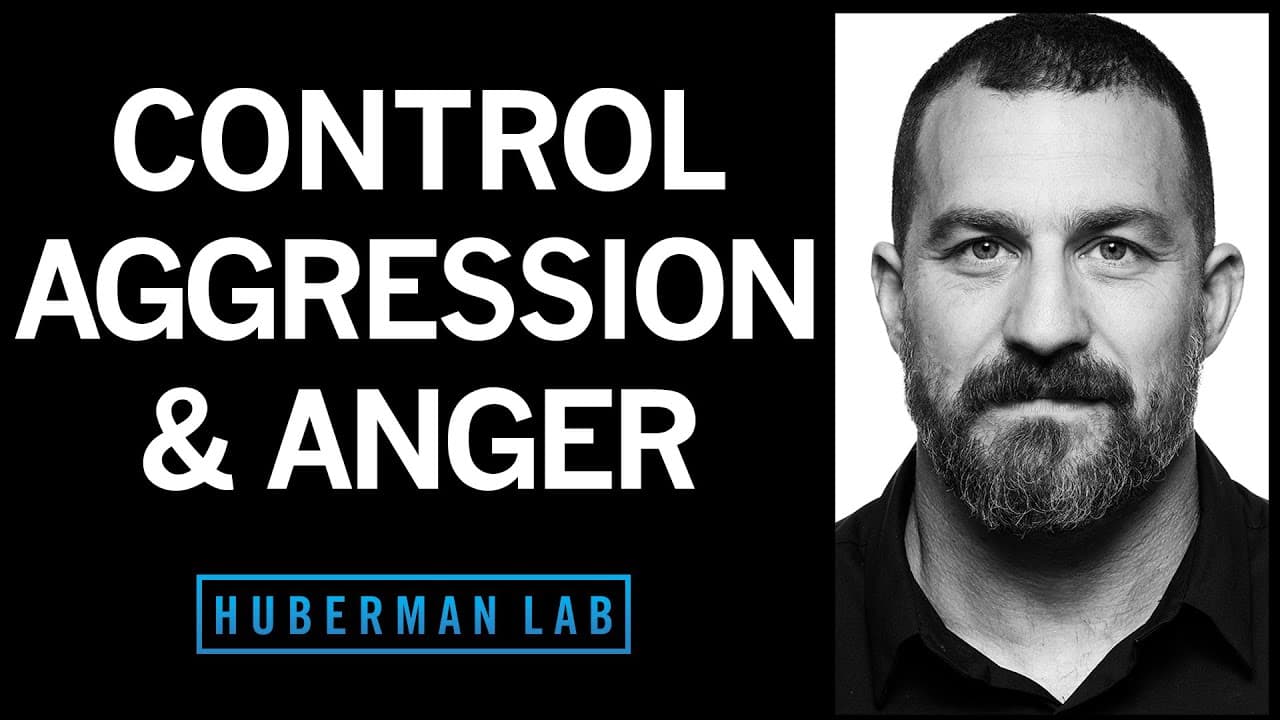
Understanding & Controlling Aggression | Huberman Lab Podcast #71
TL;DR
Aggression is a complex behavior with various types and underlying biological mechanisms, such as the involvement of the ventromedial hypothalamus (VMH) and the conversion of testosterone to estrogen. Context, including day length and stress levels, also influences aggression. Tools such as omega-3 fatty acid supplementation, cortisol reduction techniques, and ashwagandha supplementation can be utilized to modulate aggressive tendencies.
Transcript
- Welcome to the Huberman Lab Podcast, where we discuss science and science based tools for everyday life. [cheerful music] I'm Andrew Huberman, and I'm a professor of neurobiology and ophthalmology at Stanford School of Medicine. Today, we are discussing aggression. I'm going to explain to you that there are several different types of aggression, ... Read More
Key Insights
- 🅰️ Different types of aggression exist, including reactive and proactive aggression, with distinct underlying biological mechanisms.
- ❓ Testosterone is converted to estrogen, and it is the activation of estrogen receptor-containing neurons in the VMH that triggers aggression.
- 🥳 Day length influences aggression through hormonal changes, with longer days and more sunlight correlating with reduced aggression.
- ❓ Omega-3 fatty acid supplementation, cortisol reduction techniques, and ashwagandha supplementation can be utilized to modulate aggressive tendencies.
Install to Summarize YouTube Videos and Get Transcripts
Explore YouTube Video Summarizer or Get YouTube Transcript Extractor
Questions & Answers
Q: Does testosterone directly cause aggression?
No, testosterone itself does not directly cause aggression. Testosterone is converted to estrogen in the brain, and it is the activation of estrogen receptor-containing neurons in the VMH that triggers aggression.
Q: How can day length affect aggression?
Day length influences aggression through the modulation of hormones such as melatonin, dopamine, and stress hormones. Longer days with more sunlight decrease aggression, while shorter days with reduced sunlight increase aggression.
Q: Are there any dietary interventions that can help reduce aggression?
Omega-3 fatty acid supplementation, which provides precursors for neurotransmitters like serotonin, has been shown to reduce aggression in certain contexts. Additionally, diets rich in tryptophan, a precursor to serotonin, may have a positive impact on aggression.
Q: Is there a potential link between cortisol levels and aggression?
Higher cortisol levels are associated with a greater propensity for aggression, as cortisol activates the sympathetic arm of the autonomic nervous system. Techniques such as sauna or hot baths and ashwagandha supplementation may help lower cortisol levels and reduce aggression.
Summary & Key Takeaways
-
Aggression encompasses different types, including reactive aggression (in response to threat) and proactive aggression (deliberate harm towards others). Biological mechanisms, such as the activity of estrogen receptor-containing neurons in the ventromedial hypothalamus (VMH), play a role in aggression.
-
Testosterone does not directly trigger aggression; rather, it is converted to estrogen, which activates aggression-related neurons. Factors such as cortisol levels, serotonin levels, and day length also influence aggressive tendencies.
-
Supplementation with omega-3 fatty acids, cortisol reduction techniques (e.g., sauna or hot baths), and ashwagandha supplementation can be used to modulate aggression.
Read in Other Languages (beta)
Share This Summary 📚
Summarize YouTube Videos and Get Video Transcripts with 1-Click
Try YouTube Summary with ChatGPT & Claude or YouTube Transcript Generator
Explore More Summaries from Andrew Huberman 📚




Summarize YouTube Videos and Get Video Transcripts with 1-Click
Try YouTube Summary with ChatGPT & Claude or YouTube Transcript Generator