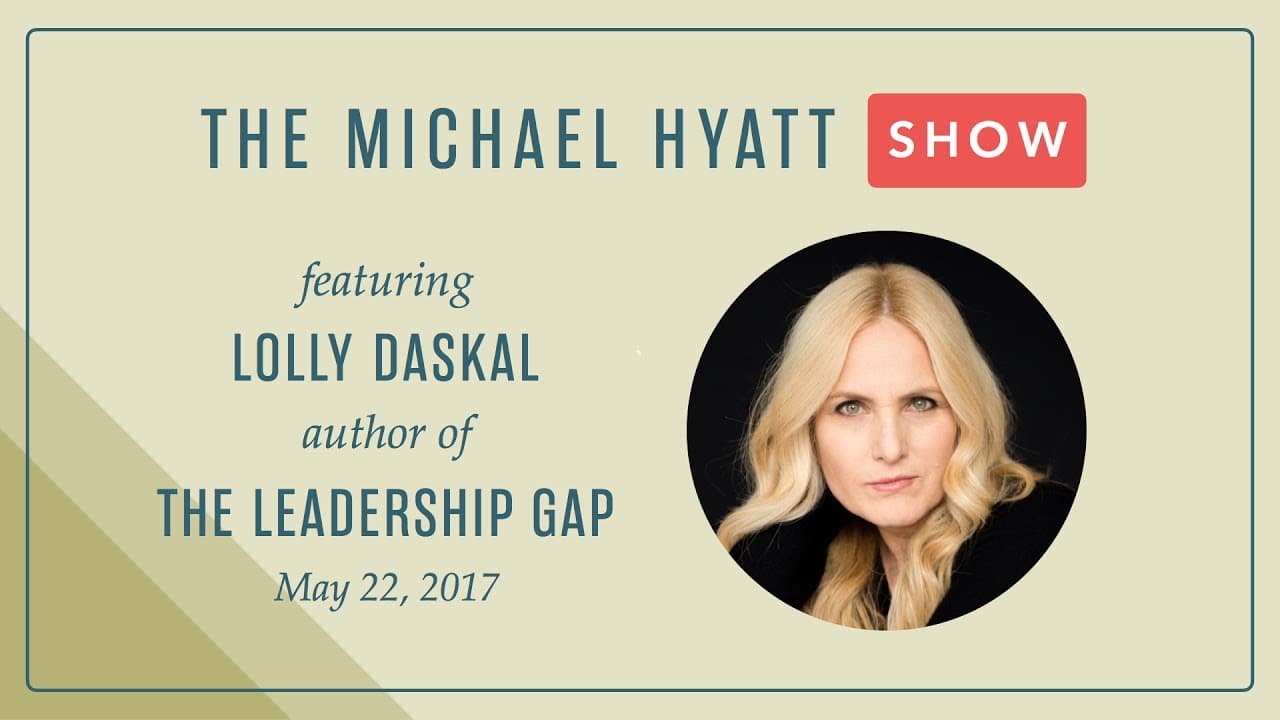
The Michael Hyatt Show with Special Guest, Lolly Daskal
TL;DR
Leadership strengths can hide weaknesses that hinder success.
Transcript
[Applause] hey guys Michael Hyatt here welcome to the Michael Hyatt show I am so excited that you've joined us we have special guests lolly Daskal later we're gonna be talking about her new book the leadership gap you guys are going to love this if you have any interest in leadership or how your strengths can sometimes become a weakness and can act... Read More
Key Insights
- Leadership strengths can often become weaknesses if not managed properly, as they may overshadow other necessary skills.
- Self-awareness is crucial for leaders to identify their blind spots and areas where their strengths may become liabilities.
- Leaders must learn to leverage both their strengths and weaknesses to become more effective and holistic in their roles.
- The concept of leadership gaps highlights how certain traits, while beneficial, can also lead to negative outcomes if not balanced.
- Lolly Daskal's book, 'The Leadership Gap,' explores the duality of leadership traits and how they can both empower and hinder leaders.
- Leaders should embrace vulnerability and transparency, admitting their mistakes to build trust and credibility with their teams.
- The 'rethink' model encourages leaders to reassess their approaches and adapt their styles to better suit the needs of their teams.
- Creating a safe environment for feedback is essential for leaders to understand how their actions are perceived and to foster growth.
Install to Summarize YouTube Videos and Get Transcripts
Explore YouTube Video Summarizer or Get YouTube Transcript Extractor
Questions & Answers
Q: What is the main concept of Lolly Daskal's book, 'The Leadership Gap'?
Lolly Daskal's book, 'The Leadership Gap,' explores the idea that a leader's greatest strengths can also be their greatest weaknesses. She identifies seven archetypes that represent common leadership traits and their corresponding gaps. The book provides insights on how leaders can recognize and manage these gaps to achieve their goals and lead more effectively.
Q: How can leaders identify their leadership gaps?
Leaders can identify their leadership gaps by practicing self-awareness and seeking feedback from their teams and peers. It's important for leaders to create a safe environment where team members feel comfortable providing honest feedback. Additionally, leaders should regularly reflect on their actions and decisions, considering how their strengths might also serve as weaknesses in different contexts.
Q: What is the 'rethink' model mentioned in the episode?
The 'rethink' model is a framework introduced by Lolly Daskal that encourages leaders to reassess their approaches and adapt their styles to better suit the needs of their teams. It involves recognizing the duality of leadership traits and understanding how strengths can become liabilities. By rethinking their actions and decisions, leaders can better navigate their leadership gaps and lead more effectively.
Q: Why is vulnerability important for leaders?
Vulnerability is important for leaders because it builds trust and credibility with their teams. When leaders are open about their mistakes and willing to admit their weaknesses, it fosters an environment of transparency and honesty. This openness encourages team members to also be vulnerable, leading to more authentic communication and stronger team dynamics. Vulnerability helps leaders connect with their teams on a human level, enhancing their overall leadership effectiveness.
Q: How can leaders balance their strengths and weaknesses?
Leaders can balance their strengths and weaknesses by being aware of how their strengths might also serve as weaknesses in different situations. They should seek feedback and be open to learning from their mistakes. By embracing both their strengths and weaknesses, leaders can create a more holistic approach to leadership. It's also important for leaders to adapt their styles to fit the needs of their teams and the specific context they are in.
Q: What role does self-awareness play in effective leadership?
Self-awareness plays a crucial role in effective leadership as it helps leaders recognize their strengths and weaknesses. By understanding how their actions and decisions are perceived by others, leaders can adjust their approaches to better suit the needs of their teams. Self-awareness also enables leaders to identify areas for personal growth and development, ultimately leading to more effective and impactful leadership.
Q: How can leaders create a safe environment for feedback?
Leaders can create a safe environment for feedback by fostering a culture of openness and trust. They should encourage team members to share their thoughts and opinions without fear of retribution. Leaders should also model vulnerability by admitting their own mistakes and being receptive to feedback. Regularly seeking input from team members and showing appreciation for their contributions can further enhance the safety and effectiveness of the feedback environment.
Q: What is the significance of the seven archetypes in 'The Leadership Gap'?
The seven archetypes in 'The Leadership Gap' represent common leadership traits and their corresponding gaps. Each archetype has a strength that, if not managed properly, can become a weakness. By understanding these archetypes, leaders can identify their own traits and gaps, allowing them to better navigate their leadership journey. The archetypes provide a framework for leaders to assess their actions and decisions, helping them to achieve their goals and lead more effectively.
Summary & Key Takeaways
-
In 'The Michael Hyatt Show,' Michael Hyatt interviews Lolly Daskal about her book 'The Leadership Gap,' which explores how leaders' strengths can also be their weaknesses. Lolly shares insights on how leaders can identify and manage these gaps to achieve their ultimate goals.
-
Lolly Daskal discusses the importance of self-awareness and vulnerability in leadership, emphasizing that leaders should be open to feedback and willing to admit their mistakes. She introduces the 'rethink' model, which helps leaders reassess their strengths and weaknesses.
-
The episode highlights the dual nature of leadership traits, where strengths can become liabilities if not balanced. Lolly encourages leaders to embrace both their strengths and weaknesses, creating a more holistic approach to leadership.
Read in Other Languages (beta)
Share This Summary 📚
Summarize YouTube Videos and Get Video Transcripts with 1-Click
Try YouTube Summary with ChatGPT & Claude or YouTube Transcript Generator
Explore More Summaries from Michael Hyatt 📚




Summarize YouTube Videos and Get Video Transcripts with 1-Click
Try YouTube Summary with ChatGPT & Claude or YouTube Transcript Generator