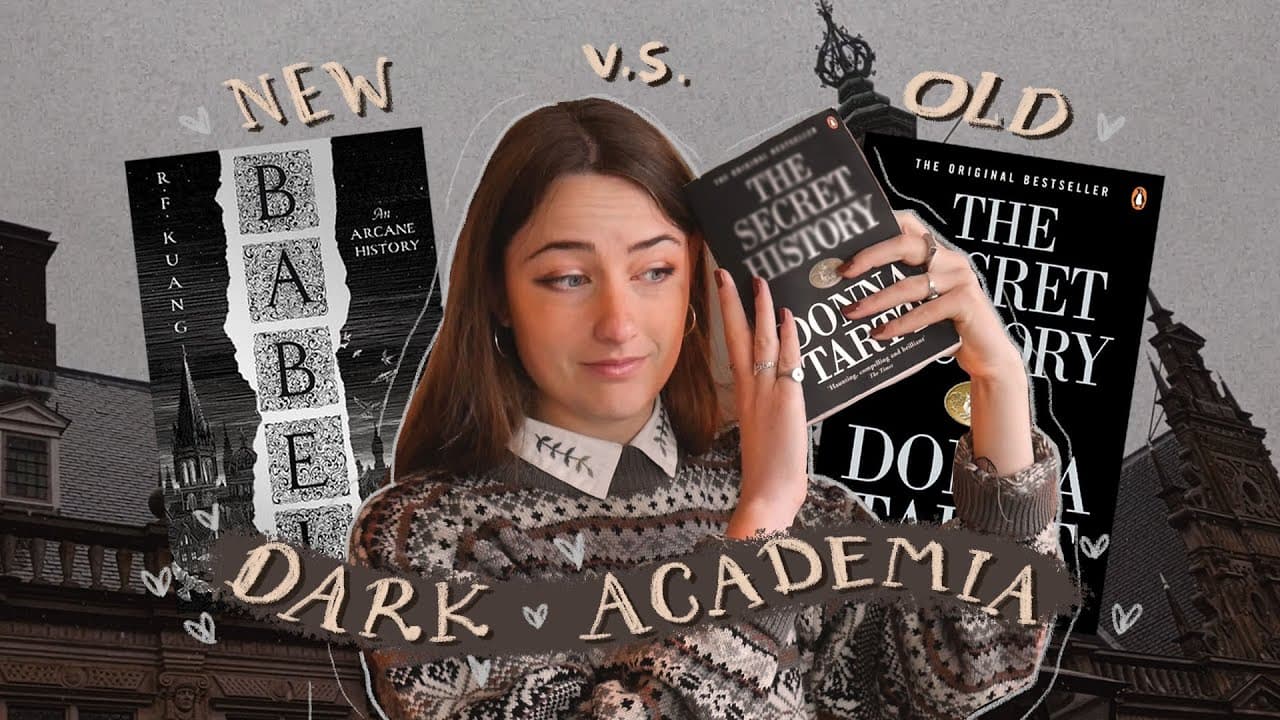
dark academia reading vlog ✒️ the secret history vs babel *spoiler-free*
TL;DR
In this in-depth analysis, the YouTuber Leonie delves into the origins and themes of the dark academia genre, sharing her thoughts on "The Secret History" by Donna Tartt and "Babel" by R.F. Kuang.
Transcript
I am going to vomit right now on this train but like in a good way how am I actually annotating how am I doing it this confirms my theory so much that I can say about this book hello my name is leonie thank you for hanging out with me if you're new here oh welcome as someone who has been a fan of the genre for a very long time I am finally after so... Read More
Key Insights
- 🕶️ The dark academia aesthetic has evolved from its critique of elitism and classism in "The Secret History" to a surface-level emulation of that aesthetic.
- 🕶️ "The Secret History" critiques the elitist nature of dark academia, highlighting the importance of inclusivity in the genre.
- 🕶️ "Babel" expands on the themes of dark academia, exploring racism, sexism, and colonialism through the lens of linguistics and translation.
- 🌍 The magic system in "Babel" has untapped potential and could have been further integrated into the world-building to create a more dynamic and transformative setting.
- 🍂 Both books underscore the need for careful characterization, with "The Secret History" excelling in providing nuanced, morally gray characters while "Babel" falls short by using characters as narrative devices.
- 🛀 The telling-not-showing approach in "Babel" detracts from the book's impact, preventing readers from inferring the themes and subtext themselves.
- 💭 Despite its flaws, "Babel" offers thought-provoking discussions on important social issues within the context of dark academia.
Install to Summarize YouTube Videos and Get Transcripts
Explore YouTube Video Summarizer or Get YouTube Transcript Extractor
Questions & Answers
Q: How does "The Secret History" critique elitism and classism?
"The Secret History" critiques elitism and classism through its portrayal of an exclusive Classics class and the privileged students who inhabit it. Richard, the protagonist, becomes intrigued by the enigmatic students and their disregard for those less well-off.
Q: How does "Babel" address racism and colonialism?
"Babel" explores themes of racism and colonialism through its diverse characters and their experiences in an alternate history Oxford. The book delves into how language, power, and translation intersect with colonial structures.
Q: What common themes are explored in both books?
Both "The Secret History" and "Babel" tackle themes of elitism, classism, and academia. They critique the dark academia aesthetic and its rootedness in privileged white institutions, emphasizing the need for inclusivity and questioning the romanticization of privilege.
Q: What is the significance of annotating books in the dark academia aesthetic?
Annotating books aligns with the dark academia aesthetic as it encourages a deeper engagement and analysis of the text. It allows readers to make personal connections, note interesting lines or themes, and create a rich, individualized reading experience.
Summary & Key Takeaways
-
Leonie, a long-time fan of the dark academia genre, reads "The Secret History" and "Babel" to explore the origins and evolution of dark academia.
-
"The Secret History" critiques elitism and classism through the story of Richard, a scholarship student in an elite Classics class.
-
"Babel" is set in Oxford and tackles themes of racism, sexism, and colonialism through its diverse characters studying linguistics.
Read in Other Languages (beta)
Share This Summary 📚
Summarize YouTube Videos and Get Video Transcripts with 1-Click
Try YouTube Summary with ChatGPT & Claude or YouTube Transcript Generator
Explore More Summaries from The Book Leo 📚



Summarize YouTube Videos and Get Video Transcripts with 1-Click
Try YouTube Summary with ChatGPT & Claude or YouTube Transcript Generator