The 8 Smartest People of the Year: 2013's Nobel Winners
TL;DR
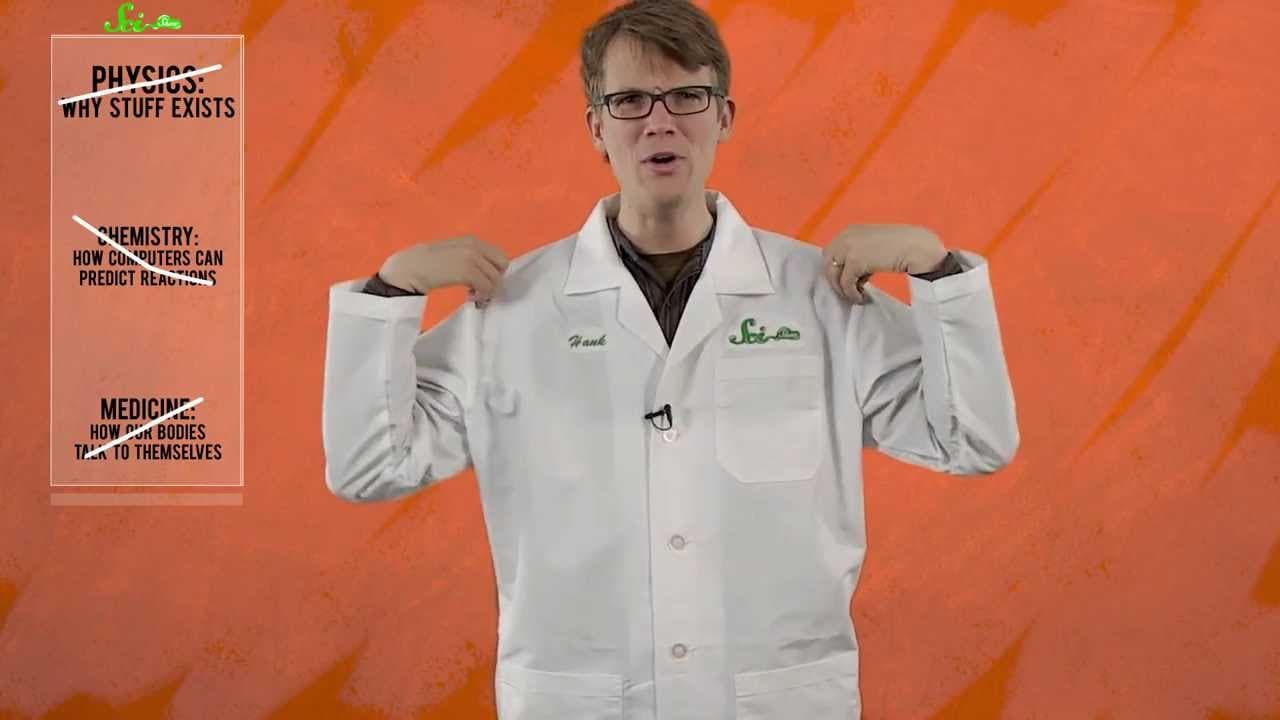
The 2013 Nobel laureates in physics, chemistry, and physiology have made significant contributions to our understanding of the universe, the modeling of chemical reactions, and the mechanisms of cellular communication.
Transcript
how does your body talk to itself how do we know what chemicals will do before they do it and why is there stuff these are the kinds of questions that have been answered at least in part by some of the greatest minds in science this year's Nobel laureates in physics chemistry and physiology and today is the day that you learn the answer to these qu... Read More
Key Insights
- 🏑 The discovery of the Higgs boson and field by François Englert and Peter Higgs had a profound impact on the field of physics, providing a crucial explanation for the acquisition of mass in particles.
- 💦 Martin Karplus, Michael Levitt, and Arieh Warshel's work in modeling chemical reactions using computer models based on quantum principles has revolutionized the study of complex reactions, including those occurring in the human body.
- 👨🔬 James Rothman, Randy Schekman, and Thomas Südhof's research on vesicle mechanisms has deepened our understanding of cellular communication, disease processes, and potential therapeutic targets.
Install to Summarize YouTube Videos and Get Transcripts
Explore YouTube Video Summarizer or Get YouTube Transcript Extractor
Questions & Answers
Q: What did François Englert and Peter Higgs propose in 1964, and how was it confirmed?
Englert and Higgs proposed a theory explaining the existence of matter and the acquisition of mass through the Higgs boson and field. The theory was confirmed by the discovery of the Higgs boson particle through high-energy collisions created at the CERN laboratory.
Q: How did Martin Karplus, Michael Levitt, and Arieh Warshel improve the modeling of chemical reactions?
The team improved computer models by incorporating the principles of quantum physics, allowing for more accurate prediction of chemical reactions, including those involving large molecules. Their models have been vital in the study of pharmaceuticals and reactions within the human body.
Q: What did James Rothman, Randy Schekman, and Thomas Südhof discover about vesicles?
The team unveiled the mechanisms behind vesicle function, including how they transport materials within cells, release their cargo, and respond to signals. Their research has shed light on various diseases and conditions linked to defective vesicles.
Q: What are the implications of understanding vesicle mechanisms?
Understanding vesicle mechanisms has provided crucial insights into cellular processes, such as waste removal, hormonal signaling, and neurotransmitter communication. It has also offered new perspectives on diseases related to faulty vesicles, such as diabetes and neurological conditions.
Summary & Key Takeaways
-
François Englert and Peter Higgs won the 2013 Nobel Prize in Physics for their independent proposals in 1964, explaining the existence of matter and the acquisition of mass through the Higgs boson and field. Their theory was confirmed by the discovery of the Higgs boson particle.
-
Martin Karplus, Michael Levitt, and Arieh Warshel won the Nobel Prize in Chemistry for their work in modeling complex chemical reactions using computer models, including the prediction of reactions in the human body and pharmaceuticals.
-
James Rothman, Randy Schekman, and Thomas Südhof won the Nobel Prize in Physiology or Medicine for their research on vesicles, the tiny sacs that transport materials within cells. They discovered the mechanisms behind vesicle function and its implications for cellular processes and diseases.
Read in Other Languages (beta)
Share This Summary 📚
Summarize YouTube Videos and Get Video Transcripts with 1-Click
Try YouTube Summary with ChatGPT & Claude or YouTube Transcript Generator
Explore More Summaries from SciShow 📚


Summarize YouTube Videos and Get Video Transcripts with 1-Click
Try YouTube Summary with ChatGPT & Claude or YouTube Transcript Generator