The Hurricane Category Scale Is Broken
TL;DR
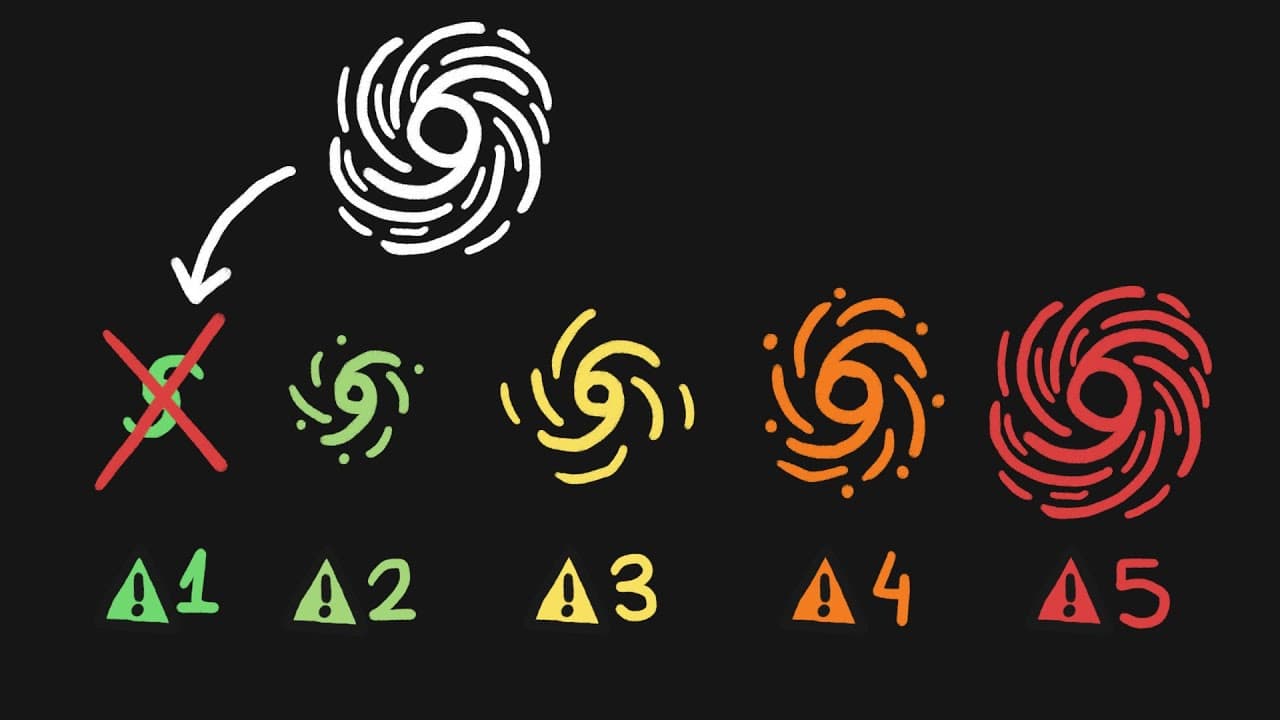
The current hurricane category scale based on wind speed is flawed and overlooks critical factors such as storm surge and rainfall.
Transcript
3, 4, or 5; the higher a hurricane’s peak wind speeds, the higher the category, and supposedly the higher the hurricane’s threat. The goal of this scale is to easily convey the danger of an incoming hurricane to the public. Except it doesn’t work. In 2015, Hurricane Patricia approached Mexico with the highest hurricane wind speeds ever re... Read More
Key Insights
- 💨 The current hurricane category scale based on wind speed alone fails to convey a hurricane's true threat accurately.
- 🧑🏭 Factors such as location, storm surge, and rainfall should be considered in determining a hurricane's category.
- ❣️ Storm surges caused by hurricanes are the most catastrophic, followed by heavy rainfall.
- 👱 Air pressure at the center of a storm is a reliable measure for predicting a hurricane's destructiveness.
- 💨 The measurement of air pressure is easier and more readily available than wind speed, making it a better alternative for categorizing hurricanes.
- 👱 To create a more reliable category scale, measurements of factors like air pressure, storm surge, and rainfall should be considered.
- 🤢 Factors such as a hurricane's size, speed, coastline terrain, and average sea level play a significant role in determining its potential impact.
Install to Summarize YouTube Videos and Get Transcripts
Explore YouTube Video Summarizer or Get YouTube Transcript Extractor
Questions & Answers
Q: Why does the current hurricane category scale based on wind speed fail to accurately predict a hurricane's threat?
The scale overlooks critical factors such as the location of landfall, storm surge, and rainfall, which have a significant impact on a hurricane's destructive potential.
Q: What are the most catastrophic products of a hurricane?
The most catastrophic products are storm surges, which raise sea levels and cause massive flooding, followed by heavy rainfall that can also lead to dangerous flooding.
Q: How did Hurricane Patricia, a category 5 hurricane, cause relatively minor damage compared to a lower category Hurricane Stan?
Hurricane Patricia hit a rural, sparsely populated area with mountainous terrain, which weakened the storm. In contrast, Hurricane Stan hit heavily-populated areas with a more favorable environment for the storm to intensify.
Q: What factor can reliably predict a hurricane's potential destruction?
The air pressure at the center of the storm is a better predictor of destruction. Low air pressure pulls in higher-pressure air, leading to larger storm size, stronger winds, and a higher likelihood of producing a large storm surge and heavy rainfall.
Summary & Key Takeaways
-
The current hurricane category scale, based solely on wind speed, fails to accurately predict a hurricane's true threat.
-
Factors such as the location of landfall, storm surge, and rainfall are more critical in determining a hurricane's impact.
-
To create a more reliable category scale, measurements of air pressure at the storm's center should be included.
Read in Other Languages (beta)
Share This Summary 📚
Summarize YouTube Videos and Get Video Transcripts with 1-Click
Try YouTube Summary with ChatGPT & Claude or YouTube Transcript Generator
Explore More Summaries from MinuteEarth 📚


Summarize YouTube Videos and Get Video Transcripts with 1-Click
Try YouTube Summary with ChatGPT & Claude or YouTube Transcript Generator