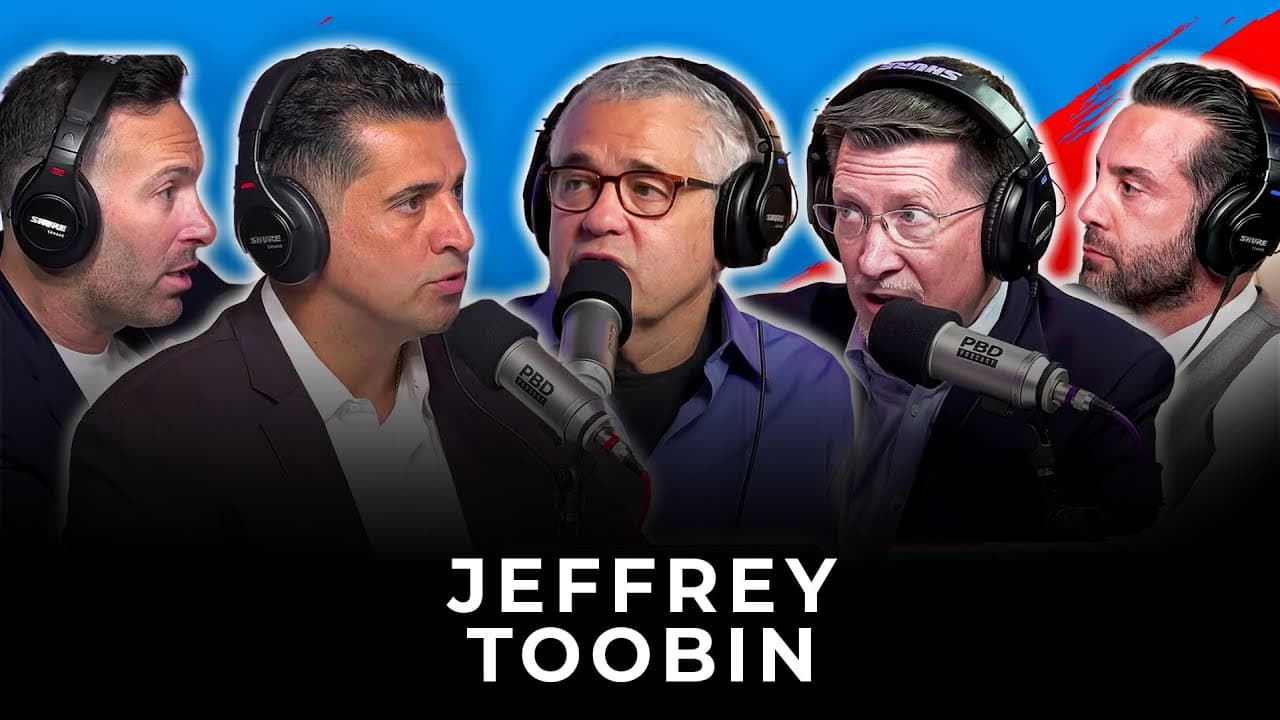
Jeffrey Toobin (Fired From CNN) | PBD Podcast | Ep. 279
TL;DR
A deep discussion on media credibility, personal accountability, and the impact of extremism.
Transcript
homie look what I become okay so we have a special guest here with us you know what I love about this podcast is one week we'll have a guest and there'll be a group that's very happy and there'll be a group that's very unhappy then the unhappy group a couple weeks later are incredibly happy and a happy group is now unhappy it's always great so you ... Read More
Key Insights
- 💖 Tubin’s Zoom incident sparked discussions on personal accountability and public trust in media figures.
- 🧑⚕️ Vaccine mandates generated heated debates on personal freedom versus public health responsibilities.
- 🧑🏭 The Oklahoma City bombing serves as a historical lens to understand more recent acts of political extremism.
- 😘 Right-wing extremism has persistent links to anti-government sentiments amplified by modern technology.
- 🇨🇫 Media bias is perceived across the political spectrum, influencing public interpretation of events.
- ❓ Professional accountability is crucial for journalists to maintain credibility and trust with audiences.
- 👔 The evolution of extremism and political violence is deeply tied to cultural and digital shifts in society.
Install to Summarize YouTube Videos and Get Transcripts
Explore YouTube Video Summarizer or Get YouTube Transcript Extractor
Questions & Answers
Q: What led to Jeffrey Tubin's notoriety in media?
Jeffrey Tubin gained notoriety after a Zoom incident in which he was caught exposing himself during a virtual meeting. This led to suspension and significant public backlash. Despite the controversy, Tubin publicly apologized and discussed the incident as a part of his legacy, emphasizing personal accountability amidst widespread media scrutiny.
Q: How does Tubin perceive the media's role in shaping public opinion about vaccines?
Tubin asserts that media responsibility includes addressing public health issues transparently. He emphasized that the information on vaccines was based on scientific consensus, asserting that promoting vaccination was necessary to protect public health, even if it faced resistance.
Q: In what ways does Tubin connect Timothy McVeigh to current political extremism?
Tubin discusses McVeigh not as a lone wolf but as part of a broader right-wing movement. He highlights the enduring ideologies of anti-government sentiments and gun rights that resonate today, particularly with the rise of online communities that can share such views rapidly.
Q: What is Tubin's stance on accountability in media and politics?
Tubin emphasizes the unique responsibility of journalists to uphold truth and accountability, arguing that a lack of scrutiny can lead to dire consequences in public trust and political stability. He believes that both political figures and media outlets should be held to high standards of accountability.
Q: How does Tubin address the perceived bias in news coverage?
Tubin recognizes the public's perception of bias in news outlets, especially amidst the polarized political climate. He suggests that media personalities often reflect ideological leanings, but insists that journalism must strive for accuracy and fairness despite this reality.
Q: What themes does Tubin explore in his book "Homegrown"?
Tubin's book examines right-wing extremism, retrospective narratives of the Oklahoma City bombing, and how such incidents inform current political climates. He delves into how extremist ideologies continue to evolve, especially in the digital age where groups can organize and mobilize more effectively.
Summary & Key Takeaways
-
The podcast features a conversation with Jeffrey Ross Tubin, exploring his controversial moments in media and the dynamics of public perception, especially regarding accountability in journalism.
-
Tubin discusses the significant consequences of media narratives and public trust, especially in relation to vaccine mandates and political protests, raising important ethical questions about editorial decisions.
-
The conversation extends into the dangers of right-wing extremism, historical context, and the ongoing impact of political violence in America, with references to current events and cultural movements.
Read in Other Languages (beta)
Share This Summary 📚
Summarize YouTube Videos and Get Video Transcripts with 1-Click
Try YouTube Summary with ChatGPT & Claude or YouTube Transcript Generator