How Does Trade Affect Economic Growth?
TL;DR
Trade significantly boosts economic growth by lowering barriers and increasing market access. Empirical evidence shows that countries with open trade policies tend to have higher GDP per capita. Examples from China and India highlight how trade liberalization leads to rapid economic development. Additionally, trade facilitates the spread of ideas and innovation, crucial for sustained growth.
Transcript
whether trade promotes growth used to be a very controversial question it's less so today I think in large part because of the development of better empirical evidence and that's what we're going to look at now here's a graph we showed earlier which shows that GDP per capita in landlock Nations is much lower than in Nations which have access to the... Read More
Key Insights
- Trade promotes economic growth by reducing barriers and increasing access to larger markets.
- Landlocked countries tend to have lower GDP per capita due to natural trade barriers.
- Countries with open trade policies generally experience higher GDP per capita compared to closed economies.
- Trade liberalization often follows economic crises and leads to significant growth rate increases.
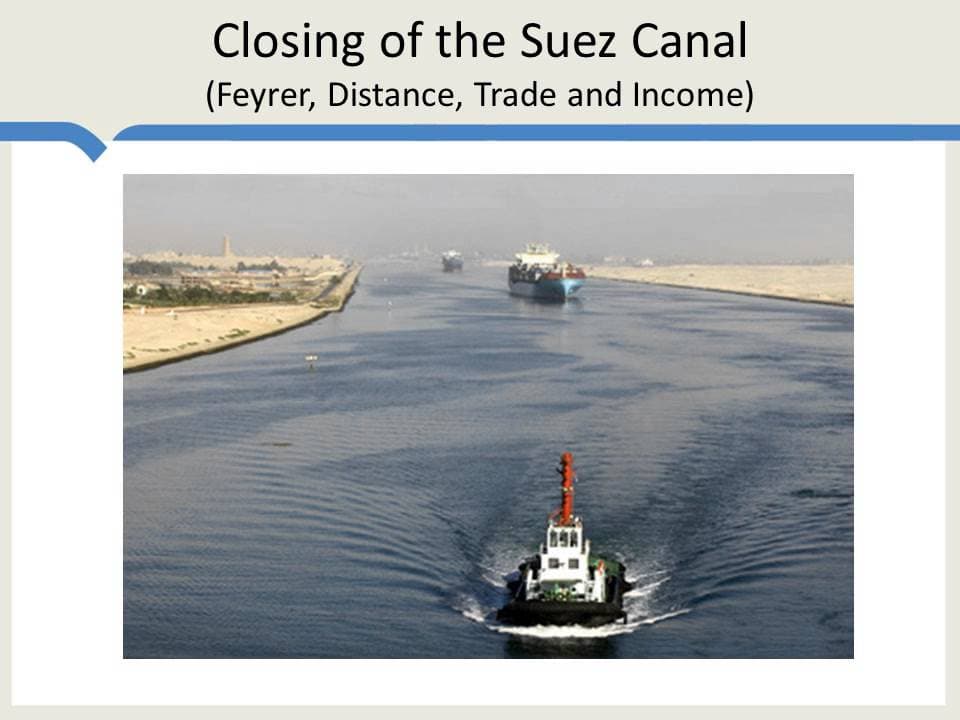
- The Suez Canal closure serves as a natural experiment showing reduced trade lowers income.
- China and India's economic growth post-liberalization exemplifies trade's positive impact.
- Competition from trade increases efficiency and productivity across industries.
- Free trade facilitates the import of ideas and technologies, crucial for innovation and growth.
Install to Summarize YouTube Videos and Get Transcripts
Explore YouTube Video Summarizer or Get YouTube Transcript Extractor
Questions & Answers
Q: How does trade affect GDP per capita?
Trade positively affects GDP per capita by facilitating access to larger markets and reducing trade barriers. Empirical evidence shows that countries with open trade policies generally have higher GDP per capita compared to those with closed economies. This is because open trade encourages economic activities, investment, and the efficient allocation of resources, leading to increased economic output.
Q: Why are landlocked countries economically disadvantaged?
Landlocked countries face natural trade barriers that hinder their economic growth, similar to high tariffs. Without access to coastlines, these countries encounter higher transportation costs and logistical challenges, limiting their ability to engage in international trade. As a result, landlocked nations often have lower GDP per capita compared to countries with access to sea routes, affecting their overall economic development.
Q: What impact did the Suez Canal closure have on trade?
The Suez Canal closure, due to the Six-Day War, served as a natural experiment illustrating the impact of increased trade barriers. Countries most affected by the closure experienced significant reductions in trade and income. The event demonstrated that increased trade distances, akin to higher tariffs, negatively affect economic activities by restricting efficient trade routes, leading to decreased economic output in affected regions.
Q: How did trade liberalization affect China and India?
Trade liberalization had a profound impact on China and India's economies. China's economic reforms in 1978 and India's in 1991 opened their markets to international trade, resulting in rapid economic growth. China's GDP grew at about 10% annually, while India experienced growth rates of around 6% per year. These reforms facilitated increased foreign investment, technological advancements, and integration into the global economy, driving unprecedented economic development.
Q: What role does competition play in trade?
Competition from trade plays a crucial role in enhancing efficiency and productivity within industries. Open trade policies expose domestic firms to international competition, compelling them to adopt best practices, innovate, and improve their production processes. This competitive pressure ensures that firms remain efficient and productive, contributing to overall economic growth and development by aligning domestic production with global standards.
Q: Why is free trade important for innovation?
Free trade is vital for innovation as it facilitates the import of ideas, technologies, and knowledge from other countries. Most innovations originate from a few countries, and through trade, these ideas spread globally. Importing high-tech goods and foreign direct investment brings new technologies and expertise, enabling countries to enhance their productivity and innovation capabilities. This exchange of ideas is crucial for sustaining long-term economic growth and development.
Q: How does market size influence investment in trade?
Market size significantly influences investment in trade by providing greater incentives for firms to invest in research and development. When countries enter into free trade agreements, they gain access to larger markets, increasing the potential returns on investment in new products and technologies. This expanded market access encourages firms to enhance their productive capacity and innovation efforts, leading to increased economic output and growth.
Q: What are the benefits of trade liberalization?
Trade liberalization offers numerous benefits, including increased economic growth, higher GDP per capita, and enhanced productivity. By reducing trade barriers, countries can access larger markets, attract foreign investment, and benefit from technological advancements. Trade liberalization also encourages competition, leading to efficiency gains across industries. Additionally, it facilitates the diffusion of ideas and innovation, essential for sustaining long-term economic development and improving living standards.
Summary & Key Takeaways
-
Trade is a major driver of economic growth, as evidenced by empirical studies showing that open economies tend to have higher GDP per capita. Landlocked countries face natural barriers similar to tariffs, which hinder growth. The Suez Canal closure demonstrated that reduced trade leads to decreased income, highlighting the importance of open trade routes.
-
China and India's rapid economic growth post-trade liberalization illustrates the transformative power of open trade policies. These countries experienced unprecedented growth rates, with China growing at about 10% annually and India at about 6% annually. Trade facilitated not only economic growth but also the spread of ideas and innovation.
-
Trade competition spurs efficiency and productivity improvements across industries, as firms must keep up with global standards. Market access expansion through trade agreements incentivizes investment in research and development. Additionally, free trade is crucial for importing ideas and technologies, particularly for smaller countries reliant on innovations from larger economies.
Read in Other Languages (beta)
Share This Summary 📚
Summarize YouTube Videos and Get Video Transcripts with 1-Click
Try YouTube Summary with ChatGPT & Claude or YouTube Transcript Generator
Explore More Summaries from Marginal Revolution University 📚

Summarize YouTube Videos and Get Video Transcripts with 1-Click
Try YouTube Summary with ChatGPT & Claude or YouTube Transcript Generator