NASA to Send Science Experiments on the Artemis I Mission to the Moon and Back
TL;DR
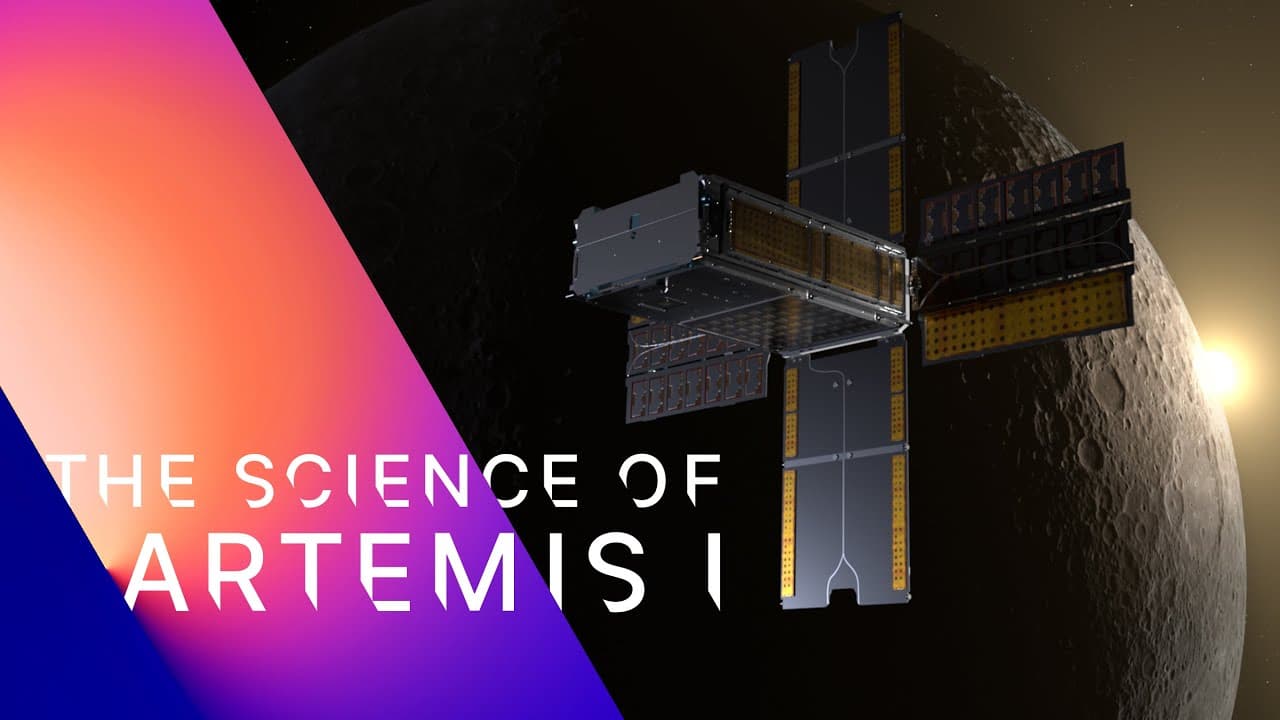
Artemis I is a significant mission that tests the Orion spacecraft integrated with the Space Launch System and carries out bold scientific missions to the Moon, providing valuable information for future lunar and Mars missions.
Transcript
Artemis I is paving the way for us to explore deeper and deeper into space. I think Artemis I is significant on so many levels. It is a new frontier to do science. So the primary objective is to test the Orion spacecraft integrated with the Space Launch System. And it is designed to carry out the boldest of the bold missions. But it's more than ju... Read More
Key Insights
- 👨🔬 Artemis I is not only about testing spacecraft but also about conducting valuable scientific research on the Moon and beyond.
- 👾 Understanding the Moon's composition and environment is crucial for future lunar missions and preparing for longer space stays.
- 👾 The space biology experiments during Artemis I help in studying the effects of ionizing radiation and developing strategies for sustaining life in space.
- 🧑🚀 Innovative technologies like Callisto aim to enhance astronaut effectiveness and user interfaces for future missions.
Install to Summarize YouTube Videos and Get Transcripts
Explore YouTube Video Summarizer or Get YouTube Transcript Extractor
Questions & Answers
Q: What is the primary objective of Artemis I?
The primary objective of Artemis I is to test the integration of the Orion spacecraft with the Space Launch System for future lunar and Mars missions.
Q: How will the secondary payloads, CubeSats, contribute to the mission?
The CubeSats will study the Moon, its composition, and the space environment. They will provide valuable information about the lunar surface and help in preparing for longer-duration missions.
Q: What is the purpose of the space biology experiments conducted during Artemis I?
Space biology experiments aim to understand how living organisms respond to the space environment, including the effects of ionizing radiation. This research helps in developing strategies for thriving in space and extended human missions.
Q: What is the Callisto technology demonstration payload?
Callisto is a secondary payload that demonstrates the use of technology from Amazon's Alexa and Cisco's WebEx as a custom space-qualified digital assistant. It aims to show how astronauts can use innovative user interfaces for the Orion spacecraft's life support system.
Summary & Key Takeaways
-
Artemis I is primarily focused on testing the Orion spacecraft and Space Launch System for future missions to the Moon and Mars.
-
The mission includes 10 secondary payloads, called CubeSats, conducting their own scientific missions to study the Moon, its composition, and the space environment.
-
Included in the mission is an experiment to study space biology and understand the effects of the space environment on biological systems.
Read in Other Languages (beta)
Share This Summary 📚
Summarize YouTube Videos and Get Video Transcripts with 1-Click
Try YouTube Summary with ChatGPT & Claude or YouTube Transcript Generator
Explore More Summaries from NASA 📚

Summarize YouTube Videos and Get Video Transcripts with 1-Click
Try YouTube Summary with ChatGPT & Claude or YouTube Transcript Generator