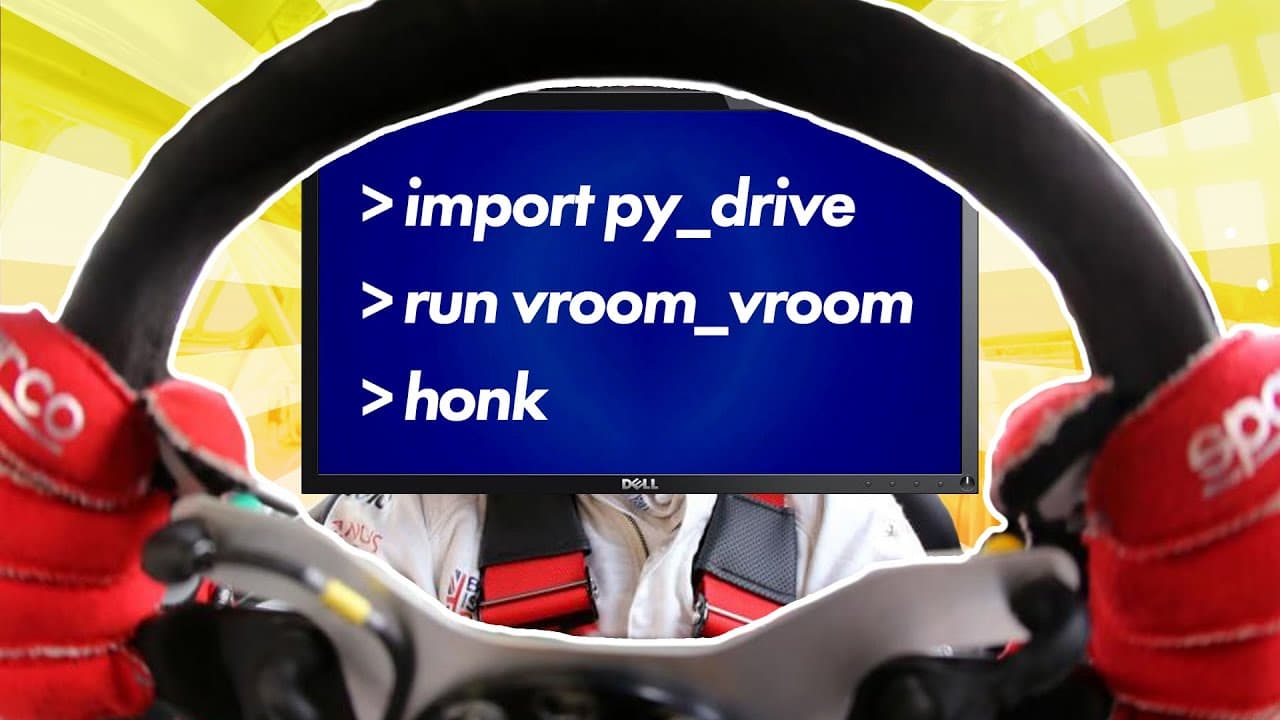
Can I teach my computer to drive? (coding vlog)
TL;DR
In this coding vlog, the content creator takes on the challenge of teaching his computer how to drive on a 2D racing circuit, documenting the process from start to finish.
Transcript
if you're anything like me you may have watched some videos on YouTube about coding where someone has created a program that teaches their computer to play snake or play Tetris or generate YouTube video scripts I've watched a lot of these and they've always focused on the end result it makes the end result seem inevitable like here's the thing whic... Read More
Key Insights
- 😀 Programming videos often focus on the end result, but this vlog offers a unique perspective by documenting the process and challenges faced.
- 📽️ Python was chosen as the programming language for this project due to its familiarity and the content creator's existing knowledge.
- 🧑🏫 The content creator used linear algebra and genetic programming to teach the computer how to drive on a 2D racing circuit.
- 😨 Evaluating the performance of the cars was done using a scoring system based on reaching checkpoints and the time taken.
- 😨 The cars were able to adapt and navigate a different track, demonstrating some level of learning and adaptability.
- 🧑🏭 The content creator acknowledges that real-world autonomous driving is much more complex and involves additional factors such as lidar and GPS.
- 🏎️ Robo Race sponsored this series of videos and is involved in developing autonomous cars for racing competitions.
Install to Summarize YouTube Videos and Get Transcripts
Explore YouTube Video Summarizer or Get YouTube Transcript Extractor
Questions & Answers
Q: Why is this coding vlog different from others that focus on the end result?
Most coding videos only showcase the final product, creating the illusion that programming is straightforward. This vlog aims to document the actual process and challenges faced along the way.
Q: What programming language did the content creator use for this project?
The content creator chose to work with Python because of its familiarity and ease of use.
Q: How did the content creator teach the computer to drive on a 2D racing circuit?
The content creator used a combination of linear algebra and genetic programming to generate a set of cars that could navigate the track based on their distance to the walls and their speed.
Q: How did the content creator evaluate the performance of the cars?
The content creator implemented checkpoints around the track and used the time taken to reach each checkpoint as a scoring system for evaluating the cars' performance.
Q: Did the cars learn to drive on other tracks besides the training track?
Yes, the content creator tested the cars on a different track and found that they were able to navigate it, albeit with some initial confusion about the correct direction.
Summary & Key Takeaways
-
The content creator is challenged by Robo Race to teach his computer how to drive on a 2D racing circuit using Python.
-
The video focuses on the journey of creating the program rather than just the end result.
-
The content creator breaks down the key steps involved in the project, such as creating a game window, object interaction, and implementing machine learning.
Read in Other Languages (beta)
Share This Summary 📚
Summarize YouTube Videos and Get Video Transcripts with 1-Click
Try YouTube Summary with ChatGPT & Claude or YouTube Transcript Generator
Explore More Summaries from Simon Clark 📚


Summarize YouTube Videos and Get Video Transcripts with 1-Click
Try YouTube Summary with ChatGPT & Claude or YouTube Transcript Generator