How to Invest In Chinese Stock Markets (And Why You Absolutely Should Not!) | Economics Explained
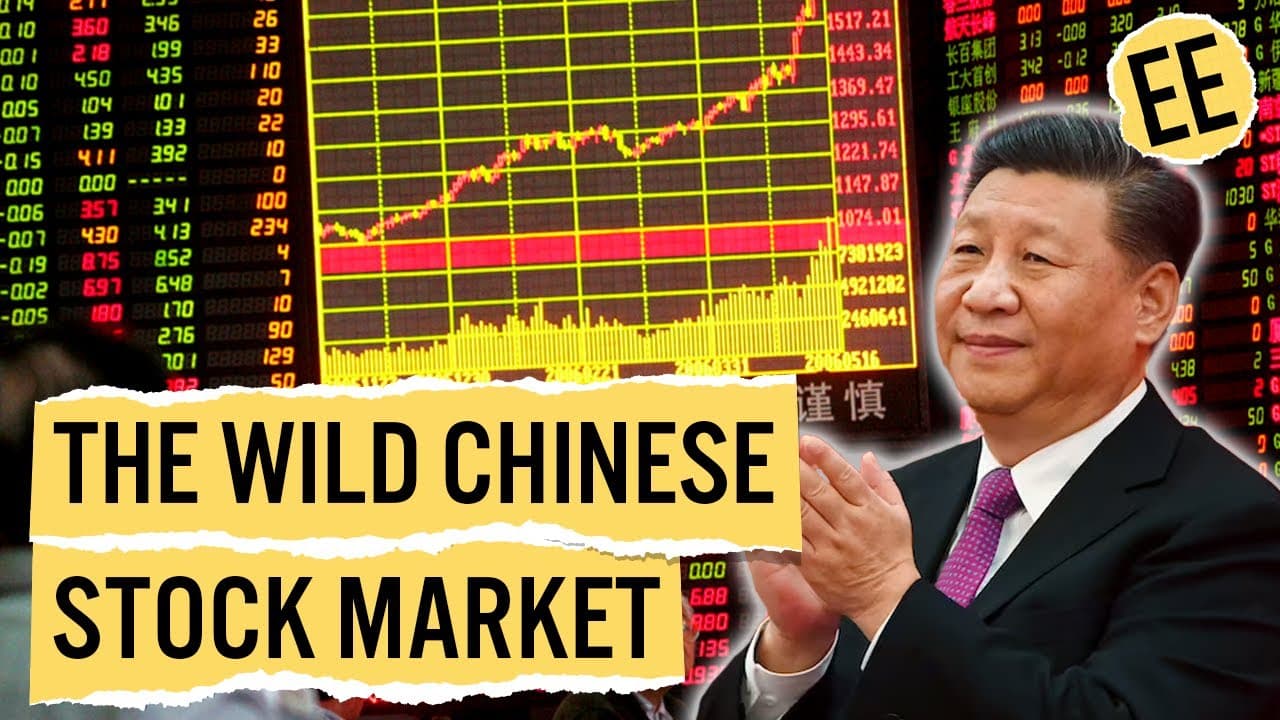
TL;DR
Investing in Chinese stocks is complex due to over and under-regulation.
Transcript
China has been home to the most extreme economic growth in human history. In four short decades, the nation has gone from a struggling backwater filled with poverty to this, a nation of glistening skyscrapers and more Gucci stores than you can poke a stick at. The driver of this growth has obviously been its embrace of the free market and opening i... Read More
Key Insights
- China's economic growth has been unprecedented, transforming from poverty to a nation of prosperity within four decades.
- Despite its potential, investing in Chinese stocks is fraught with challenges due to over-regulation and under-regulation.
- The Chinese stock market is heavily controlled by the government, affecting which companies get listed and the speed of the process.
- Foreign investors face significant barriers when attempting to invest directly in Chinese stocks, often requiring residency or employment in China.
- Over-regulation in China has led to under-regulation issues, where companies seek listings on exchanges outside of China, sometimes using fraudulent methods.
- Reverse mergers have been used by dubious companies to list on foreign exchanges without proper scrutiny, posing risks to investors.
- Alternative investment options include partnering with Chinese businesses, buying shares in international exchanges, or investing through ETFs.
- The anticipated growth of the Chinese economy is already reflected in stock prices, limiting potential returns for investors.
Install to Summarize YouTube Videos and Get Transcripts
Explore YouTube Video Summarizer or Get YouTube Transcript Extractor
Questions & Answers
Q: What are the main challenges of investing in Chinese stocks?
Investing in Chinese stocks is challenging due to over-regulation by the government, which controls which companies can be listed and the process involved. Additionally, foreign investors face significant barriers, such as needing residency or employment in China, to invest directly, limiting their options.
Q: How does the Chinese government's control affect the stock market?
The Chinese government's control over the stock market means they decide which companies get listed and how quickly. This control can lead to inefficiencies, as the exchanges are funded by the government and not motivated by profit, resulting in a slower listing process and limited capital raising capabilities.
Q: What are reverse mergers, and why are they a concern?
Reverse mergers involve a private company buying a publicly listed company to gain a stock exchange listing without going through rigorous checks. This is concerning because it allows potentially fraudulent companies to list on foreign exchanges, posing risks to investors who may be misled by false financial reports.
Q: What alternatives exist for investing in Chinese companies?
Investors can gain exposure to Chinese companies by partnering with businesses in China, purchasing shares of Chinese companies listed on international exchanges, or investing through exchange-traded funds (ETFs) that have access to Chinese stock exchanges. These methods bypass some of the direct investment barriers.
Q: Why might anticipated growth already be reflected in stock prices?
The anticipated growth of the Chinese economy is well-known, and as a result, it is already factored into stock prices. This means that the potential for significant returns is limited because the expected economic expansion has been priced into the current valuation of stocks.
Q: What are the risks of investing directly in Chinese stocks for foreigners?
Foreigners face significant risks when investing directly in Chinese stocks due to strict regulations requiring residency or employment in China. Even if eligible, they can only purchase non-voting shares, limiting their influence on company decisions, and they must undergo a robust background check.
Q: How does the Chinese stock market differ from Western markets like NYSE?
Unlike Western markets such as the NYSE, which are privately owned and profit-driven, Chinese stock markets are government-owned, treating stock exchanges as public services. This results in different motivations, as Chinese exchanges are not incentivized by profit, affecting the efficiency and effectiveness of capital raising.
Q: What role do ETFs play in accessing Chinese stocks?
ETFs provide a way for investors to access Chinese stocks without directly navigating the complex regulatory environment. They allow investors to buy a security that, in turn, invests in Chinese stocks through companies authorized by the Chinese government, offering a more straightforward and less risky investment option.
Summary & Key Takeaways
-
China has experienced remarkable economic growth, but investing in its stock market is complicated due to strict government regulations. Foreign investors face barriers, and the market's over-regulation has led to under-regulation issues, with companies seeking listings abroad, sometimes using fraudulent methods.
-
The Chinese government controls stock exchanges, creating challenges for companies trying to get listed. Foreign investors have limited access, needing specific criteria to buy shares directly. This restricts the stock market's ability to raise capital effectively, impacting overall performance.
-
Investors can still gain exposure to Chinese companies through partnerships, international listings, or ETFs. However, the expected economic growth is already priced into stocks, making it difficult to achieve significant returns. The video advises caution when considering investments in Chinese markets.
Read in Other Languages (beta)
Share This Summary 📚
Summarize YouTube Videos and Get Video Transcripts with 1-Click
Try YouTube Summary with ChatGPT & Claude or YouTube Transcript Generator
Explore More Summaries from Economics Explained 📚






Summarize YouTube Videos and Get Video Transcripts with 1-Click
Try YouTube Summary with ChatGPT & Claude or YouTube Transcript Generator