How to Create Blue Sodium Chloride from Salts
TL;DR
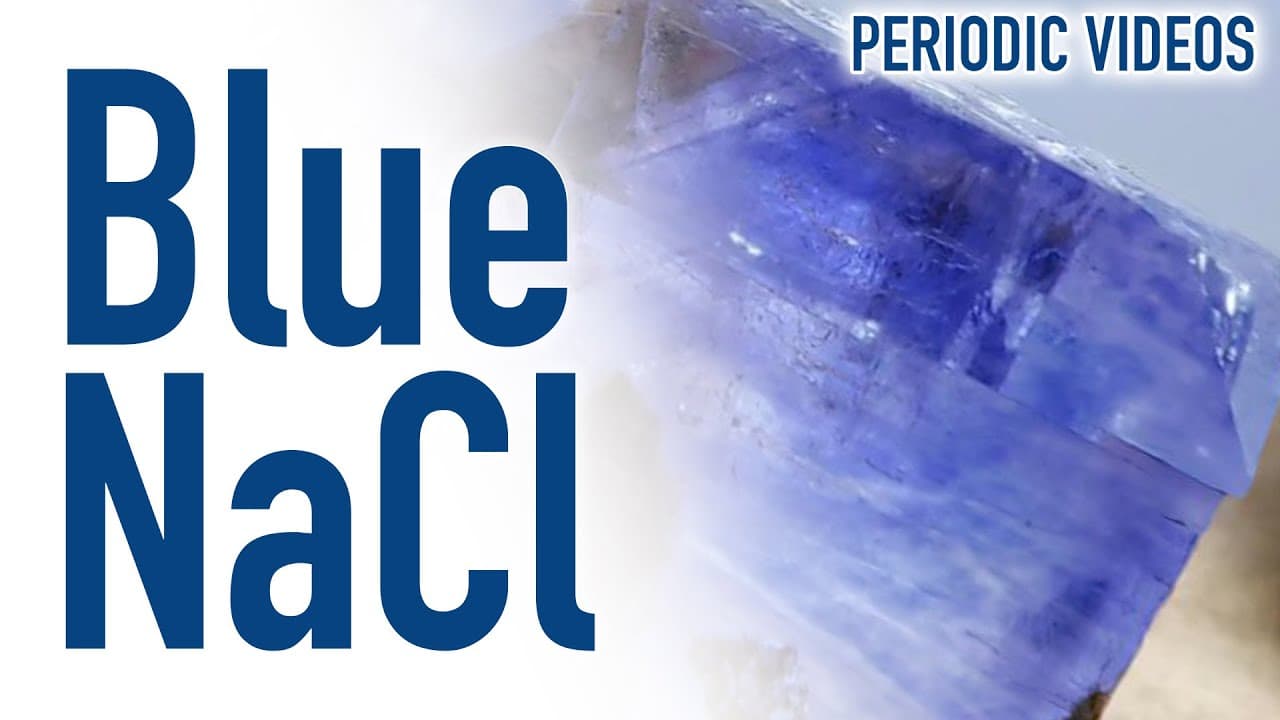
You can create blue sodium chloride by mixing sodium chloride with potassium chloride and heating the mixture until it melts. When you add metallic sodium, it forms nanoparticles that scatter light, resulting in a blue color. This experiment demonstrates how variations in chemical composition can change material properties.
Transcript
Neil and I were quite excited because I got an email from my acquaintance artem saying that it was possible to make sodium chloride blue I mean a blue color not some sort of classification and his recipe was slightly vague that you mix sodium chloride and potassium chloride and heat it until it melts this in itself is quite difficult because the me... Read More
Key Insights
- 🫠 Eutectic mixtures lower melting points of components.
- 🙂 Metallic sodium can react in a visually striking manner, emitting light.
- 💱 Material variability can result in unexpected properties like color change.
- ❓ Chemical composition alterations affect material properties.
- ❓ Nanoparticles can influence material color and behavior.
- 🧂 Sodium vaporizes in a bright flash when added to molten salt.
- ❓ Excess sodium in the mixture may contribute to the fizzing reaction.
Install to Summarize YouTube Videos and Get Transcripts
Explore YouTube Video Summarizer or Get YouTube Transcript Extractor
Questions & Answers
Q: How did the experiment to create blue sodium chloride begin?
The experiment started with mixing sodium chloride and potassium chloride and heating the mixture until it melted to create a eutectic mixture.
Q: What role did metallic sodium play in the experiment?
Metallic sodium was added to the molten salt mixture, potentially forming nanoparticles that contributed to the blue color of the sodium chloride.
Q: Why was there a bright flash of light during the experiment?
The addition of metallic sodium to the molten mixture resulted in a bright flash of light, likely due to the reaction of sodium vaporizing.
Q: What explanation was provided for the blue color of the sodium chloride?
Two arguments were suggested – excess sodium leading to spare electrons causing a blue hue, or the presence of metallic sodium nanoparticles distributing through the solid.
Summary & Key Takeaways
-
An experiment attempted to create blue sodium chloride by mixing sodium chloride and potassium chloride, then adding metallic sodium.
-
The mixture melted at a lower temperature due to eutectic properties, and metallic sodium potentially formed nanoparticles, resulting in a blue hue.
-
The experiment showed material variability by altering chemical compositions and showcased the unexpected outcome of blue sodium chloride.
Read in Other Languages (beta)
Share This Summary 📚
Summarize YouTube Videos and Get Video Transcripts with 1-Click
Try YouTube Summary with ChatGPT & Claude or YouTube Transcript Generator
Explore More Summaries from Periodic Videos 📚


Summarize YouTube Videos and Get Video Transcripts with 1-Click
Try YouTube Summary with ChatGPT & Claude or YouTube Transcript Generator