Jeff Bezos on going back to the Moon | Lex Fridman Podcast Clips
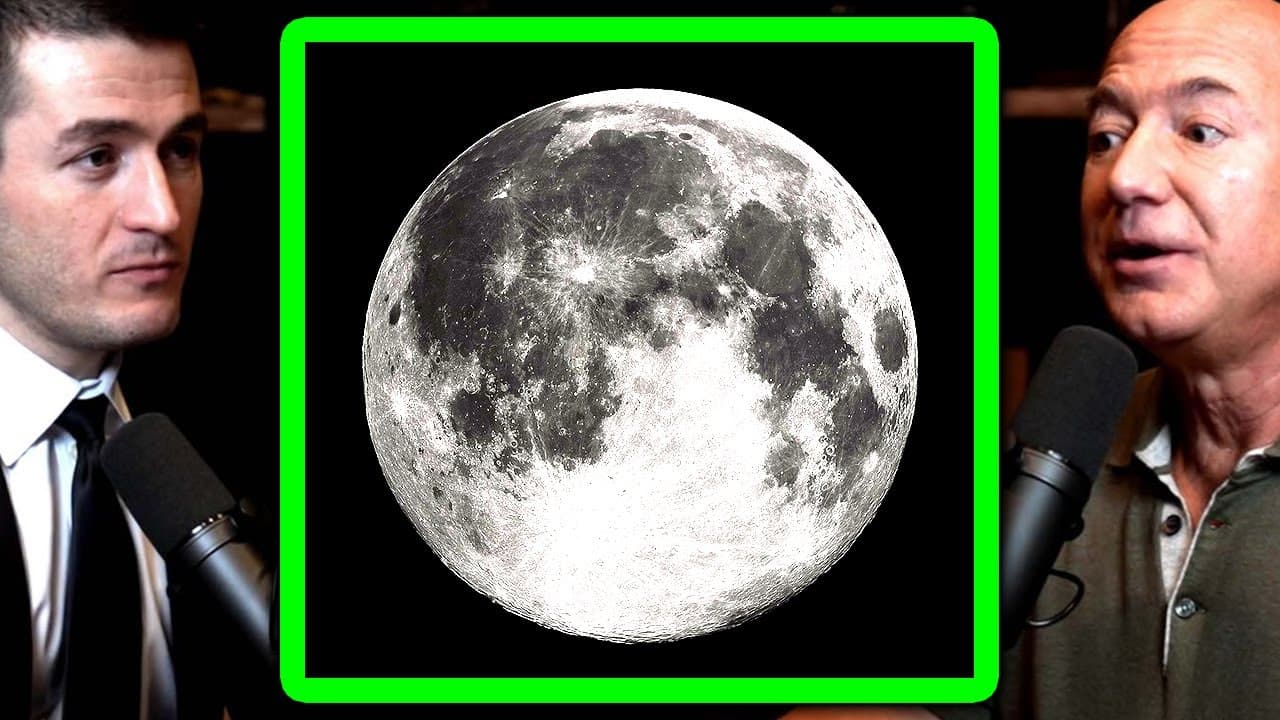
TL;DR
Blue Origin is developing both an expendable and reusable lunar lander as part of NASA's Artemis program, aiming to reduce costs and make lunar missions more sustainable through the use of lunar resources.
Transcript
you've mentioned the lunar program let me ask you about that yeah um there's uh a lot going on there and you haven't really talked about it much so in addition to the Artemis program with NASA uh blue is doing its own Lander program can you describe it uh there's a there's a sexy picture on Instagram with with one of them is it the MK1 I guess yeah... Read More
Key Insights
- ❓ Blue Origin is developing an expendable and reusable lunar lander for NASA's Artemis program.
- 😒 The use of liquid hydrogen as fuel offers advantages but presents storage challenges, which Blue Origin aims to overcome with cryocoolers.
- 🥶 Utilizing lunar resources like regolith and potentially ice can make lunar missions more sustainable and reduce costs over time.
- 😫 Automation plays a significant role in setting up and operating lunar factories, potentially reducing the need for human presence.
Install to Summarize YouTube Videos and Get Transcripts
Explore YouTube Video Summarizer or Get YouTube Transcript Extractor
Questions & Answers
Q: What is Blue Origin's lunar lander program and how does it contribute to NASA's Artemis program?
Blue Origin is developing the Mark 1 lunar lander, an expendable lander designed to transport cargo to the Moon's surface. They are also developing the Mark 2 lunar lander, a reusable lander for human missions as part of NASA's Artemis program. The goal is to reduce costs and make lunar missions more sustainable over time.
Q: What advantage does using liquid hydrogen as fuel offer for high-energy missions?
Liquid hydrogen has a high specific impulse, making it ideal for high-energy missions like landing on the Moon. However, hydrogen is not storable, as it constantly boils off. Blue Origin is developing solar-powered cryocoolers to make hydrogen a storable propellant for deep space missions, which is a significant breakthrough.
Q: How does Blue Origin plan to make lunar missions more sustainable through the use of lunar resources?
Blue Origin aims to utilize lunar resources like lunar regolith to manufacture commodities and solar cells on the Moon's surface. They have already built a solar cell using lunar regolith, albeit with lower efficiency. They are also working on extracting oxygen from lunar regolith and potentially utilizing ice in shadowed craters for fuel, making the Moon more self-sustaining.
Q: Will Jeff Bezos step foot on the Moon or Mars?
It is highly unlikely that Jeff Bezos will personally go to the Moon or Mars. He believes these missions will be accomplished by future generations and professional astronauts. However, he expresses enthusiasm and a desire to be part of such missions if given the opportunity.
Summary & Key Takeaways
-
Blue Origin is developing the Mark 1 lunar lander, designed to take 3,000 kg of cargo to the Moon's surface, and the Mark 2 lunar lander, a reusable lander for NASA's Artemis program.
-
The use of liquid hydrogen as fuel offers a high specific impulse advantage for high-energy missions like landing on the Moon, but hydrogen is not storable. Blue Origin is developing solar-powered cryocoolers to overcome this challenge.
-
Blue Origin aims to make lunar missions more affordable over time by utilizing lunar resources, such as manufacturing commodities and solar cells from lunar regolith, extracting oxygen from lunar regolith, and potentially utilizing ice in permanently shadowed craters for fuel.
Read in Other Languages (beta)
Share This Summary 📚
Summarize YouTube Videos and Get Video Transcripts with 1-Click
Try YouTube Summary with ChatGPT & Claude or YouTube Transcript Generator
Explore More Summaries from Lex Clips 📚






Summarize YouTube Videos and Get Video Transcripts with 1-Click
Try YouTube Summary with ChatGPT & Claude or YouTube Transcript Generator