What is SpaceX Launching to the International Space Station?

TL;DR
NASA is conducting research projects on the International Space Station to study atmospheric carbon dioxide, asteroid surface material, tissue chips for disease modeling, and DNA repair in microgravity.
Transcript
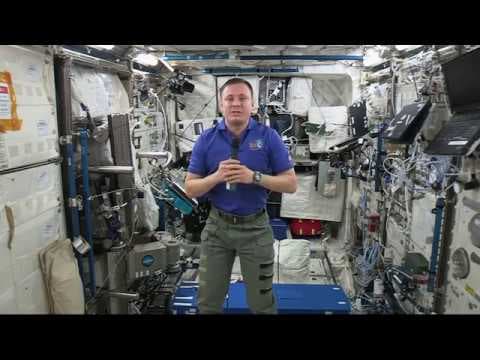
[ MUSIC ] >> THIS IS A PAYLOAD THAT'S GONNA BE ON THE JEM XPOSED MODULE, SO IT'S HANGIN' ON THE OUTSIDE OF THE ISS LOOKIN' DOWN AT THE EARTH. AND WHAT ARE WE DOING? WE'RE TRYING TO MEASURE ATMOSPHERIC CARBON DIOXIDE. PLANTS ARE ACTUALLY DOING US A HUGE FAVOR. THOSE PLANTS IN THE OCEAN TAKE ABOUT HALF OF THE ATMOSPHERIC CARBON DIOXIDE THAT HUMANS EM... Read More
Key Insights
- ❓ NASA is using innovative technologies and instruments on the International Space Station to study various aspects of the Earth, asteroids, and human physiology.
- 🍁 The OCO-3 instrument provides detailed maps of carbon dioxide, contributing to our understanding of the Earth's climate and vegetation.
- 🎟️ Studying asteroid regolith helps prepare for future missions and interactions with these celestial bodies.
- 🐿️ Tissue chips in microgravity accelerate disease modeling and drug discovery processes.
- 👾 The Genes in Space experiment explores the effects of microgravity and radiation on DNA repair and paves the way for genomic editing in space.
Install to Summarize YouTube Videos and Get Transcripts
Explore YouTube Video Summarizer or Get YouTube Transcript Extractor
Questions & Answers
Q: What is the purpose of the OCO-3 instrument on the ISS?
The OCO-3 instrument aims to continue the collection of atmospheric carbon dioxide data started by OCO-2, providing detailed snapshot maps of carbon dioxide and providing insights into forests, crops, cities, and power plants.
Q: Why is understanding asteroid regolith important for future astronaut missions?
Understanding how to interact with asteroid regolith is crucial for future astronaut missions, as it helps in anchoring to the surface and exploring the asteroid's surface material, enabling safe and effective exploration.
Q: How can tissue chips help in drug discovery and disease modeling?
Tissue chips containing living human cells serve as tools to mimic various disease states and aging, helping researchers understand diseases better and accelerate the drug discovery process, which is currently expensive and time-consuming on Earth.
Q: What is the objective of the Genes in Space experiment?
The Genes in Space experiment aims to examine repair pathway frequencies and DNA repair in microgravity to protect astronauts from the intense radiation experienced in space and explore the potential for genomic editing in space.
Summary & Key Takeaways
-
NASA is using instruments on the JEM XPOSED module of the ISS to measure atmospheric carbon dioxide and understand the variability of its absorption by ocean plants.
-
The HERMES facility on the ISS is studying the surface material of asteroids to prepare for future astronaut missions and understand how to interact with asteroid regolith.
-
Tissue chips containing living human cells are being used to accelerate the process of disease modeling and drug discovery in microgravity.
-
The Genes in Space winning team is conducting an experiment to examine how repair pathways and DNA repair frequencies are affected by microgravity and intense radiation in space.
Read in Other Languages (beta)
Share This Summary 📚
Summarize YouTube Videos and Get Video Transcripts with 1-Click
Try YouTube Summary with ChatGPT & Claude or YouTube Transcript Generator
Explore More Summaries from NASA 📚

Summarize YouTube Videos and Get Video Transcripts with 1-Click
Try YouTube Summary with ChatGPT & Claude or YouTube Transcript Generator