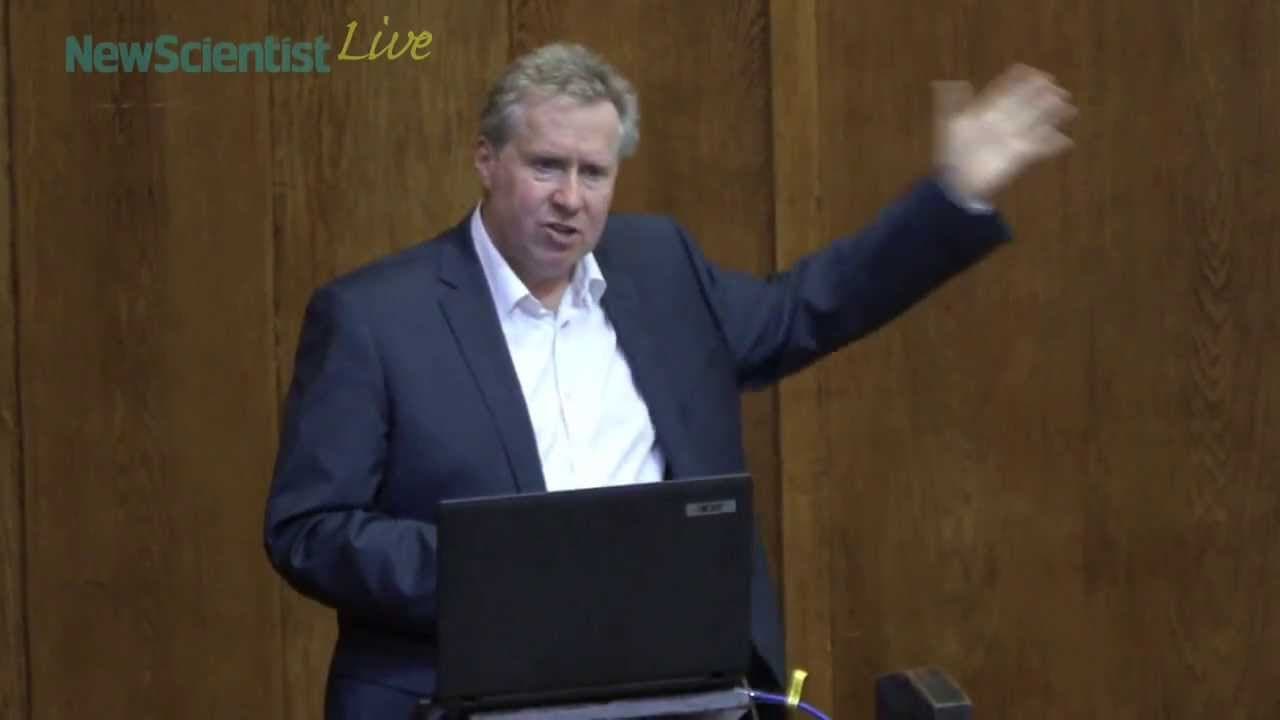
In search of the perfect vacuum part 1 -- Jeremy Webb -- Nothing event
TL;DR
Discover the evolution of vacuums from Aristotle's disbelief to Torricelli's first vacuum creation, leading to technological advancements by Wolfgang Gaede.
Transcript
Thank You Helen if I'd known you were going to suggest this I'd have put you on last so that you went home sick rather than listening to my talk and feeling it right let me see if this works nope good we're always beaten by technology on New Scientist we write about it we understand it but we can't use it so this talk is convert composed from two e... Read More
Key Insights
- 🫵 Aristotle's belief in the non-existence of a vacuum dominated views for 2,000 years.
- 🥺 Torricelli's experiment with mercury led to the first creation of a vacuum, challenging established beliefs.
- ✊ Otto von Guericke's air pump demonstrations and Magdeburg spheres showcased the power of vacuums.
- 💨 Blaise Pascal's experiments with atmospheric pressure and height paved the way for understanding vacuums.
- 🥺 The introduction of electricity spurred interest in vacuum science, leading to discoveries like the electron.
- 🈸 Vacuum technology advancements by Gaede and others revolutionized scientific experiments and industrial applications.
- 💡 Thomas Edison's quest for efficient light bulbs drove the need for vacuum technology innovations.
Install to Summarize YouTube Videos and Get Transcripts
Explore YouTube Video Summarizer or Get YouTube Transcript Extractor
Questions & Answers
Q: Why did Aristotle believe a vacuum couldn't exist?
Aristotle believed a vacuum couldn't exist because it was made of nothing, contradicting his idea of the universe composed of earth, water, air, and fire. This belief influenced views for centuries, supported by the early church.
Q: How did Torricelli create the first vacuum?
Torricelli created the first vacuum using a mercury-filled tube experiment where the mercury column fell, leaving a space above it devoid of matter, known as a partial vacuum. This challenged Aristotle's beliefs about the vacuum.
Q: What role did Otto von Guericke play in vacuum technology?
Otto von Guericke created the first air pump, demonstrating the existence of vacuums through experiments like using Magdeburg spheres. His innovations paved the way for advancements in vacuum research.
Q: How did Wolfgang Gaede contribute to vacuum technology?
Wolfgang Gaede made significant contributions to vacuum technology by inventing devices like the rotary mercury pump and diffusion pump, achieving ultra-high vacuum levels. His innovations were crucial for technological advancements.
Summary & Key Takeaways
-
Aristotle's belief that a vacuum couldn't exist shaped views for 2,000 years.
-
Torricelli's experiment with mercury led to the creation of the first vacuum.
-
Advancements by scientists like Otto von Guericke and Wolfgang Gaede revolutionized vacuum technology.
Read in Other Languages (beta)
Share This Summary 📚
Summarize YouTube Videos and Get Video Transcripts with 1-Click
Try YouTube Summary with ChatGPT & Claude or YouTube Transcript Generator
Explore More Summaries from New Scientist 📚


Summarize YouTube Videos and Get Video Transcripts with 1-Click
Try YouTube Summary with ChatGPT & Claude or YouTube Transcript Generator