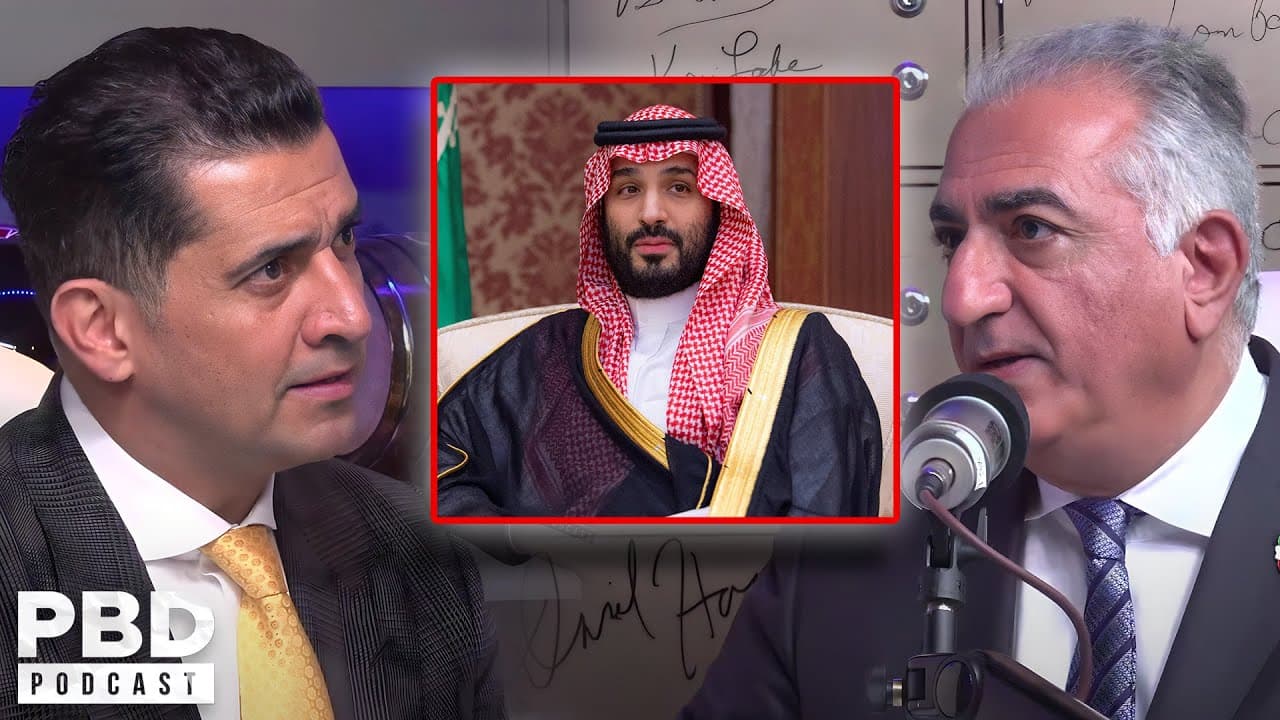
"He's Very Ambitious" - Can Saudi Crown Prince MBS Help Stabilize the Middle East?
TL;DR
The content discusses the complexities of negotiating peace in the Middle East, highlighting Saudi Arabia's ambitions and Iran's role in regional instability.
Transcript
you know it's easy to negotiate with reasonable people when you're doing a business deal and you sit down and within the first 30 minutes you're like you know what okay I think we can get a deal here maybe we're not going to like the price but they seem like they're will they have reason to say you're thinking this is worth 300 million it's not wor... Read More
Key Insights
- 🥳 Effective negotiation requires understanding and compromising with reasonable parties, which is often lacking in the Middle East.
- 😀 The ambitious leadership of MBS represents a shift towards modernization but faces challenges from regional instability.
- 💁 Historical relationships between nations in the Middle East can inform current tensions and their potential resolutions.
- 🇸🇦 The safety and reputation of countries like Saudi Arabia are crucial for attracting foreign talent and investment in various sectors.
- 🌍 Iran's expansionist policies have significant implications for regional dynamics and sovereignty among neighboring nations.
- 🤩 Addressing the Sunni-Shiite divide is key to achieving lasting peace in the Middle East.
- ❓ Collaborative efforts among regional players can yield positive outcomes if antagonistic elements are minimized.
Install to Summarize YouTube Videos and Get Transcripts
Explore YouTube Video Summarizer or Get YouTube Transcript Extractor
Questions & Answers
Q: Why is negotiating with unreasonable parties challenging in business deals?
Negotiating with unreasonable parties creates an environment of frustration and impasse. When one side sets excessive demands or lacks a realistic understanding of values, it becomes impossible to find common ground, leading to abandoned discussions. This behavior can hinder business prospects and damage relationships in more diplomatic contexts, such as international relations.
Q: What role does Muhammad bin Salman play in Saudi Arabia's ambition for stability?
Muhammad bin Salman (MBS) is at the forefront of efforts to modernize Saudi Arabia and improve its global reputation. His initiatives aim to transform the country into a safer and more appealing destination for international celebrities and investments by emphasizing security and progressive reforms, despite the surrounding geopolitical challenges.
Q: How does Iran's regime impact stability in the Middle East?
The Iranian regime is portrayed as a primary source of chaos in the region, undermining stability through its support of terrorism and radicalism. By exporting its ideological agenda and engaging in hostility towards neighboring countries, Iran continues to challenge peace efforts, complicating potential agreements and making cooperation difficult for surrounding nations.
Q: Why did Messi reportedly decline the opportunity to play in Saudi Arabia?
Messi's refusal to join a Saudi Arabian team is attributed to personal safety concerns for himself and his family. Existing geopolitical tensions and the perception of safety for foreign residents are significant factors that influence such decisions, highlighting the hurdles Saudi Arabia faces in attracting global sports talent.
Q: What historical relations existed between Iran and Saudi Arabia before the revolution?
Prior to the Iranian Revolution, Saudi Arabia and Iran shared cooperative relations, characterized by mutual respect and collaboration. However, the revolution shifted dynamics drastically, leading to longstanding tensions rooted in differing religious and political ideologies, challenging both nations’ positions in the region significantly.
Q: How does regional cooperation contribute to Middle Eastern stability?
Regional cooperation fosters dialogue and mutual understanding among countries, essential for addressing shared challenges like security threats and economic interests. By working together, nations can create frameworks promoting peace, reducing the likelihood of conflict, and developing harmonious relations that benefit all members involved.
Q: What is the significance of the Sunni-Shiite divide in Middle Eastern politics?
The Sunni-Shiite divide is pivotal to Middle Eastern politics, often exacerbating tensions between Iran and Saudi Arabia. This sectarian rift fuels conflicts, influences alliances, and complicates negotiations, making it crucial for leaders to navigate this landscape carefully while seeking common ground for peace and stability.
Summary & Key Takeaways
-
The discussion evaluates negotiation dynamics in the Middle East, emphasizing how dealing with unreasonable entities complicates peace efforts. It stresses the importance of mutual understanding for successful negotiations.
-
Muhammad bin Salman (MBS) is highlighted as a significant figure in Saudi Arabia, striving to make the country a secure destination for international stars like Ronaldo, despite regional chaos.
-
The historical context between Saudi Arabia and Iran is explored, indicating that a shift towards collaboration could solve many regional issues currently exacerbated by Iranian instability.
Read in Other Languages (beta)
Share This Summary 📚
Summarize YouTube Videos and Get Video Transcripts with 1-Click
Try YouTube Summary with ChatGPT & Claude or YouTube Transcript Generator