The Freezing Dunes of Northern Canada
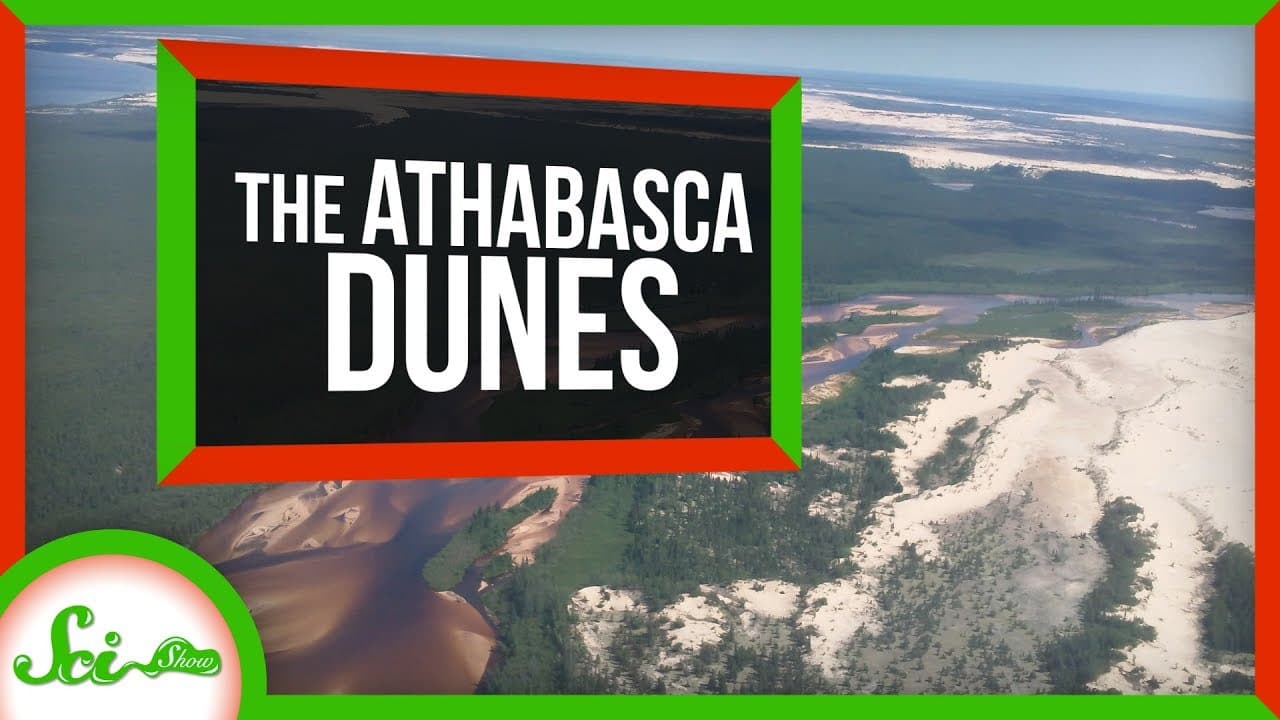
TL;DR
The Athabasca dunes in Canada's north are a rare and unique habitat, home to ten endemic plant species adapted to the shifting sands and extreme conditions.
Transcript
Thanks to CuriosityStream for supporting this episode! Go to CuriosityStream.com/SciShow to learn more. [ intro ] What do you think of when you imagine giant dunes of sand? Maybe punishing heat, little water, and practically no life. Basically, a desert. But the northernmost parts of Alberta and Saskatchewan in Canada are not a desert. It’s below f... Read More
Key Insights
- 🌍 The Athabasca dunes are located in Canada's north and are one of the world's northernmost dune fields.
- 💁 The dunes were formed from glacial meltwater depositing till into a lake, which later receded, leaving behind the sand.
- 🥶 The shifting sands and cold, dry winds have created a unique habitat with rare plant species that are adapted to survive in the harsh conditions.
- 👪 The Athabasca dunes are home to ten endemic plant species found nowhere else on the planet.
- ❓ These endemic species have evolved adaptations such as tough outer layers, rapid growth, and survival strategies like rhizomes.
- 💱 The Athabasca Sand Dunes Provincial Park in Saskatchewan protects the dunes, but climate change remains a potential threat.
- 🇬🇸 The sand cat, another dune-adapted species, inhabits the hot deserts of Arabia and can be seen in the CuriosityStream documentary "Sand Cats."
Install to Summarize YouTube Videos and Get Transcripts
Explore YouTube Video Summarizer or Get YouTube Transcript Extractor
Questions & Answers
Q: How were the Athabasca dunes formed?
The dunes were formed from glacial meltwater depositing till into a lake, which later receded, leaving behind the sand.
Q: What factors contributed to the unique plant life in the Athabasca dunes?
The shifting sands and cold, dry winds prevented the growth of stabilizing plants, leading to the evolution of unique plant species adapted to the dunes' conditions.
Q: Are there any endemic species in the Athabasca dunes?
Yes, there are ten endemic plant species that are found only in the Athabasca dunes and nowhere else on the planet.
Q: How are the endemic plant species adapted to the dunes?
The plants have developed tough outer layers, grow quickly to avoid being buried, and some have rhizomes or other survival strategies to thrive in the shifting sands.
Summary & Key Takeaways
-
The Athabasca dunes in Northern Canada are one of the world's northernmost dune fields and a unique habitat.
-
Formed around ten thousand years ago, these dunes were created by glacial meltwater depositing till into a massive lake.
-
The shifting sands and cold, dry winds have allowed for the development of rare plant species adapted to the harsh conditions.
Read in Other Languages (beta)
Share This Summary 📚
Summarize YouTube Videos and Get Video Transcripts with 1-Click
Try YouTube Summary with ChatGPT & Claude or YouTube Transcript Generator
Explore More Summaries from SciShow 📚


Summarize YouTube Videos and Get Video Transcripts with 1-Click
Try YouTube Summary with ChatGPT & Claude or YouTube Transcript Generator